A young hunter raised by Chiron. In Ovid he comes upon Artemis bathing in the forest and sees her naked by chance. The goddess turns him into a stag, and his own hounds tear him apart.
In brief
- The son of Aristaeus and Autonoe, a daughter of Cadmus. The centaur Chiron brings him up as a hunter.
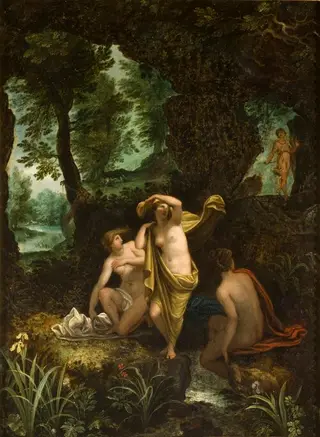
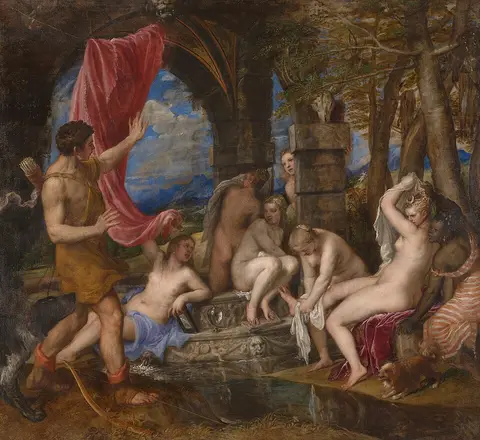
- Hunting on Mount Cithaeron, he comes upon a spring in a cave where Artemis is bathing with her nymphs.
- In Ovid the goddess splashes water on him and turns him into a stag. Actaeon cannot speak. His own hounds do not know him and tear him to pieces.
Family
Parents
Apollodorus, Library 3.4.4
To see the whole family, open the Actaeon family tree → · how is Actaeon related to Zeus? → · compare with someone else →
Why was he punished?
Ancient sources disagree about the reason. In Ovid, Actaeon is not to blame; the poet asks where a mistake was ever a crime.
Apollodorus reports that according to Acusilaus, Zeus punished him for courting Semele. In Euripides' Bacchae, Cadmus recalls that Actaeon was punished for boasting that he was a better hunter than Artemis.
Apollodorus also tells how the hounds went looking for their master and came to Chiron's cave. To calm them, Chiron made a statue of Actaeon.
Ovid, Metamorphoses 3.138–252; Apollodorus, Library 3.4.4; Euripides, Bacchae 337–340Actaeon in art
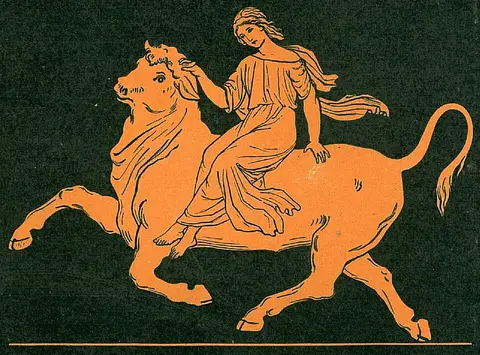
16works depicting Actaeon, in date order, from ancient vases to paintings of the Renaissance and after. All are in the public domain or openly licensed. Click an image for the full-size version and licence details. For scene-by-scene readings of famous vases, see Greek vase painting.




Stories featuring Actaeon
Quick questions
- Who are Actaeon's parents?
- In the main account, Actaeon's father is Aristaeus and mother is Autonoë. Apollodorus, Library 3.4.4
- What are Actaeon's symbols?
- Stag's antlers, Hunting hounds.
- Which myths is Actaeon in?
- Cadmus and Europa: the bull, the dragon and the alphabet · Actaeon and Artemis.
Ancient sources
This page is based on the texts below. Numbers refer to books and lines.
- Ovid, Metamorphoses 3.138–252
- Apollodorus, Library 3.4.4
- Callimachus, Bath of Pallas 107–118
- Euripides, Bacchae 337–340