Monsters of Greek mythology
The 27 monsters in this atlas, from the Gorgons and the Hydra to Typhon, the last enemy of Zeus. Many of them are one family: the children of Typhon and Echidna. Tap a name for the full, sourced story. For the gods see the list of Greek gods; for how they are related, the family tree.
-
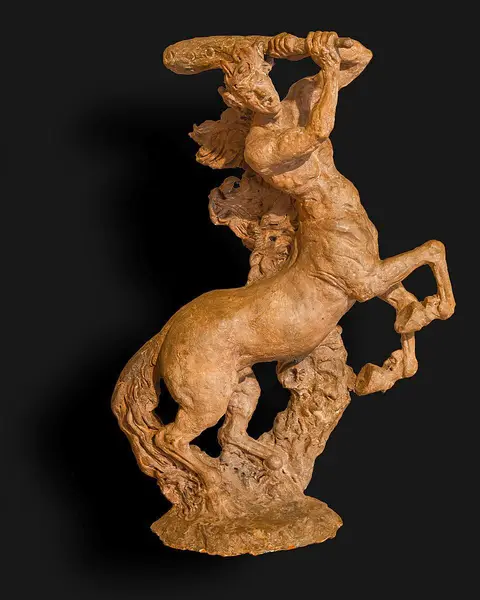 Centaurs
Half-man, half-horse creatures of the mountains of Thessaly, mostly wild and drunken. Wise Chiron and kindly Pholus are the exceptions.
Pindar, Pythian 2.21–48 -
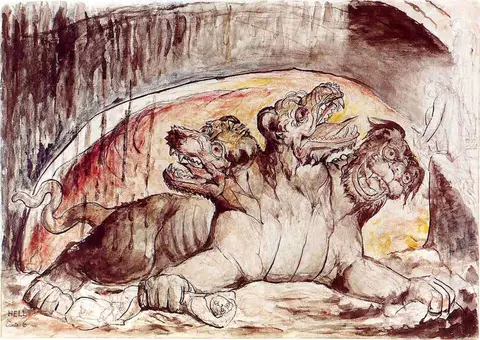 Cerberus
The many-headed hound who guards the gates of the underworld, letting the dead in and no one out. Heracles drags him up to the daylight in his last labour.
Hesiod, Theogony 310–312, 769–774 -
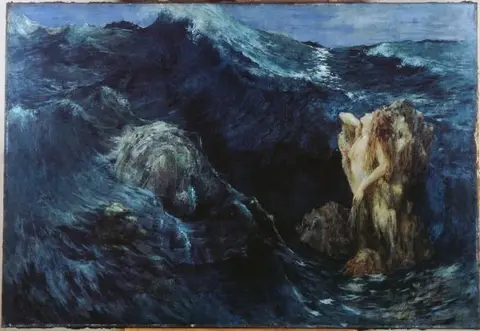 Charybdis
The whirlpool opposite Scylla that swallows the sea three times a day. Odysseus survives it by clinging to a fig tree.
Homer, Odyssey 12.73–126, 12.234–259, 12.426–446 -
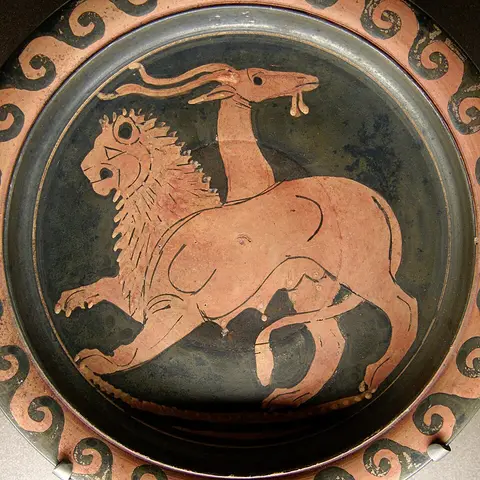 Chimera
The fire-breathing monster of Lycia, part lion, part goat, part serpent, killed by Bellerophon from the back of Pegasus.
Homer, Iliad 6.179–183, 16.328–329 -
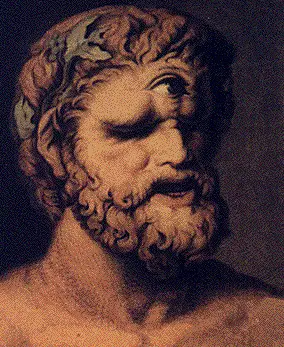 Cyclopes
One-eyed giants. In Hesiod they are three smiths who forge Zeus's thunderbolt; in Homer they are lawless shepherds like Polyphemus.
Hesiod, Theogony 139–146, 501–506 -
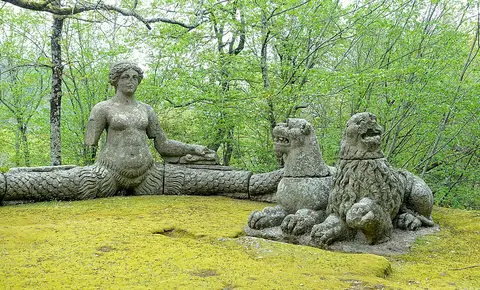 Echidna
Half nymph, half serpent: the 'mother of monsters'. With Typhon she bears Cerberus, the Hydra, Orthrus and the Chimera.
Hesiod, Theogony 295–332 -
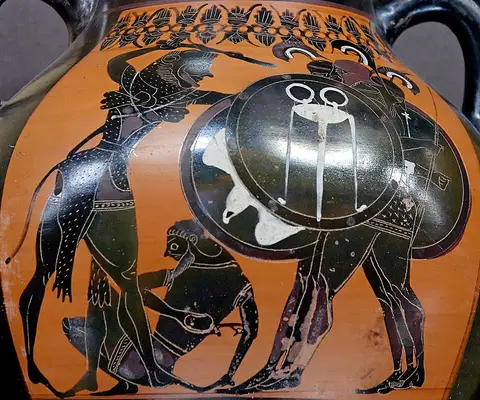 Geryon
The three-bodied giant of the far west whose red cattle Heracles steals in his tenth labour.
Hesiod, Theogony 287–294, 979–983 -
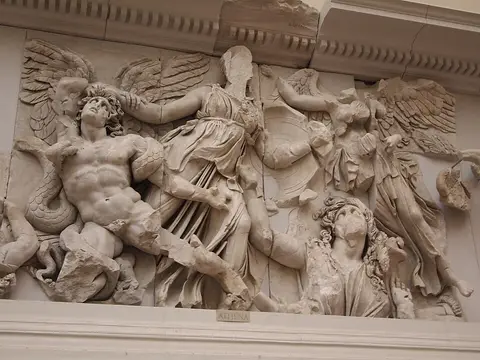 Giants
The earth-born giants who make war on the Olympians, the Gigantomachy. The gods can only win with the help of a mortal, Heracles.
Hesiod, Theogony 185–186 - Gorgons
Three winged sisters with snakes for hair whose gaze turns people to stone. Two are immortal; the third, Medusa, is killed by Perseus.
Hesiod, Theogony 270–283 -
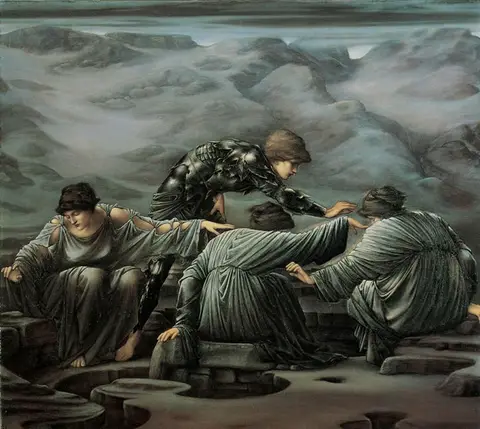 Graeae
The Grey Sisters, born old, who share a single eye and a single tooth. Perseus steals both to force them to help him.
Hesiod, Theogony 270–273 - Harpies
The 'snatchers': winged storm spirits who carry people off and steal the food of the blind seer Phineus until the Argonauts drive them away.
Hesiod, Theogony 265–269 - Hecatoncheires
The Hundred-Handers, three giant sons of Uranus and Gaia with a hundred arms and fifty heads each. They win the war against the Titans for Zeus.
Hesiod, Theogony 147–153, 617–735 -
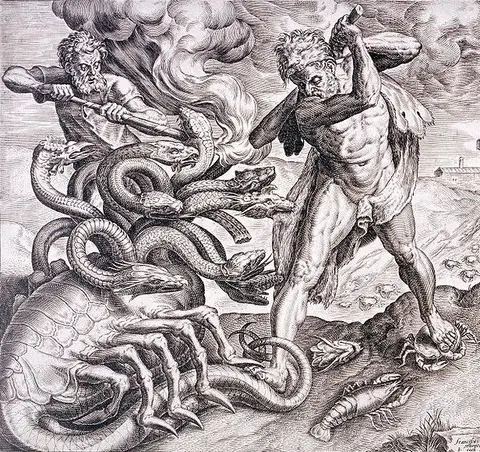 Hydra
The many-headed water serpent of Lerna. Every time Heracles cuts off a head, two grow back, until his nephew Iolaus sears the stumps with fire.
Hesiod, Theogony 313–318 -
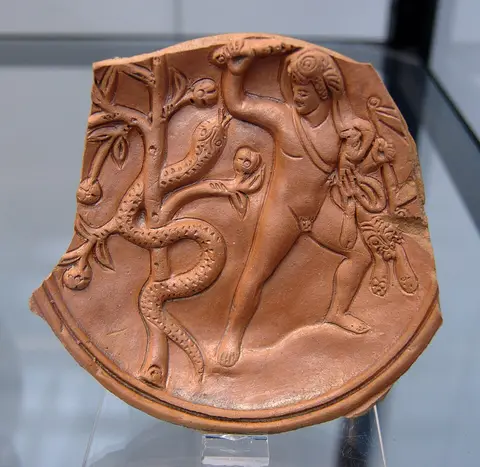 Ladon
The serpent-dragon that coils around the tree of golden apples in the garden of the Hesperides.
Hesiod, Theogony 333–336 -
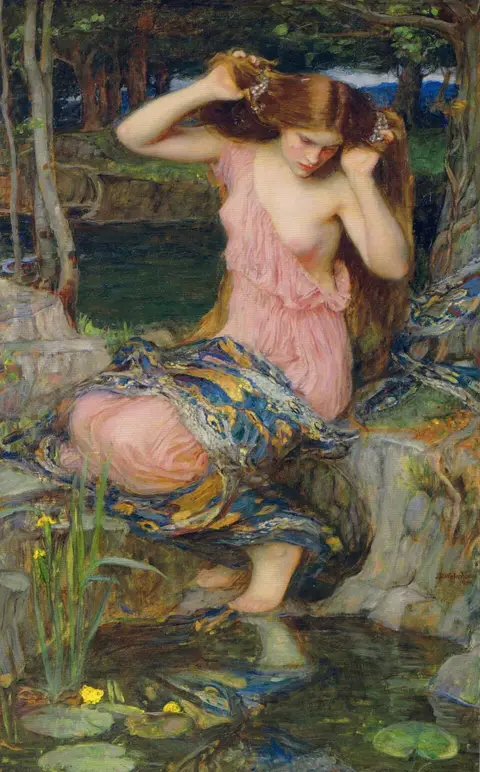 Lamia
A queen turned child-killing monster after Hera destroys her children. Greek mothers used her name to frighten children; later a lamia became a kind of vampire.
Diodorus 20.41.3–6 -
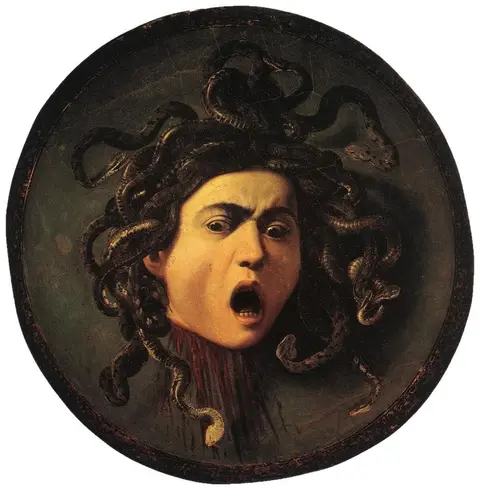 Medusa
The only mortal of the three Gorgons. Her hair is snakes and anyone who looks at her face turns to stone. Perseus cuts off her head, which ends up on Athena's shield.
Hesiod, Theogony 270–283 -
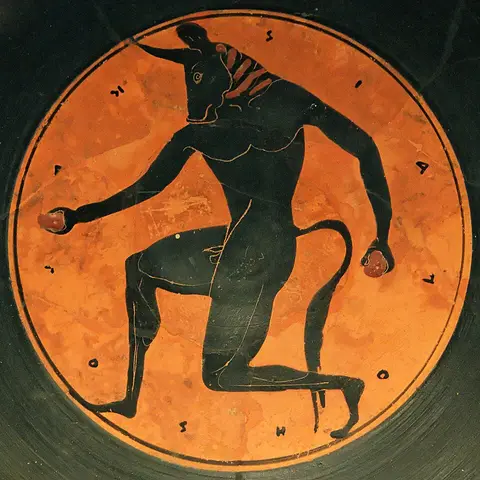 Minotaur
The bull-headed man of Crete, shut in the Labyrinth and fed on young Athenians until Theseus kills him with the help of Ariadne's thread.
Apollodorus, Library 3.1.3–3.1.4, 3.15.8; Apollodorus, Epitome 1.7–1.9 -
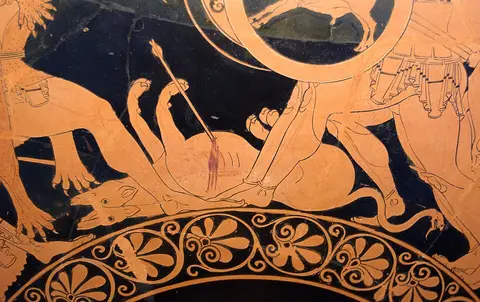 Orthrus
The two-headed dog who guards Geryon's red cattle, brother of Cerberus. Heracles kills him with his club.
Hesiod, Theogony 293–294, 306–309, 326–327 -
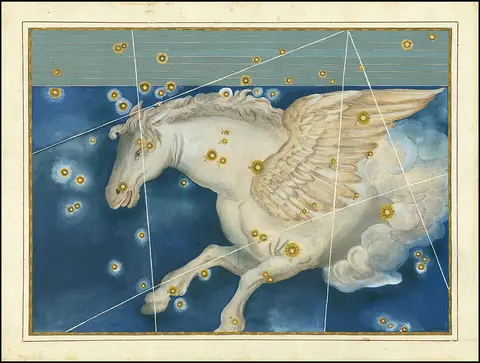 Pegasus
The winged horse who springs from Medusa's neck. Bellerophon tames him with a golden bridle and rides him against the Chimera.
Hesiod, Theogony 278–286 -
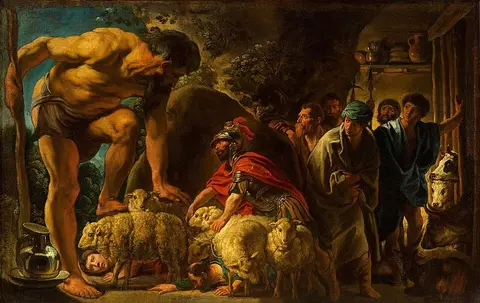 Polyphemus
The man-eating Cyclops who traps Odysseus in his cave. Blinded by 'Nobody', he calls down the curse of Poseidon that keeps Odysseus from home for ten years.
Homer, Odyssey 1.68–73, 9.105–566 -
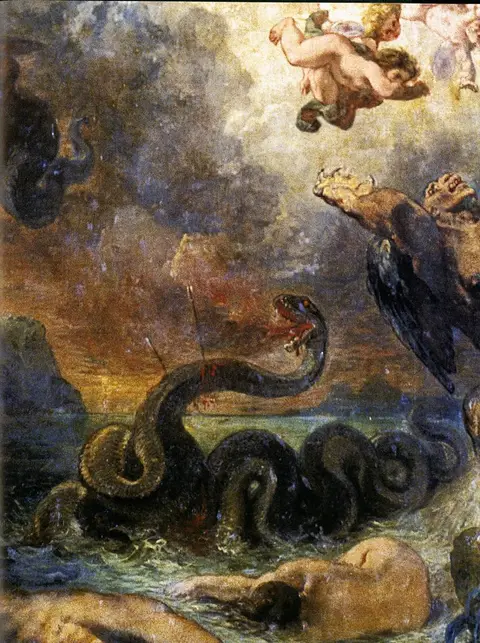 Python
The giant serpent that guarded Delphi. Apollo kills it with his arrows and takes over the oracle. The priestess of Delphi, the Pythia, and the Pythian Games take their name from it.
Homeric Hymn 3 to Apollo 300–374 -
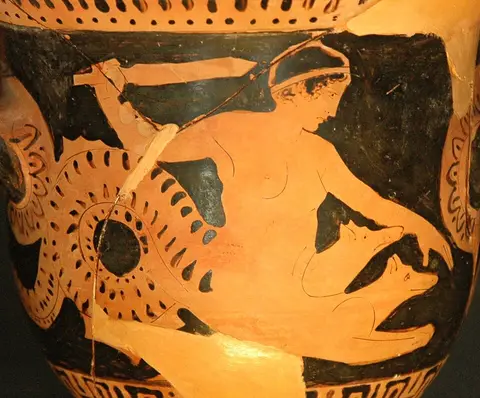 Scylla
The six-headed sea monster who snatches six of Odysseus's men from the deck. 'Between Scylla and Charybdis' means caught between two dangers.
Homer, Odyssey 12.73–126, 12.222–259 -
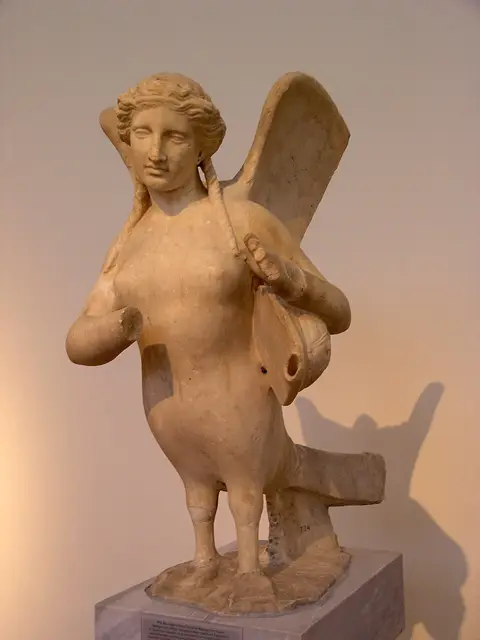 Sirens
Bird-women whose irresistible song lures sailors to their death. Odysseus hears it tied to the mast; Orpheus drowns it out with his lyre.
Homer, Odyssey 12.37–54, 12.158–200 -
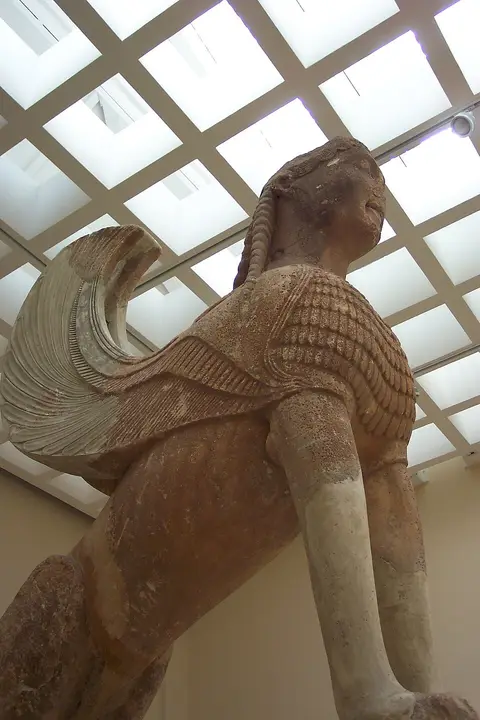 Sphinx
The winged lion with a woman's head who besieges Thebes with her riddle until Oedipus answers it.
Hesiod, Theogony 326–327 -
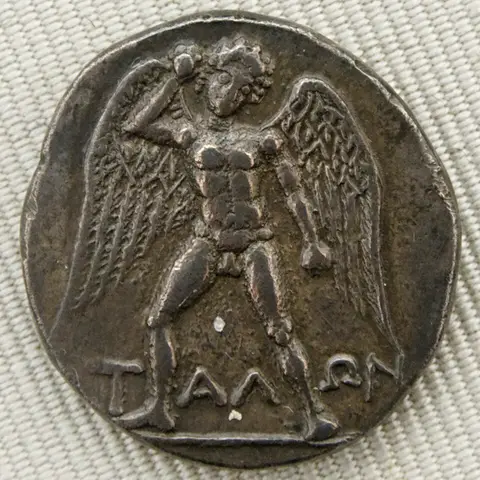 Talos
The bronze giant who guards Crete by running round the island three times a day. Medea brings him down through the single vein in his ankle.
Apollonius of Rhodes, Argonautica 4.1638–1688 -
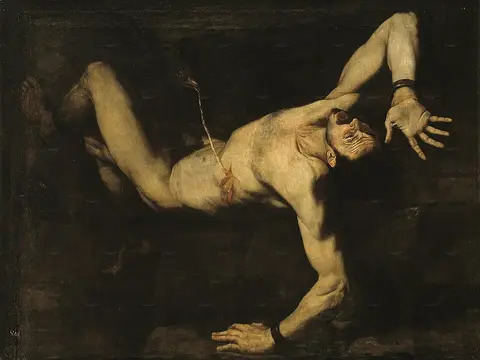 Tityos
The giant who attacks Leto and is shot down by Apollo and Artemis. In the underworld two vultures tear at his liver forever.
Homer, Odyssey 7.321–324, 11.576–581 -
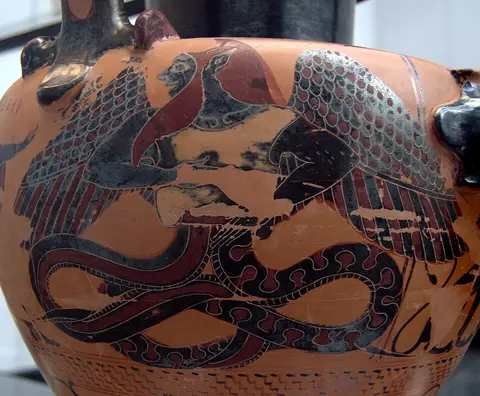 Typhon
The most fearsome monster of Greek myth, the last challenger to Zeus's rule. Zeus buries him under Mount Etna, whose eruptions are his fire.
Hesiod, Theogony 820–880
Greek monsters: common questions
Who is the mother of monsters in Greek mythology?
Echidna, half nymph and half serpent. With Typhon she bears Orthrus, Cerberus, the Hydra and, in most accounts, the Chimera; many of the monsters the heroes kill belong to this one family.
Hesiod, Theogony 295–332What is the most powerful monster in Greek mythology?
Typhon, the last challenger to Zeus's rule, with a hundred serpent heads and eyes that flash fire. In Apollodorus he even defeats Zeus for a time, before Zeus buries him under Mount Etna.
Hesiod, Theogony 820–880; Apollodorus, Library 1.6.3How many heads does Cerberus have?
Hesiod gives him fifty; most later writers and artists give him three. Cerberus lets the dead into the underworld and lets no one out, until Heracles drags him up to the daylight in his last labour.
Hesiod, Theogony 310–312; Apollodorus, Library 2.5.12Which monsters did Heracles fight?
Among his labours: the Nemean lion, the Hydra, the dog Orthrus and the giant Geryon, and finally Cerberus. He also helps the gods defeat the Giants. The twelve labours on a map →
Apollodorus, Library 2.5.1–2.5.12, 1.6.1–1.6.2Was Medusa always a monster?
In Hesiod she is one of the three Gorgons, the only mortal one. Ovid tells a later story: she was once a beautiful girl, and after Poseidon assaults her in Athena's temple the goddess turns her hair to snakes. Medusa →
Hesiod, Theogony 270–283; Ovid, Metamorphoses 4.794–803Which Greek monsters lived in what is now Turkey?
The Chimera lived in Lycia, where the eternal flames of Yanartaş near Antalya were linked to her; Typhon was born in Cilicia and kept Zeus captive in the Corycian cave near Silifke. Myths in Anatolia →
Homer, Iliad 6.179–183; Pliny, Natural History 2.236; Apollodorus, Library 1.6.3