Wife of Cepheus, king of Ethiopia, and mother of Andromeda. She boasts that she is more beautiful than the Nereids. The boast comes back on her land as a sea monster, and on her daughter as chains on a rock. She is remembered in the sky as a constellation seated on her throne.
In brief
- According to Apollodorus, Cassiopeia competes in beauty with the Nereids, the sea nymphs, and claims to be more beautiful than all of them.
- The angry Nereids turn to Poseidon. Poseidon punishes the land with a flood and a sea monster. The oracle of Ammon declares that there will be no deliverance unless Andromeda is given to the monster.
- Perseus kills the monster and marries Andromeda.
Family
Parents
No parents: one of the first beings.
Consorts and partners
Children
To see the whole family, open the Cassiopeia family tree → · how is Cassiopeia related to Zeus? → · compare with someone else →
The throne that turns upside down
According to the ancient star catalogues, Cassiopeia, Cepheus, Andromeda and Perseus are placed side by side in the sky. Cassiopeia sits on her throne.
According to Hyginus, as a punishment the constellation is also seen upside down as it turns through the night. This 'W'-shaped constellation of the northern sky circles the Pole Star and can be seen all year round.
Hyginus, Astronomica 2.10; Eratosthenes, Catasterismi 16Cassiopeia in art
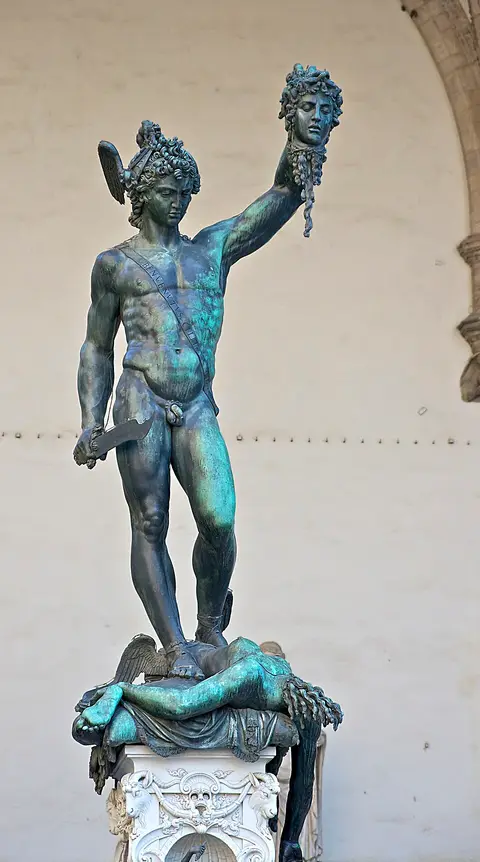
1work depicting Cassiopeia, in date order, from ancient vases to paintings of the Renaissance and after. All are in the public domain or openly licensed. Click an image for the full-size version and licence details. For scene-by-scene readings of famous vases, see Greek vase painting.

Stories featuring Cassiopeia
Quick questions
- Who were Cassiopeia's consorts and lovers?
- The partners named in the sources: Cepheus.
- Who are Cassiopeia's children?
- This atlas records 1 child of Cassiopeia: Andromeda. See the family tree →
- What are Cassiopeia's symbols?
- Throne.
- Which myths is Cassiopeia in?
- Perseus and Medusa.
Ancient sources
This page is based on the texts below. Numbers refer to books and lines.
- Apollodorus, Library 2.4.3
- Hyginus, Astronomica 2.10
- Eratosthenes, Catasterismi 16
- Ovid, Metamorphoses 4.663–803