God of the sea, of earthquakes and of horses. Homer calls him 'earth-shaker'. His anger keeps Odysseus from home for ten years.
In brief
- A son of Cronus and Rhea. Swallowed by his father, he is freed by Zeus.
- When the brothers divide the world, the sea falls to him. In the Iliad he says it himself: 'we drew lots'.
- His wife is the Nereid Amphitrite. Because Odysseus blinds his son, the Cyclops Polyphemus, Poseidon prevents his homecoming for years.
Family
Consorts and partners
Children
* Only in some accounts.
To see the whole family, open the Poseidon family tree → · how is Poseidon related to Zeus? → · compare with someone else →
The contest for Athens
Poseidon and Athena compete to be patron of Athens. Poseidon strikes the Acropolis with his trident and produces a salt spring; Athena plants an olive tree. The judges choose Athena, and the city takes her name.
Apollodorus, Library 3.14.1The walls of Troy
In the Iliad Poseidon recalls how he and Apollo once served King Laomedon of Troy for a year: Poseidon built the city walls, Apollo herded the king's cattle. Laomedon refused to pay them, one reason Poseidon sides with the Greeks in the war.
Homer, Iliad 21.441–457, 7.452–453Poseidon in art
9works depicting Poseidon, in date order, from ancient vases to paintings of the Renaissance and after. All are in the public domain or openly licensed. Click an image for the full-size version and licence details. For scene-by-scene readings of famous vases, see Greek vase painting.


Stories featuring Poseidon
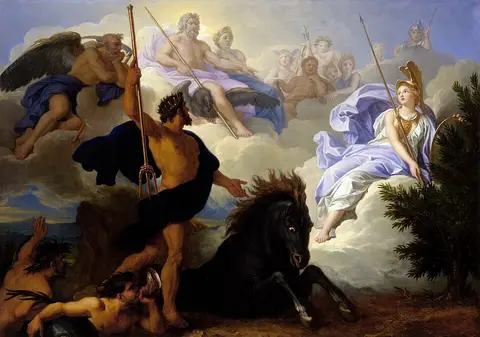 Athena and Poseidon: the contest for Athens
The age of the gods
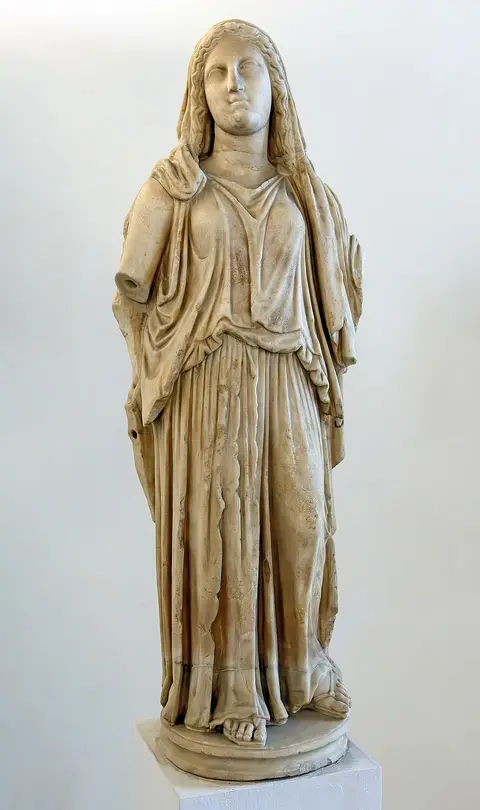 Erysichthon: the man who ate himself
The age of the gods
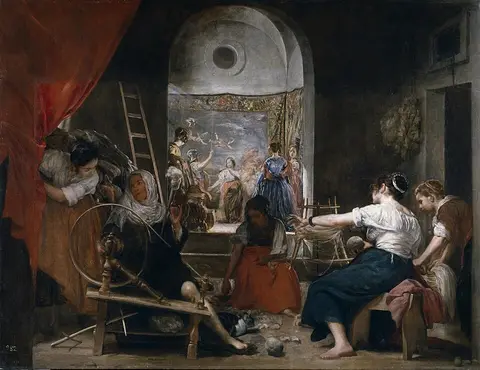 Arachne and Athena
The age of the gods
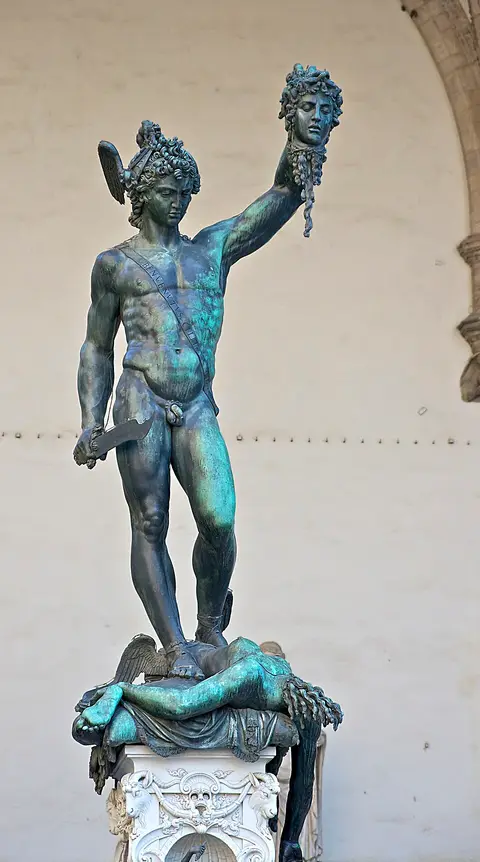 Perseus and Medusa
The age of heroes
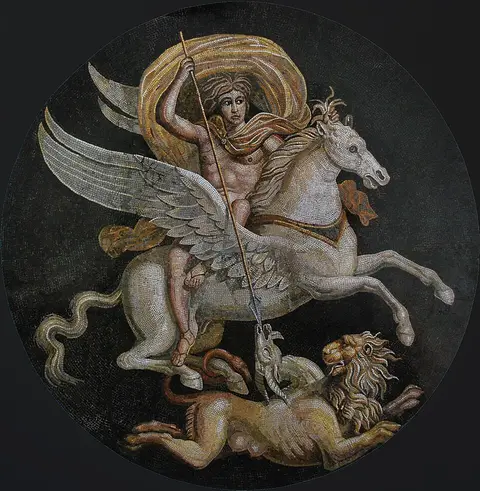 Bellerophon and the Chimera
The age of heroes
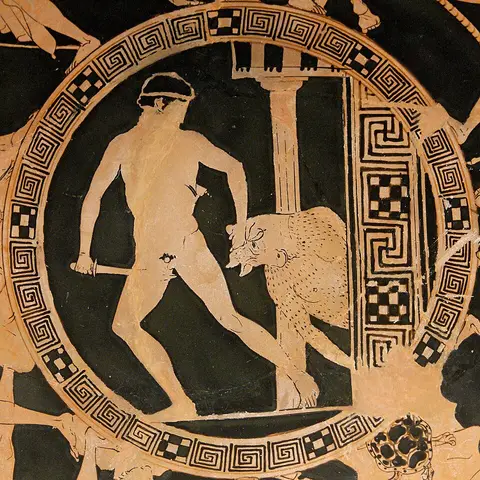 Theseus' road to Athens: six bandits
The age of heroes
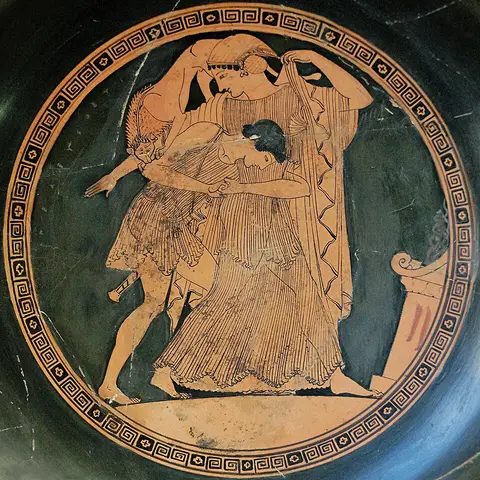 The wedding of Peleus and Thetis
The Trojan War and after
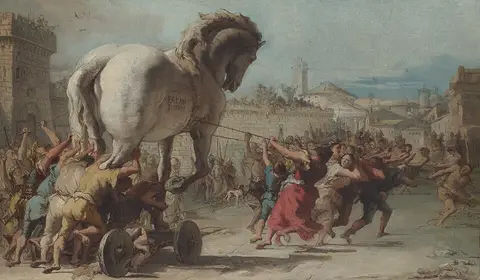 The Trojan War
 and after
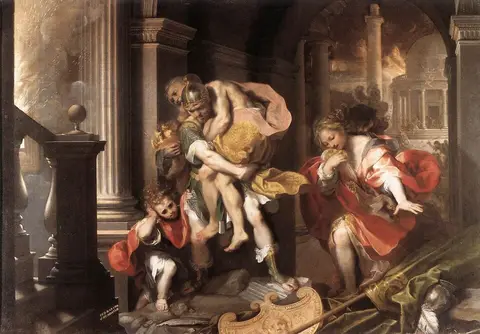 The journey of Aeneas: from Troy to Rome
The Trojan War and after
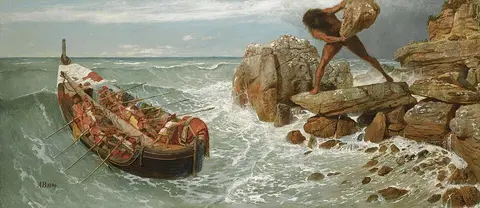 Odysseus and Polyphemus
The Trojan War and after
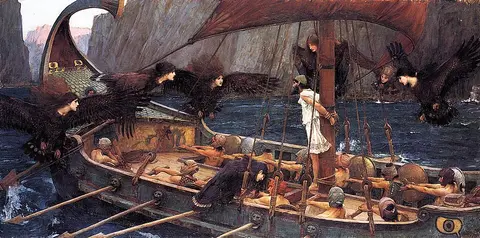 The return of Odysseus
The Trojan War and after
Quick questions
- Who are Poseidon's parents?
- In the main account, Poseidon's father is Cronus and mother is Rhea. Hesiod, Theogony 453–458
- Who were Poseidon's consorts and lovers?
- The partners named in the sources: Aethra, Amphitrite, Medusa, Demeter and Tyro.
- Who are Poseidon's children?
- This atlas records 11 children of Poseidon: Amycus, Bellerophon, Idas, Orion, Pegasus, Pelias, Polyphemus, Theseus, Triton, Chrysaor and Neleus. See the family tree →
- What is Poseidon's Roman name?
- In Roman mythology Poseidon is known as Neptune. All Greek and Roman names →
- What are Poseidon's symbols?
- Trident, Horse, Dolphin, Bull.
- Which myths is Poseidon in?
- Athena and Poseidon: the contest for Athens · Erysichthon: the man who ate himself · Arachne and Athena · Perseus and Medusa · Bellerophon and the Chimera · Theseus' road to Athens: six bandits · The wedding of Peleus and Thetis · The Trojan War, and 3 more.
Ancient sources
This page is based on the texts below. Numbers refer to books and lines.