The great hero of Athens. He enters the Labyrinth on Crete, kills the Minotaur and finds his way out thanks to Ariadne's thread.
Follow Theseus's road to Athens on a map →
In brief
- The son of King Aegeus of Athens and Aethra, princess of Troezen; some accounts make Poseidon his real father.
- Aegeus hides a sword and sandals under a rock for his son to find when he is grown. Theseus lifts the rock, takes them and sets out for Athens, clearing the road of bandits as he goes.
- Athens must send young men and women to Crete as food for the Minotaur. Theseus volunteers, enters the Labyrinth with the thread Ariadne gives him, kills the monster and follows the thread back out.
Family
Parents
Children
Siblings
½ Half-sibling: only one parent in common.
To see the whole family, open the Theseus family tree → · how is Theseus related to Zeus? → · compare with someone else →
The bed of Procrustes
One of the bandits on the road to Athens is Procrustes, who lays travellers on a bed and stretches the short ones or cuts off the limbs of the tall ones to make them fit. Theseus does the same to him. 'A Procrustean bed' still means forcing everything into one arbitrary mould.
Plutarch, Theseus 11; Apollodorus, Epitome 1.4The black sail
Theseus promises that if he succeeds he will hoist a white sail on his way home. After leaving Ariadne on Naxos he forgets to change the black one. Aegeus sees it, thinks his son is dead and throws himself to his death: from the Acropolis according to Apollodorus and Pausanias, into the sea according to Hyginus, who says the Aegean takes its name from him.
Apollodorus, Epitome 1.10; Hyginus, Fabulae 43; Plutarch, Theseus 22Theseus on Greek vases
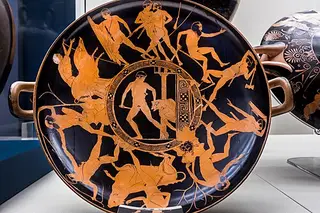
Theseus in art
16works depicting Theseus, in date order, from ancient vases to paintings of the Renaissance and after. All are in the public domain or openly licensed. Click an image for the full-size version and licence details. For scene-by-scene readings of famous vases, see Greek vase painting.


Stories featuring Theseus
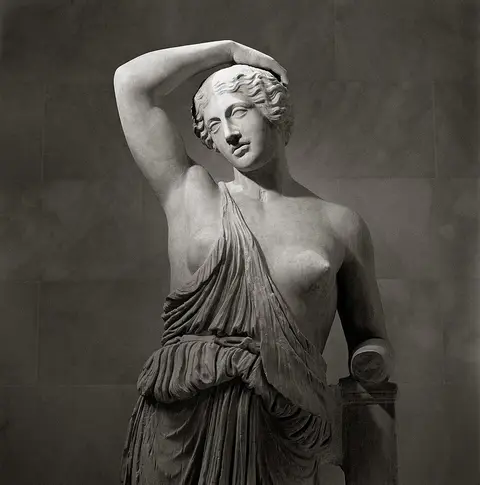 The Amazons: warrior women of the Black Sea
The age of heroes
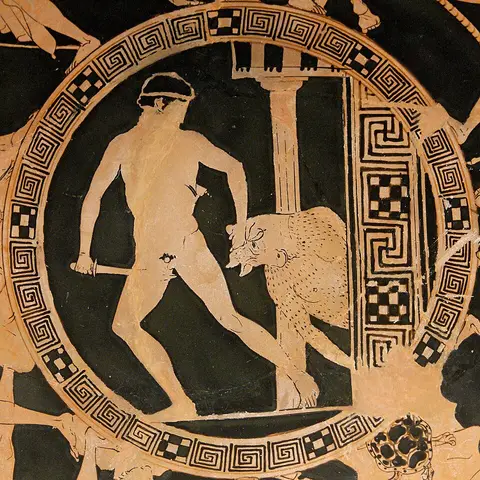 Theseus' road to Athens: six bandits
The age of heroes
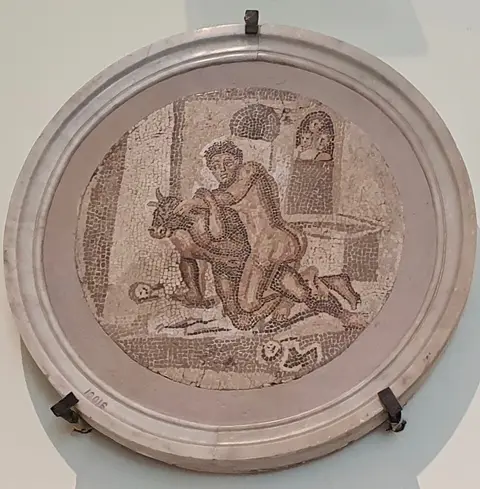 Theseus and the Minotaur
The age of heroes
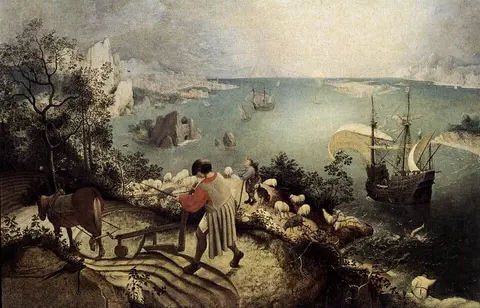 Daedalus and Icarus
The age of heroes
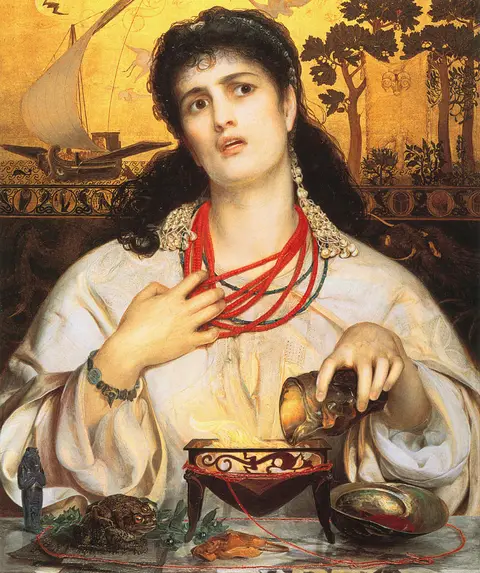 Medea in Corinth
The age of heroes
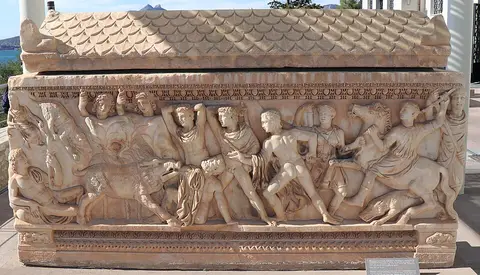 The Calydonian boar hunt
The age of heroes
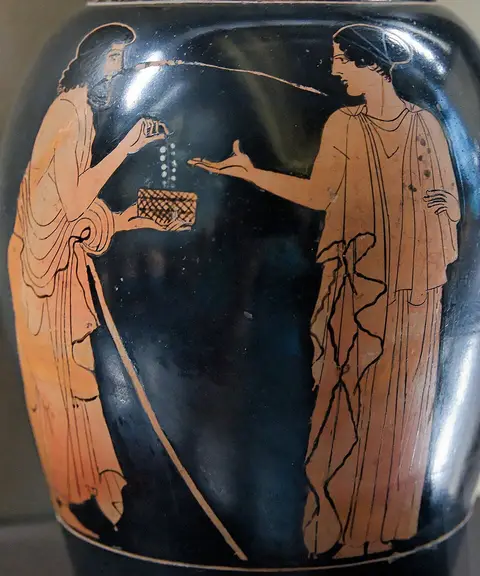 The Seven against Thebes and the Epigoni
The age of heroes
Quick questions
- How did Theseus kill the Minotaur?
- Athens had to send young men and women to Crete every year as food for the Minotaur, and Theseus volunteered to go. Ariadne, daughter of King Minos, gave him a thread; he tied it at the entrance of the Labyrinth, killed the monster and followed the thread back out. Theseus and the Minotaur → Apollodorus, Epitome 1.7–1.9
- Is the Aegean Sea named after Theseus's father?
- According to Hyginus, yes. Theseus had promised to raise a white sail if he survived but forgot to change the black one. Seeing it, his father Aegeus thought his son was dead and threw himself down. Apollodorus and Pausanias say he leapt from the Acropolis; Hyginus says he leapt into the sea, which was named the Aegean after him. Apollodorus, Epitome 1.10; Pausanias, Description of Greece 1.22.5; Hyginus, Fabulae 43
- Who are Theseus' parents?
- In the main account, Theseus' father is Aegeus and mother is Aethra. Other accounts name other parents; the family box above lists them all with their sources. Apollodorus, Library 3.15.7
- Who were Theseus' consorts and lovers?
- The partners named in the sources: Ariadne, Hippolyta, Phaedra and Antiope.
- Who are Theseus' children?
- This atlas records 1 child of Theseus: Hippolytus. See the family tree →
- What are Theseus' symbols?
- Sword, Sandals, Ball of thread.
- Which myths is Theseus in?
- The Amazons: warrior women of the Black Sea · Theseus' road to Athens: six bandits · Theseus and the Minotaur · Daedalus and Icarus · Medea in Corinth · The Calydonian boar hunt · The Seven against Thebes and the Epigoni.
Ancient sources
This page is based on the texts below. Numbers refer to books and lines.
- Plutarch, Theseus
- Apollodorus, Library 3.15.7; Apollodorus, Epitome 1.1–1.24
- Bacchylides 17–18
- Euripides, Hippolytus