King of Ithaca and the craftiest of the Greek heroes. The wooden horse is his idea. His ten-year journey home from Troy is the subject of the Odyssey.
Follow Odysseus's journey on a map, stop by stop →
In brief
- The son of Laertes and Anticlea and husband of Penelope. Homer calls him polytropos, 'man of many turns'.
- The wooden horse that takes Troy is his plan. On his way home he wanders the seas for ten years because of the anger of Poseidon.
- Twenty years after leaving he returns to Ithaca in disguise, defeats the nobles courting Penelope in the contest of the bow, and takes back his house.
Family
Parents
Homer, Odyssey 11.84–86; 1.429–433
Sophocles, Philoctetes 417
Children
Siblings
To see the whole family, open the Odysseus family tree → · how is Odysseus related to Zeus? → · compare with someone else →
The Cyclops's cave: 'My name is Nobody'
Odysseus and his men are trapped in the cave of Polyphemus, the one-eyed son of Poseidon. Odysseus tells the giant his name is 'Nobody' (Outis), makes him drunk and blinds his single eye with a heated stake. When Polyphemus shouts for help, the other Cyclopes ask who is hurting him; he answers 'Nobody!', so no one comes. Escaping, Odysseus shouts his real name, and the Cyclops's curse follows him home.
Homer, Odyssey 9.105–542The faithful dog Argos
When Odysseus comes home disguised as a beggar after twenty years, no one recognises him except his old dog Argos, lying on a dung heap. Argos wags his tail and drops his ears but is too weak to rise. Odysseus hides a tear. The dog dies as soon as he has seen his master.
Homer, Odyssey 17.291–327Words of Odysseus
“Cyclops, you ask my name? My name is Nobody. My mother and father and all my friends call me Nobody.”
“There is nothing stronger or finer than when husband and wife keep house together, of one mind.”
Our own plain translations: they keep the sense, not the exact words. Play “Who said it?” →
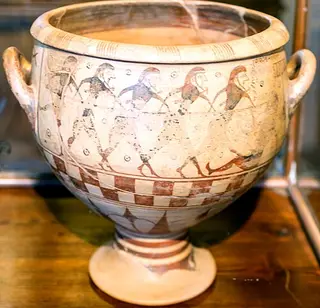
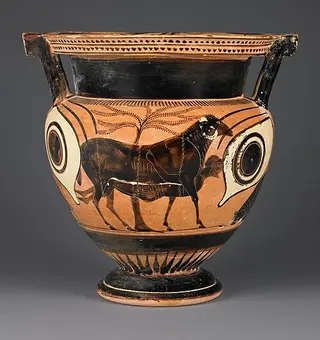
Odysseus on Greek vases
Odysseus in art
16works depicting Odysseus, in date order, from ancient vases to paintings of the Renaissance and after. All are in the public domain or openly licensed. Click an image for the full-size version and licence details. For scene-by-scene readings of famous vases, see Greek vase painting.


Stories featuring Odysseus
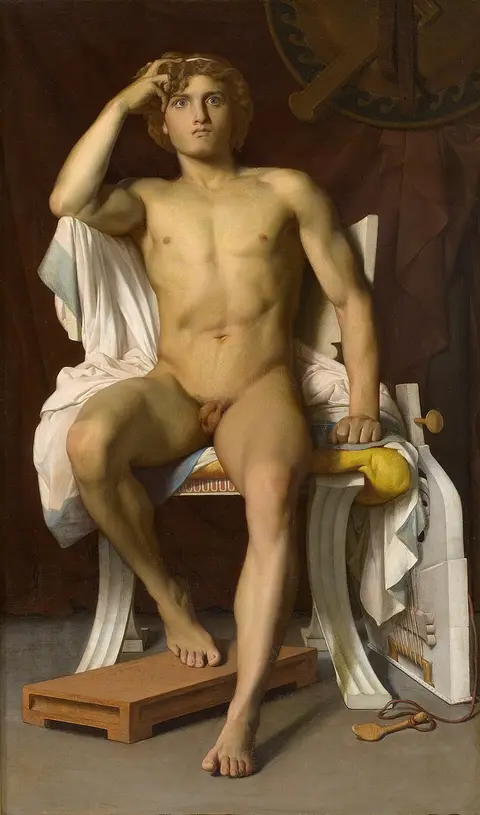 The youth of Achilles
The Trojan War and after
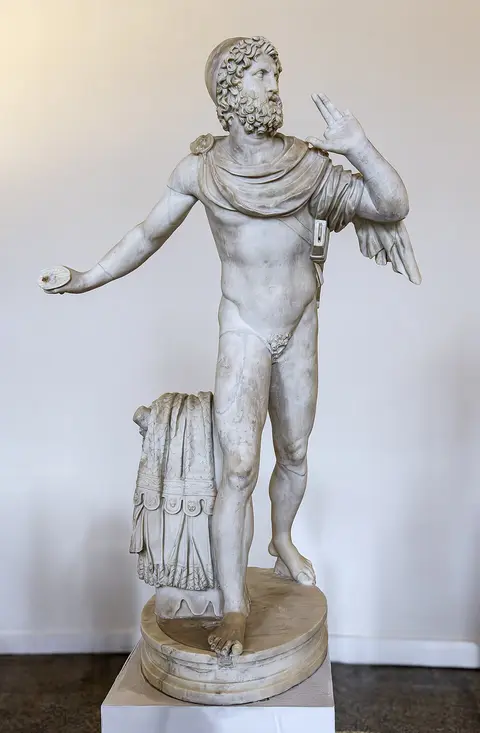 Palamedes: the revenge of Odysseus
The Trojan War and after
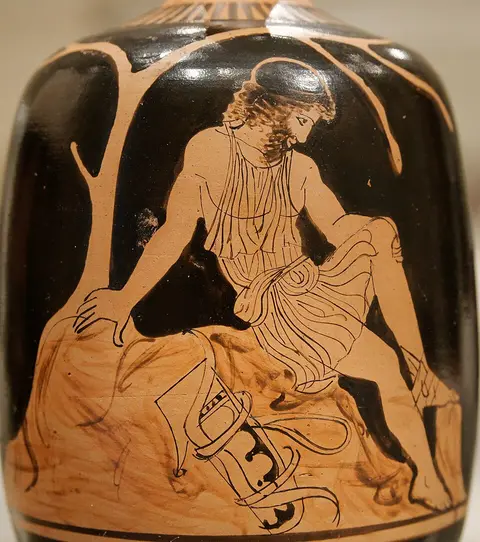 Philoctetes on Lemnos: the wounded archer
The Trojan War and after
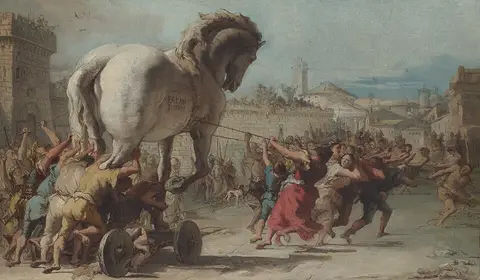 The Trojan War
 and after
The death of AchillesThe Trojan War and after
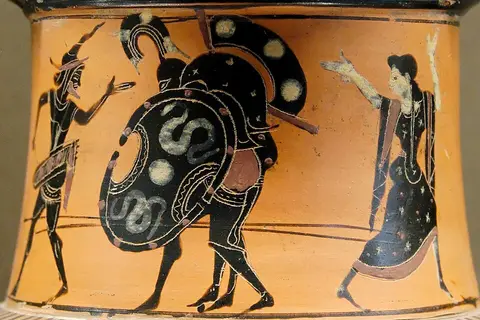 The madness of Ajax: the armour of Achilles
The Trojan War and after
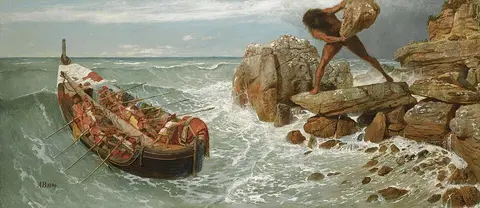 Odysseus and Polyphemus
The Trojan War and after
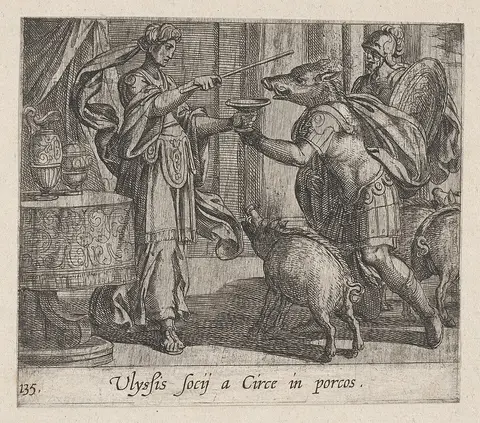 Odysseus and Circe
The Trojan War and after
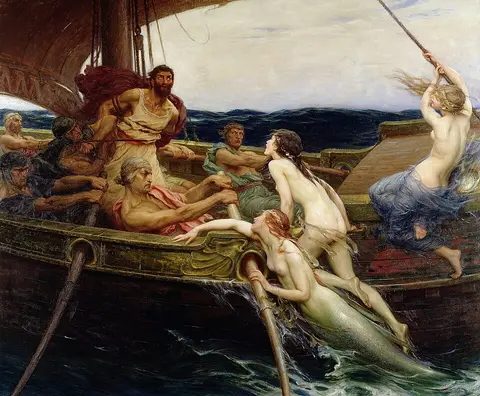 Odysseus and the Sirens
The Trojan War and after
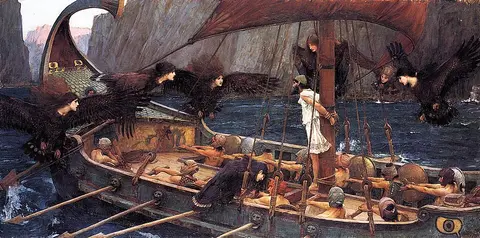 The return of Odysseus
The Trojan War and after
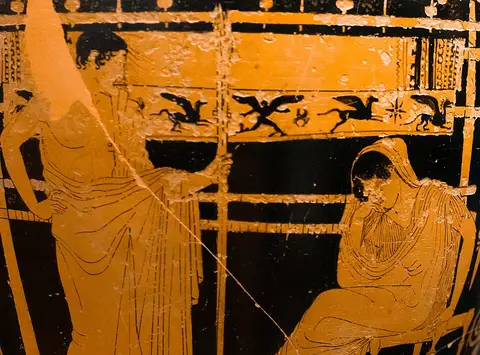 The journey of Telemachus: the son who went looking for his father
The Trojan War and after
Quick questions
- Who are Odysseus' parents?
- In the main account, Odysseus' father is Laertes and mother is Anticlea. Other accounts name other parents; the family box above lists them all with their sources. Homer, Odyssey 11.84–86; 1.429–433
- Who were Odysseus' consorts and lovers?
- The partners named in the sources: Calypso, Circe and Penelope.
- Who are Odysseus' children?
- This atlas records 1 child of Odysseus: Telemachus. See the family tree →
- What is Odysseus' Roman name?
- In Roman mythology Odysseus is known as Ulysses. All Greek and Roman names →
- What are Odysseus' symbols?
- Bow, Oar, Wooden horse.
- Which myths is Odysseus in?
- The youth of Achilles · Palamedes: the revenge of Odysseus · Philoctetes on Lemnos: the wounded archer · The Trojan War · The death of Achilles · The madness of Ajax: the armour of Achilles · Odysseus and Polyphemus · Odysseus and Circe, and 3 more.
Ancient sources
This page is based on the texts below. Numbers refer to books and lines.
- Homer, Odyssey 1–24
- Homer, Iliad 2.631–637, 10
- Apollodorus, Epitome 3.6–7.40