Son of Odysseus and Penelope, a baby when his father left for Troy. Twenty years later, guided by Athena, he sets out to look for him, and on his return helps him punish the suitors.
In brief
- To avoid the Trojan War, Odysseus pretends to be mad. According to Hyginus, Palamedes puts the baby Telemachus in front of the plough Odysseus is driving; when Odysseus swerves, it is clear he is not mad. In Apollodorus, Palamedes draws his sword as if to kill the child, and Odysseus drops the act to protect his son.
- The first four books of the Odyssey are his story (the Telemachy). Athena guides him, first disguised as Mentes and then as Mentor. Telemachus visits Nestor at Pylos and Menelaus at Sparta.
- Back home, he meets his father in the hut of the swineherd Eumaeus and helps him kill the suitors.
Family
To see the whole family, open the Telemachus family tree → · how is Telemachus related to Zeus? → · compare with someone else →
Mentor
Mentor, whose form Athena takes to guide Telemachus, is an old friend of Odysseus. Today the word 'mentor' means a trusted adviser or guide.
Homer, Odyssey 2.267–295The first novel translated into Turkish
In 1699 the French writer Fénelon wrote The Adventures of Telemachus, a novel about Telemachus's travels. Translated by Yusuf Kâmil Pasha as Terceme-i Telemak and published in 1862, it is regarded as the first Western novel translated into Turkish.
Telemachus in art
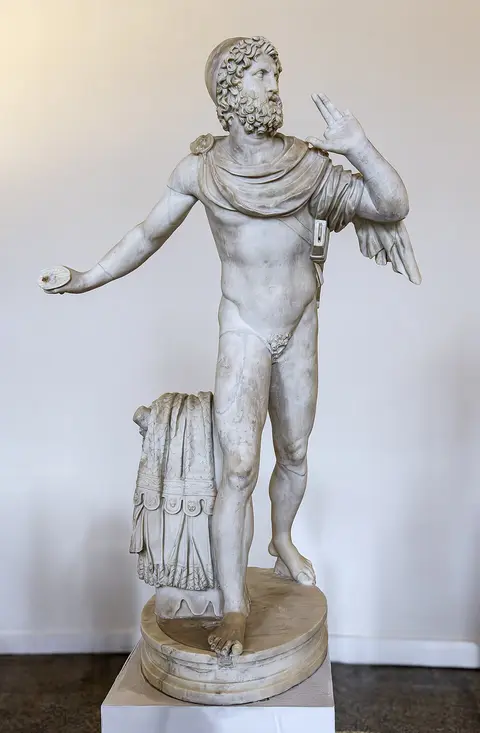
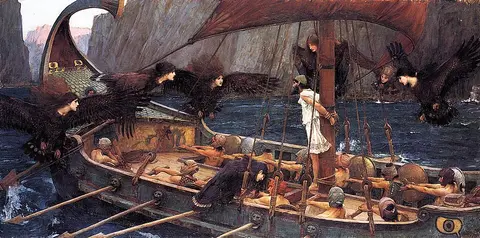
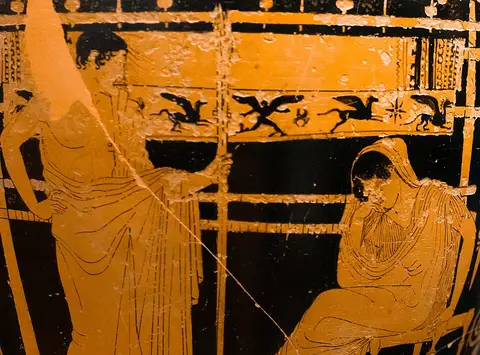
14works depicting Telemachus, in date order, from ancient vases to paintings of the Renaissance and after. All are in the public domain or openly licensed. Click an image for the full-size version and licence details. For scene-by-scene readings of famous vases, see Greek vase painting.


Stories featuring Telemachus
Quick questions
- Who are Telemachus' parents?
- In the main account, Telemachus' father is Odysseus and mother is Penelope. Homer, Odyssey 1.215–216
- Which myths is Telemachus in?
- Palamedes: the revenge of Odysseus · The return of Odysseus · The journey of Telemachus: the son who went looking for his father.
Ancient sources
This page is based on the texts below. Numbers refer to books and lines.
- Homer, Odyssey 1–4, 15–24
- Apollodorus, Epitome 3.7
- Hyginus, Fabulae 95