Goddess of wisdom, strategy and craft. She springs fully armed from the head of Zeus, and is the patron of Athens and the guide of many heroes.
In brief
- Zeus swallows his pregnant wife Metis; in due time Athena is born from his head.
- She competes with Poseidon to be patron of Athens and wins by planting an olive tree.
- She helps Perseus, Heracles, Jason and Odysseus. She sets the head of Medusa, which Perseus brings her, in the middle of her shield.
Family
Siblings
½ Half-sibling: only one parent in common.
To see the whole family, open the Athena family tree → · how is Athena related to Zeus? → · compare with someone else →
Born from the head
Hesiod says Athena was born from the head of Zeus. Apollodorus adds that Prometheus, or as others say Hephaestus, split Zeus's head with an axe. The Homeric Hymn describes her leaping out in golden armour, shaking her spear, while Olympus trembles and the sea heaves.
Hesiod, Theogony 924–926; Apollodorus, Library 1.3.6; Homeric Hymn 28 to AthenaArachne in Lydia
The young Lydian weaver Arachne claims to weave better than Athena. They compete; Arachne's tapestry shows the gods' misdeeds and is flawless. Furious, Athena tears it and finally turns Arachne into a spider. The story is set in Lydia, in today's western Turkey, and gives us the word 'arachnid'.
Ovid, Metamorphoses 6.1–145The Palladium of Troy
An ancient statue of Athena, the Palladium, was believed to protect Troy: the city could not fall while it remained there. Odysseus and Diomedes slip into the city at night and steal it.
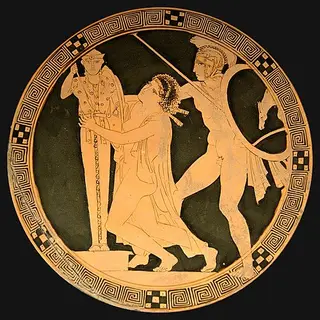
Apollodorus, Epitome 5.10–13Athena on Greek vases
Athena in art
16works depicting Athena, in date order, from ancient vases to paintings of the Renaissance and after. All are in the public domain or openly licensed. Click an image for the full-size version and licence details. For scene-by-scene readings of famous vases, see Greek vase painting.


Stories featuring Athena
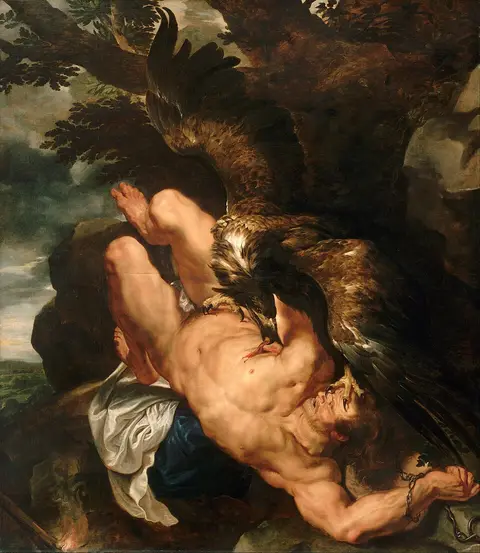 Prometheus's fire and Pandora
The age of the gods
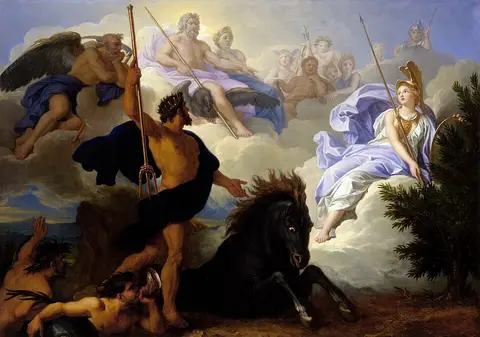 Athena and Poseidon: the contest for Athens
The age of the gods
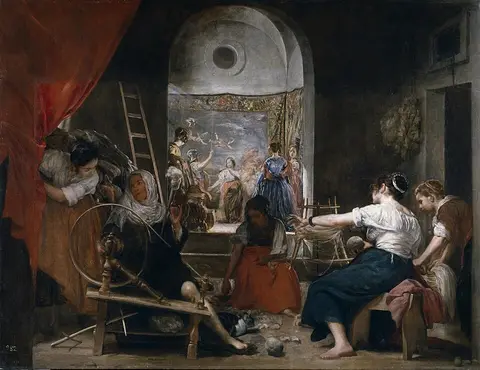 Arachne and Athena
The age of the gods
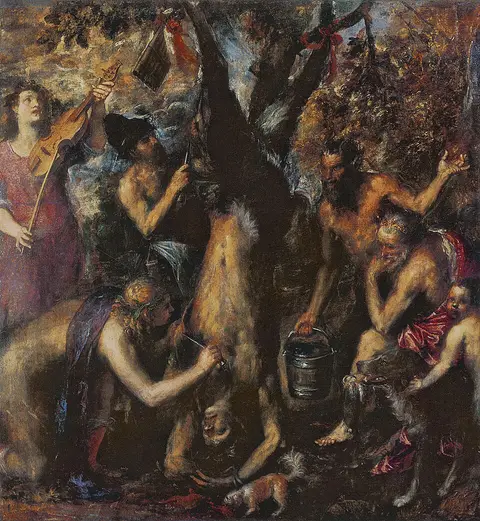 Marsyas: the satyr who challenged Apollo
The age of the gods
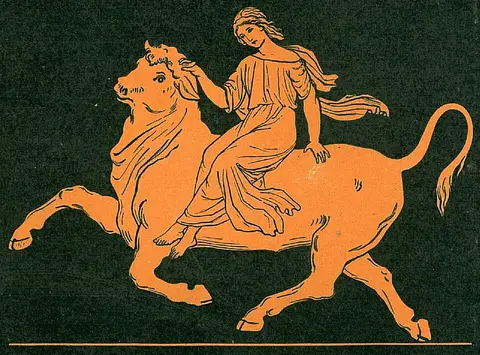 Cadmus and Europa: the bull, the dragon and the alphabet
The age of heroes
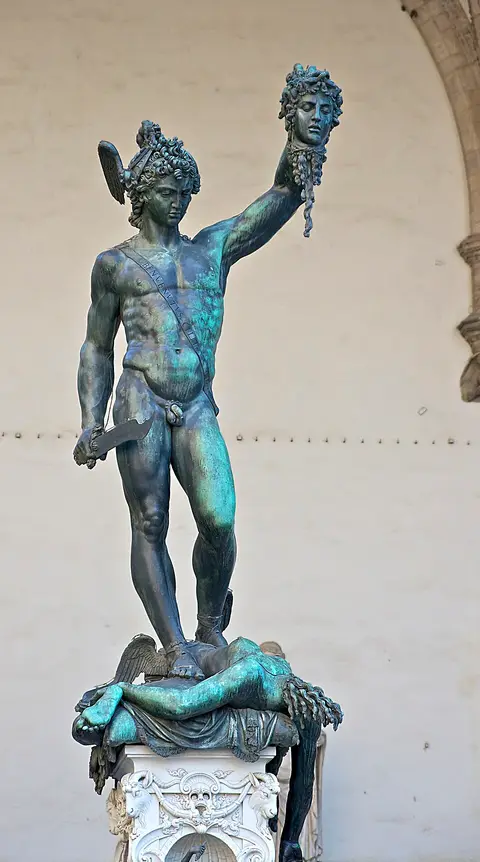 Perseus and Medusa
The age of heroes
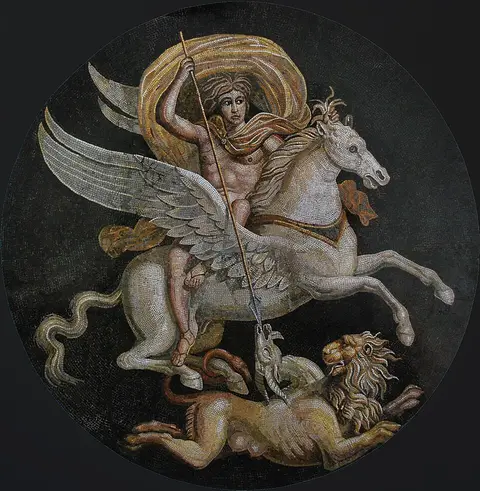 Bellerophon and the Chimera
The age of heroes
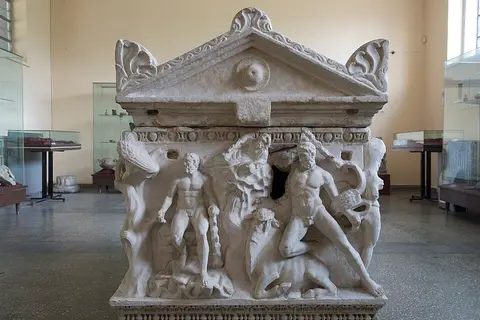 The twelve labours of Heracles
The age of heroes
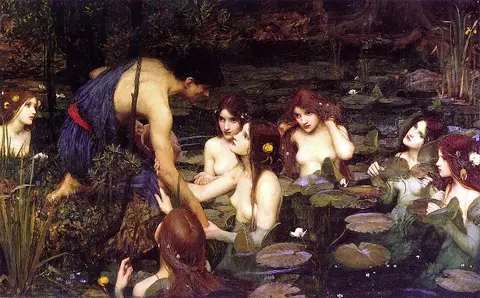 Jason and the Argonauts
The age of heroes
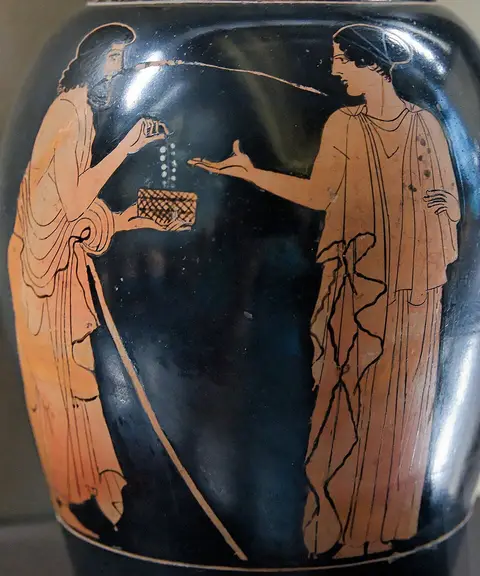 The Seven against Thebes and the Epigoni
The age of heroes
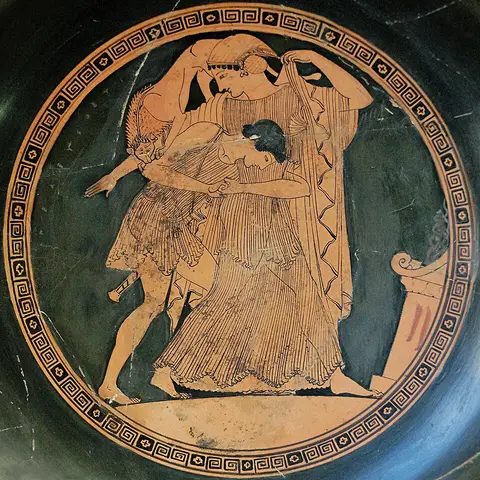 The wedding of Peleus and Thetis
The Trojan War and after
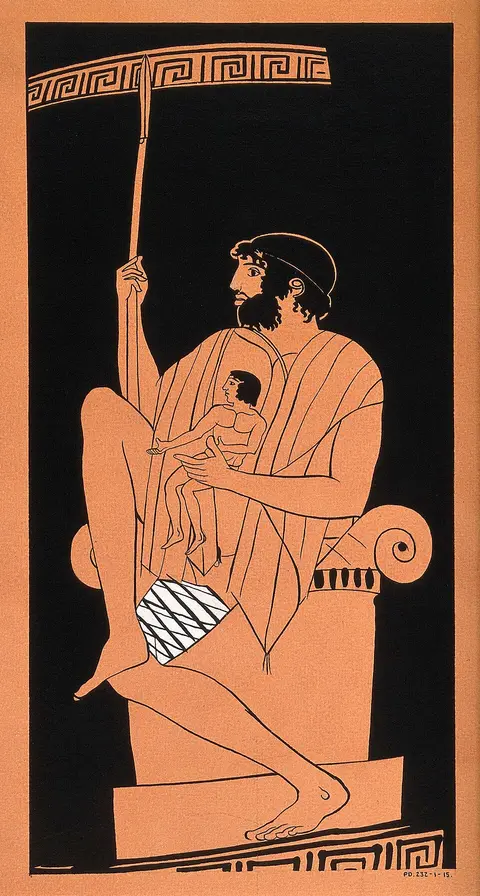 Telephus: the hero of Pergamon
The Trojan War and after
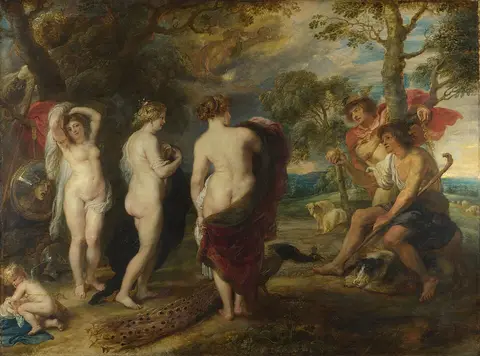 The judgement of Paris
The Trojan War and after
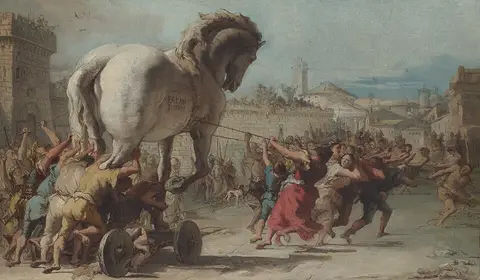 The Trojan War
 and after
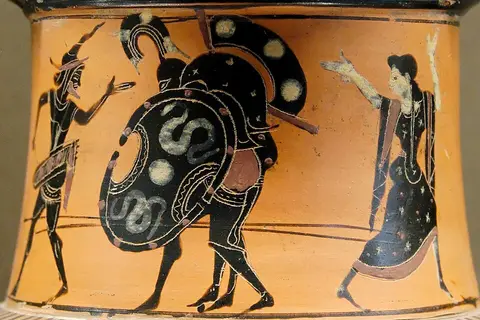 The madness of Ajax: the armour of Achilles
The Trojan War and after
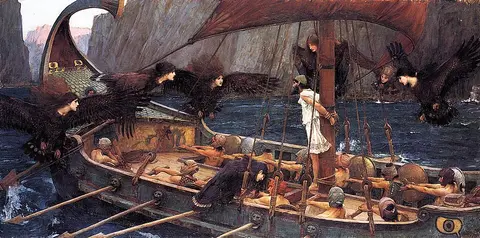 The return of Odysseus
The Trojan War and after
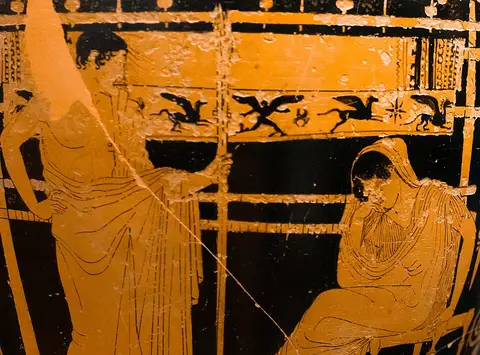 The journey of Telemachus: the son who went looking for his father
The Trojan War and after
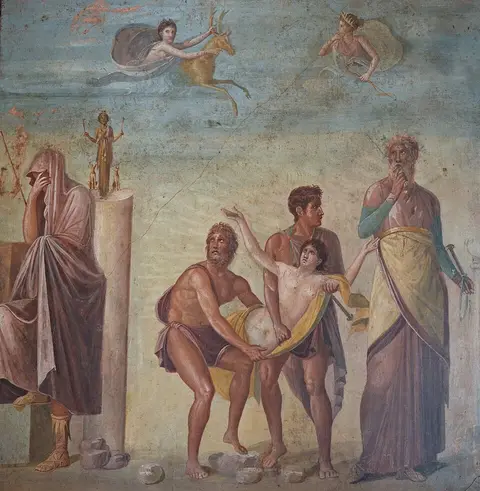 Iphigenia among the Taurians
The Trojan War and after
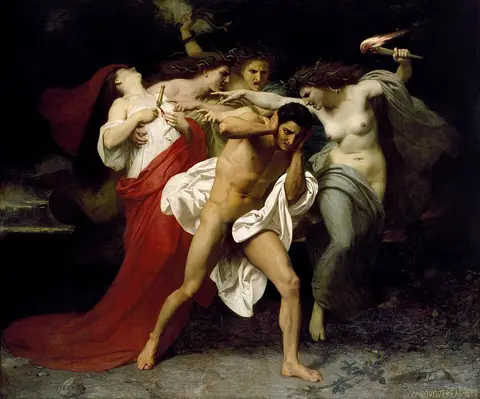 The curse of the house of Atreus
The Trojan War and after
Quick questions
- Who are Athena's parents?
- In the main account, Athena's father is Zeus and mother is Metis. Hesiod, Theogony 886–900, 924–926
- What is Athena's Roman name?
- In Roman mythology Athena is known as Minerva. All Greek and Roman names →
- What are Athena's symbols?
- Owl, Olive tree, Aegis, Helmet and spear.
- Which myths is Athena in?
- Prometheus's fire and Pandora · Athena and Poseidon: the contest for Athens · Arachne and Athena · Marsyas: the satyr who challenged Apollo · Cadmus and Europa: the bull, the dragon and the alphabet · Perseus and Medusa · Bellerophon and the Chimera · The twelve labours of Heracles, and 11 more.
Ancient sources
This page is based on the texts below. Numbers refer to books and lines.
- Hesiod, Theogony 886–900, 924–926
- Homeric Hymn 28 to Athena
- Apollodorus, Library 1.3.6, 3.14.1
- Ovid, Metamorphoses 6.1–145