Iphigenia among the Taurians
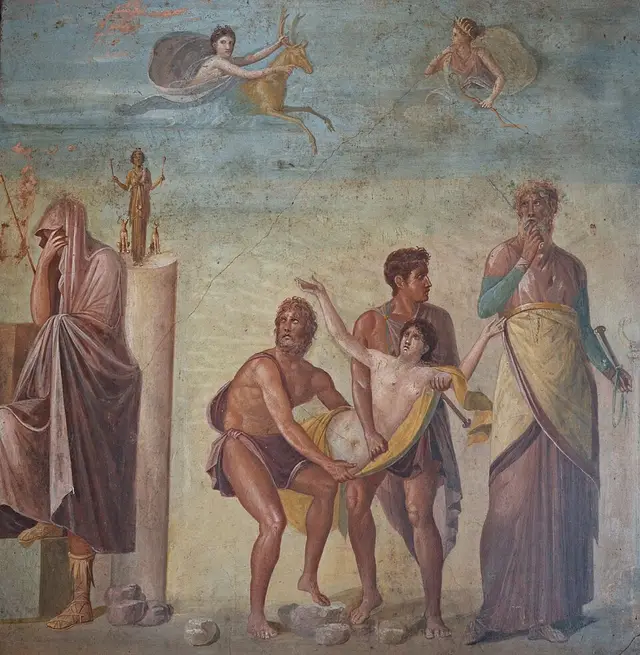
As she is about to be sacrificed at Aulis, Artemis snatches Iphigenia away and leaves a deer in her place. Iphigenia becomes priestess of a temple in the land of the Taurians, north of the Black Sea, where strangers washed up on the shore are sacrificed. One day one of the men brought to be sacrificed is her brother Orestes.
In this story
-
The deer at Aulis
The Greek fleet is waiting at Aulis for a wind. The seer Calchas declares that Artemis's anger will only end if Agamemnon's daughter Iphigenia is sacrificed. The girl is brought on the pretext of a wedding.
According to the summary of the lost epic Cypria, and in Euripides, as the knife comes down Artemis snatches the girl away and leaves a deer on the altar. Iphigenia is carried off to the land of the Taurians.
Cypria (summary by Proclus); Euripides, Iphigenia among the Taurians 1–41 -
Strangers on the shore
The Taurians were a people of what is now Crimea. Herodotus says they sacrificed shipwrecked strangers to a virgin goddess whom they called Iphigenia.
In Euripides, Iphigenia is the priestess who prepares these victims in the temple of Artemis. One day two young Greeks are captured. One of them is Orestes, the brother she believes dead. He has come on Apollo's orders to carry the statue of Artemis back to Greece.
Herodotus 4.103; Euripides, Iphigenia among the Taurians 34–66 -
The letter and the escape
Iphigenia wants to send one of the strangers to Argos with a letter. As they discuss who will carry it, brother and sister recognise each other. Ancient critics counted this recognition scene among the finest in tragedy.
Iphigenia tricks King Thoas: she tells him the statue has been polluted by the touch of a man who killed his mother and must be purified in the sea. The three escape to their ship with the statue. Athena appears and orders that the statue be taken to Halae in Attica, and that Iphigenia serve as priestess at Brauron.
Euripides, Iphigenia among the Taurians 725–1499; Aristotle, Poetics 1455a
This story on Greek vases
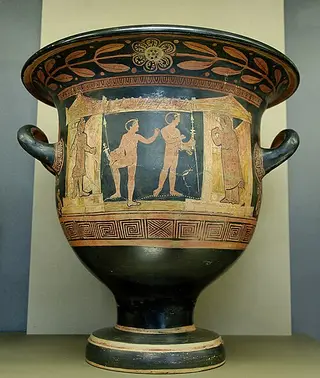
What each painter chose to show, scene by scene: Greek vase painting →
Ancient sources
- Euripides, Iphigenia among the Taurians
- Euripides, Iphigenia at Aulis
- Herodotus 4.103
- Apollodorus, Epitome 3.22, 6.26–6.27