Daughter of Demeter, carried off by Hades to become queen of the underworld. Her return to the upper world for part of each year is told as the coming of spring.
In brief
- The daughter of Zeus and Demeter. As a maiden she is also called Kore, 'the girl'.
- While she is picking flowers the earth opens and Hades carries her off.
- Because she has eaten a few pomegranate seeds in the underworld, she is bound to it: she spends part of the year with Hades and the rest with her mother.
Family
Consorts and partners
Siblings
½ Half-sibling: only one parent in common.
To see the whole family, open the Persephone family tree → · how is Persephone related to Zeus? → · compare with someone else →
The pomegranate seeds
In the Homeric Hymn, as Hades sends Persephone back to her mother, he secretly gives her a pomegranate seed to eat. Whoever eats in the underworld cannot leave it entirely, so she must spend a third of the year below. In Ovid the number of seeds rises to seven and the year is divided in half.
Homeric Hymn 2 to Demeter 371–374, 398–404; Ovid, Metamorphoses 5.533–571Persephone in art
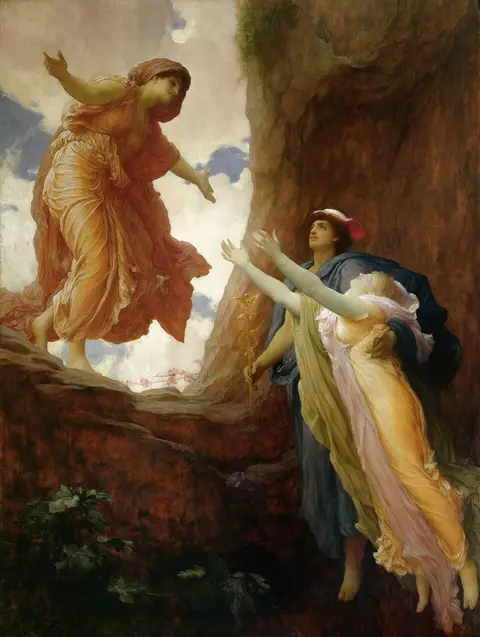
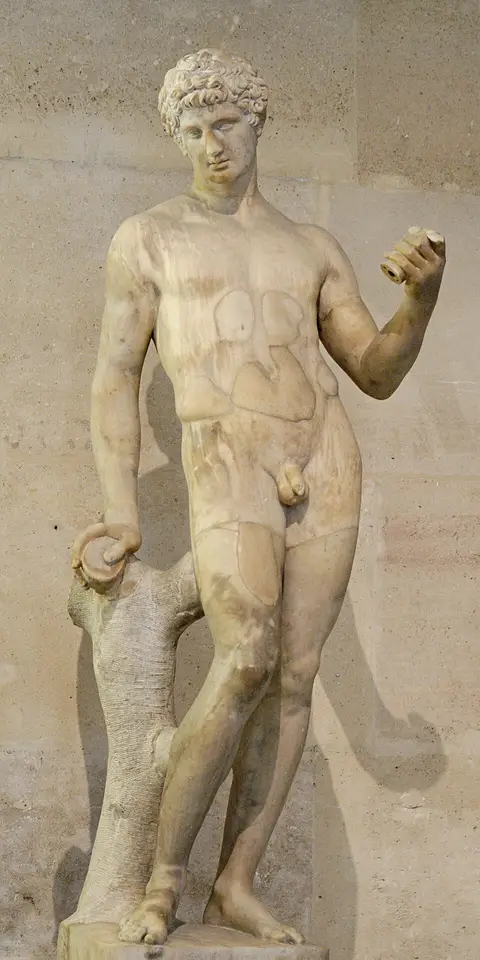
16works depicting Persephone, in date order, from ancient vases to paintings of the Renaissance and after. All are in the public domain or openly licensed. Click an image for the full-size version and licence details. For scene-by-scene readings of famous vases, see Greek vase painting.


Stories featuring Persephone



Quick questions
- Who are Persephone's parents?
- In the main account, Persephone's father is Zeus and mother is Demeter. Hesiod, Theogony 912–914
- Who were Persephone's consorts and lovers?
- The partners named in the sources: Hades.
- Who are Persephone's children?
- This atlas records 1 child of Persephone: Dionysus. See the family tree →
- What is Persephone's Roman name?
- In Roman mythology Persephone is known as Proserpina. All Greek and Roman names →
- What are Persephone's symbols?
- Pomegranate, Torch, Ears of grain.
- Which myths is Persephone in?
- The abduction of Persephone · Cupid and Psyche · Myrrha and Adonis: the child born from a myrrh tree · Orpheus and Eurydice · Odysseus and the Sirens.
Ancient sources
This page is based on the texts below. Numbers refer to books and lines.
- Hesiod, Theogony 912–914
- Homeric Hymn 2 to Demeter
- Ovid, Metamorphoses 5.341–571