The greatest hero of Greek myth, son of Zeus and Alcmene. Hounded all his life by Hera, he performs the Twelve Labours and is finally taken up among the gods.
Follow the twelve labours on a map →
In brief
- Zeus approaches Alcmene disguised as her husband Amphitryon. Alcmene bears twins: Heracles by Zeus and Iphicles by Amphitryon.
- In a fit of madness sent by Hera he kills his own children. To atone, the Delphic oracle sends him to serve Eurystheus, king of Tiryns and Mycenae, and he performs the famous Twelve Labours.
- He suffers terribly from a robe his wife Deianira unknowingly poisoned. On Mount Oeta he has himself burned on a pyre; the gods take him to Olympus and marry him to Hera's daughter Hebe.
Family
Siblings
½ Half-sibling: only one parent in common.
To see the whole family, open the Heracles family tree → · how is Heracles related to Zeus? → · compare with someone else →
Snakes in the cradle
When Heracles is eight months old Hera sends two great snakes into his cradle. Iphicles screams and flees; Heracles strangles the snakes with his hands. Apollodorus notes another version in which Amphitryon sent the snakes himself, to find out which child was his.
Apollodorus, Library 2.4.8The Twelve Labours
The Delphic oracle tells Heracles to serve Eurystheus for twelve years and perform ten labours. Eurystheus refuses to count two of them: the Hydra, because Heracles had help from his nephew Iolaus, and the stables of Augeas, because he was paid. So the labours become twelve. In Apollodorus's order: the Nemean lion, the Lernaean Hydra, the Ceryneian hind, the Erymanthian boar, the stables of Augeas, the Stymphalian birds, the Cretan bull, the mares of Diomedes, the belt of the Amazon queen Hippolyta, the cattle of Geryon, the apples of the Hesperides, and Cerberus.
Apollodorus, Library 2.4.12–2.5.12Heracles in Anatolia
The ninth labour takes him to the land of the Amazons at Themiskyra, near today's Terme in Samsun. The people of Herakleia Pontike, today's Karadeniz Ereğli, believed he brought Cerberus up from the underworld there. A Roman sarcophagus carved with his labours is on display in the Kayseri Archaeological Museum.
Apollodorus, Library 2.5.9; Xenophon, Anabasis 6.2.2Heracles on Greek vases
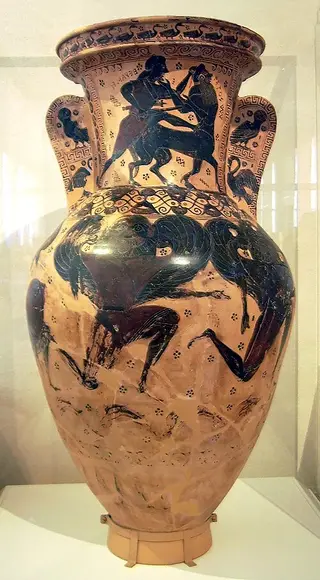 The Nessos amphora
late 7th century BC · National Archaeological Museum, Athens
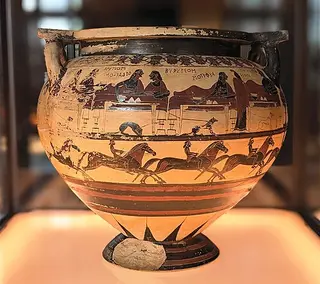 The Eurytios krater
about 600 BC · Louvre, Paris
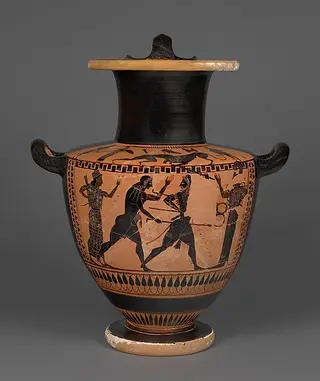 Heracles and Apollo fight over the tripod
6th century BC · J. Paul Getty Museum, Los Angeles
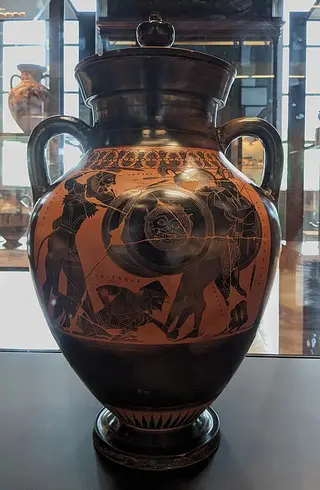 Exekias' Geryon amphora
mid-6th century BC · Louvre, Paris
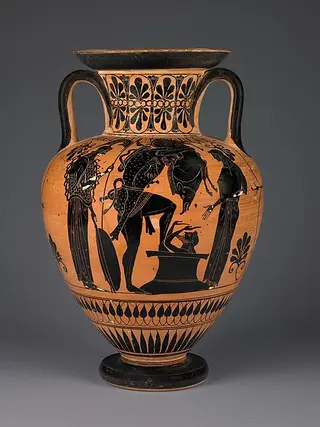 Heracles and the Erymanthian boar
late 6th century BC · J. Paul Getty Museum, Los Angeles
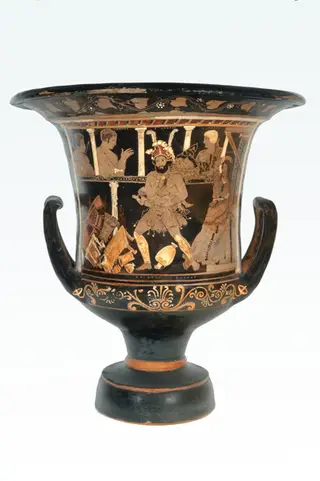 The madness of Heracles
mid-4th century BC · National Archaeological Museum, Madrid
Heracles in art
16works depicting Heracles, in date order, from ancient vases to paintings of the Renaissance and after. All are in the public domain or openly licensed. Click an image for the full-size version and licence details. For scene-by-scene readings of famous vases, see Greek vase painting.


Stories featuring Heracles
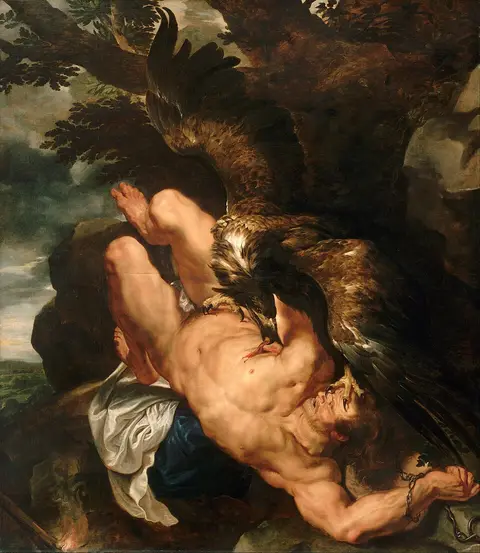 Prometheus's fire and Pandora
The age of the gods
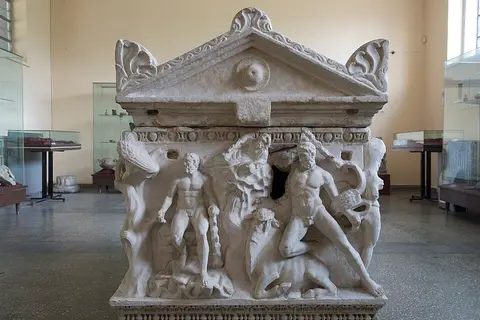 The twelve labours of Heracles
The age of heroes
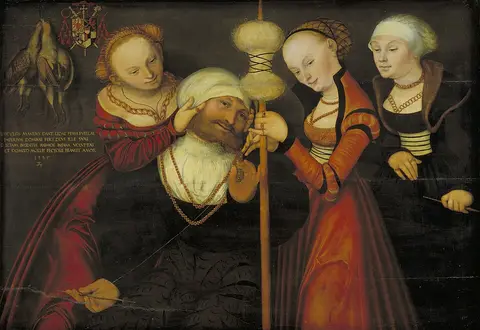 Heracles and Omphale: slave of the Lydian queen
The age of heroes
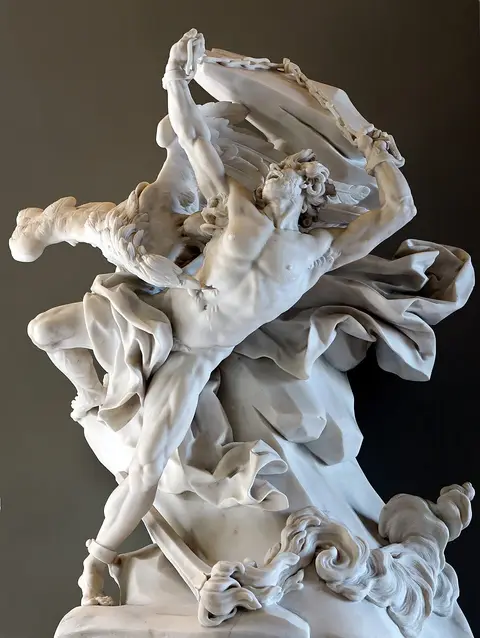 Prometheus unbound
The age of heroes
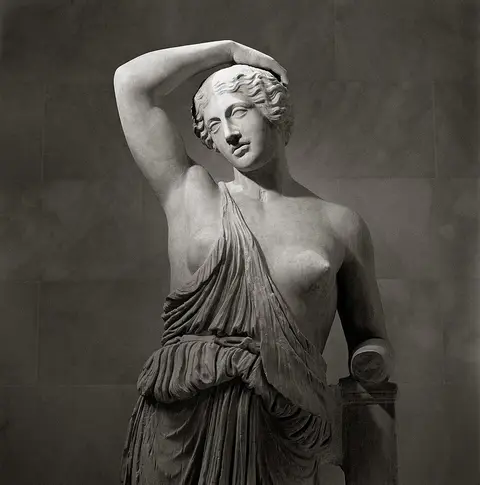 The Amazons: warrior women of the Black Sea
The age of heroes
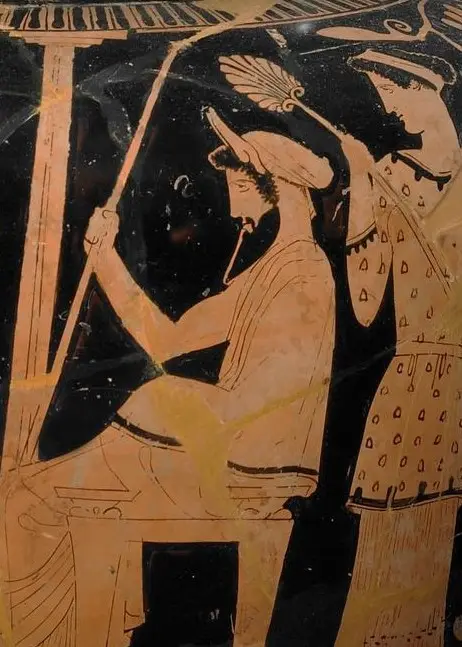 Lityerses: the reaper of Celaenae
The age of heroes
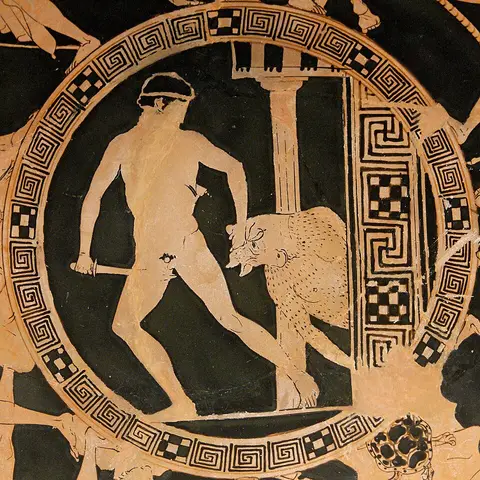 Theseus' road to Athens: six bandits
The age of heroes
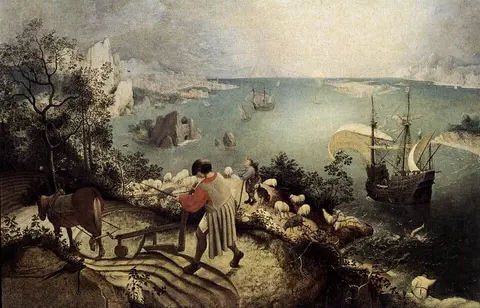 Daedalus and Icarus
The age of heroes
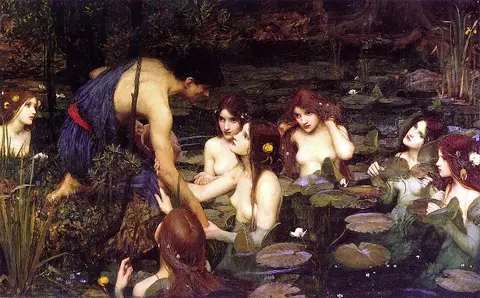 Jason and the Argonauts
The age of heroes
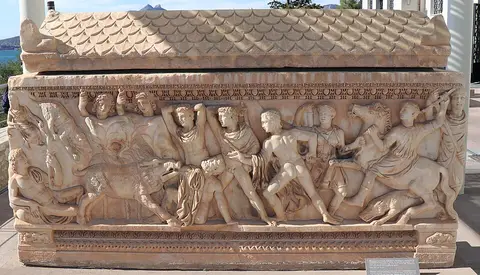 The Calydonian boar hunt
The age of heroes
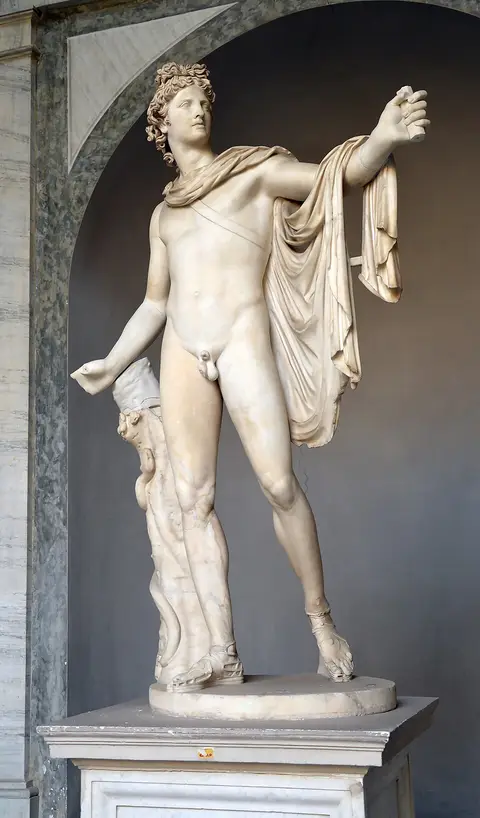 Alcestis: the queen who died for her husband
The age of heroes
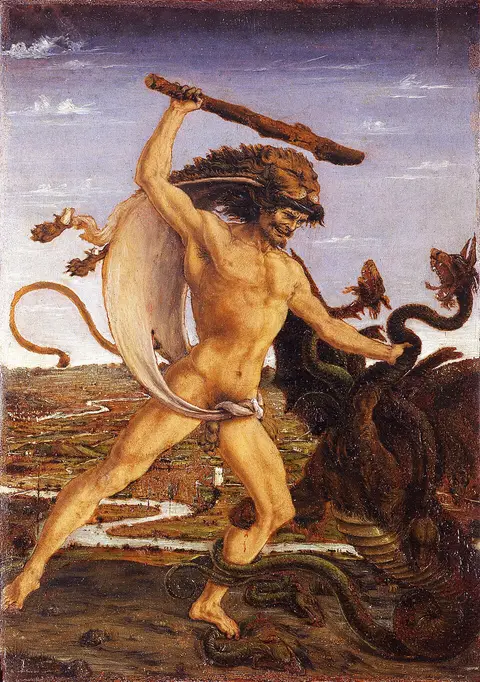 The death and deification of Heracles
The age of heroes
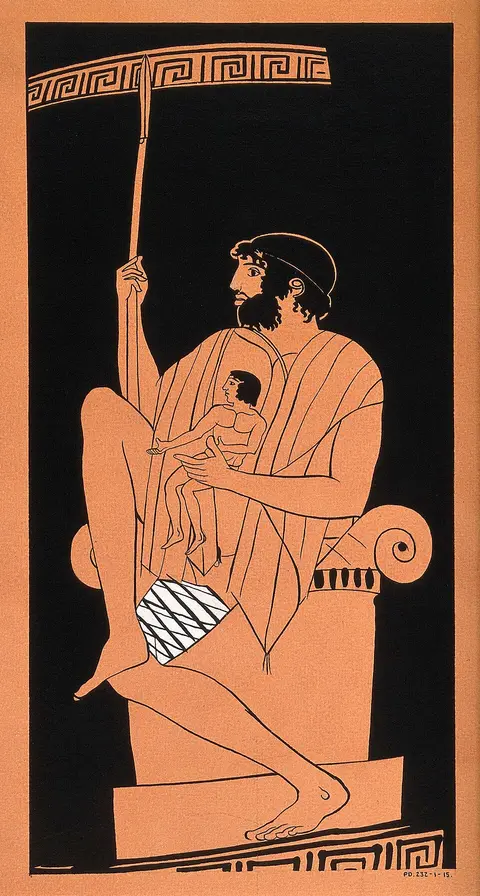 Telephus: the hero of Pergamon
The Trojan War and after
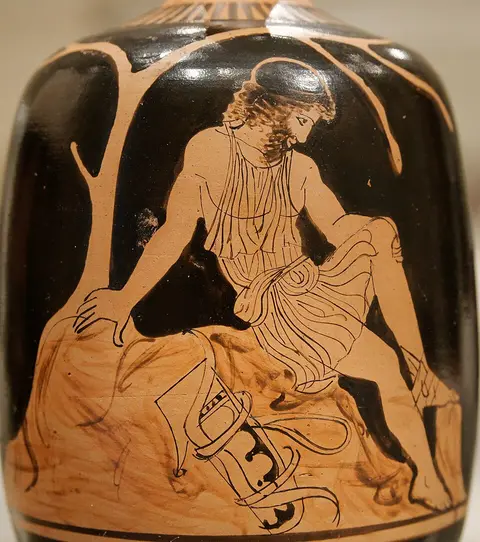 Philoctetes on Lemnos: the wounded archer
The Trojan War and after
Quick questions
- Who are Heracles' parents?
- In the main account, Heracles' father is Zeus and mother is Alcmene. Hesiod, Theogony 943–944
- Who were Heracles' consorts and lovers?
- The partners named in the sources: Deianira, Hebe, Megara, Omphale and Auge.
- Who are Heracles' children?
- This atlas records 2 children of Heracles: Hyllus and Telephus. See the family tree →
- What is Heracles' Roman name?
- In Roman mythology Heracles is known as Hercules. All Greek and Roman names →
- What are Heracles' symbols?
- Lion skin, Club, Bow.
- Which myths is Heracles in?
- Prometheus's fire and Pandora · The twelve labours of Heracles · Heracles and Omphale: slave of the Lydian queen · Prometheus unbound · The Amazons: warrior women of the Black Sea · Lityerses: the reaper of Celaenae · Theseus' road to Athens: six bandits · Daedalus and Icarus, and 6 more.
Ancient sources
This page is based on the texts below. Numbers refer to books and lines.
- Hesiod, Theogony 943–944, 950–955
- Apollodorus, Library 2.4.5–2.7.7
- Sophocles, Women of Trachis
- Euripides, Heracles