The swift messenger of the gods; patron of travellers, merchants and thieves. He guides the souls of the dead to the underworld.
In brief
- The son of Zeus and Maia, daughter of Atlas, born in a cave on Mount Kyllene in Arcadia.
- On the day he is born he leaves his cradle, makes the first lyre from a tortoise shell and steals Apollo's cattle.
- He escorts the souls of the dead to Hades, which earns him the title Psychopompos, 'guide of souls'.
Family
Siblings
½ Half-sibling: only one parent in common.
To see the whole family, open the Hermes family tree → · how is Hermes related to Zeus? → · compare with someone else →
The thief in the cradle
Hermes steals fifty of Apollo's cows, driving them backwards to confuse their tracks and tying twigs to his own feet. Then he slips back into his cradle like an innocent baby. Apollo drags him before Zeus, who laughs at the trick. When Hermes gives Apollo the lyre he has made, the brothers are reconciled: this is the origin of Apollo's lyre.
Homeric Hymn 4 to Hermes 20–580Slayer of Argus
One of Hermes's Homeric titles is Argeiphontes, usually understood as 'slayer of Argus'. In Ovid, on Zeus's orders, he lulls the hundred-eyed Argus whom Hera set to watch over Io to sleep with reed pipes (syrinx) and stories, then kills him with a sword.
In Apollodorus Hermes cannot steal Io away in secret because Hierax betrays him, so he kills Argus with a thrown stone.
Ovid, Metamorphoses 1.668–721; Apollodorus, Library 2.1.3Hermes in art
16works depicting Hermes, in date order, from ancient vases to paintings of the Renaissance and after. All are in the public domain or openly licensed. Click an image for the full-size version and licence details. For scene-by-scene readings of famous vases, see Greek vase painting.


Stories featuring Hermes
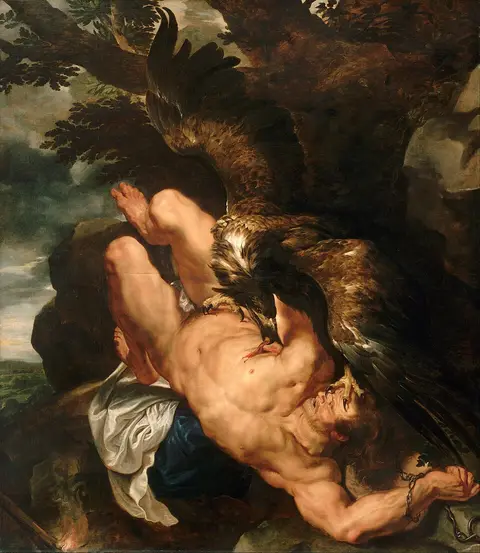 Prometheus's fire and Pandora
The age of the gods
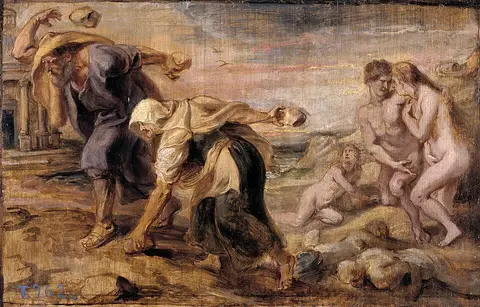 Deucalion and the great flood
The age of the gods
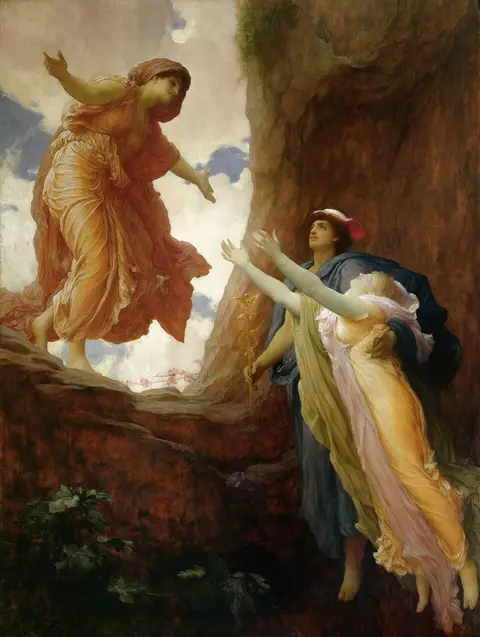 The abduction of Persephone
The age of the gods
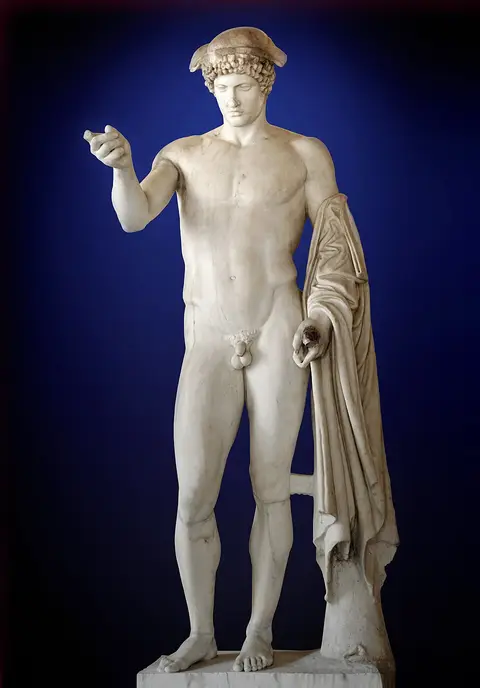 The birth of Hermes: Apollo's cattle
The age of the gods
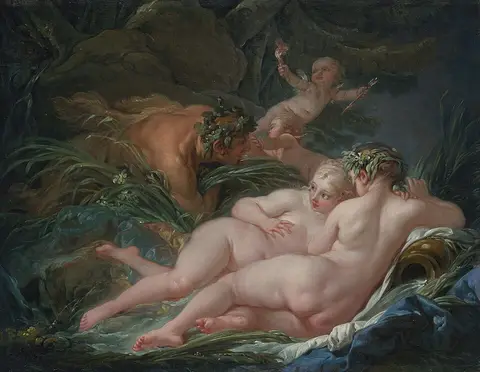 Pan and Syrinx: the first panpipe
The age of the gods
Salmacis and Hermaphroditus: the spring at BodrumThe age of the gods
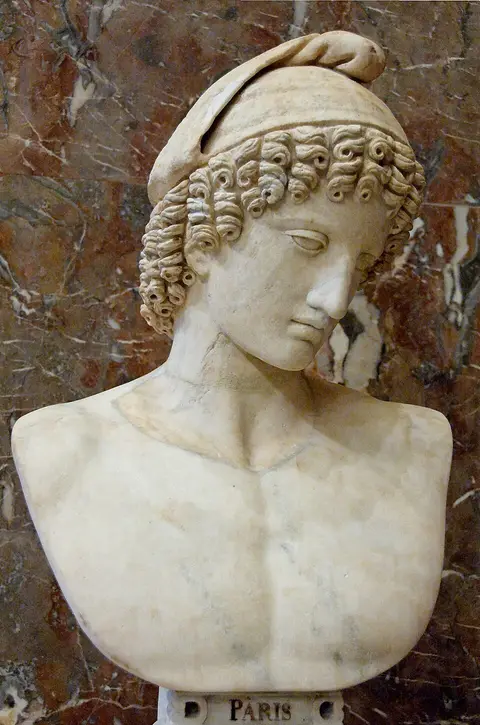 The abduction of Ganymede: from Mount Ida to Olympus
The age of the gods
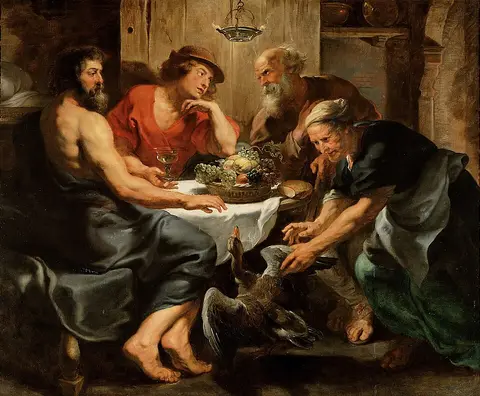 Baucis and Philemon
The age of the gods
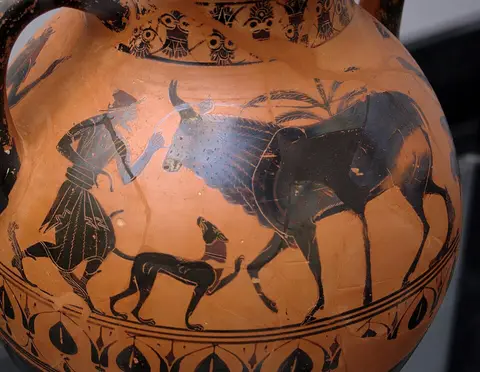 Io: the priestess turned into a cow
The age of the gods
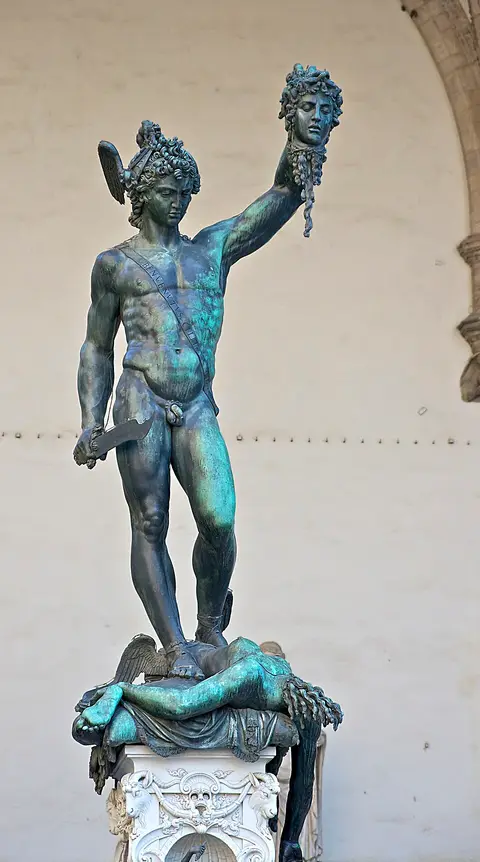 Perseus and Medusa
The age of heroes
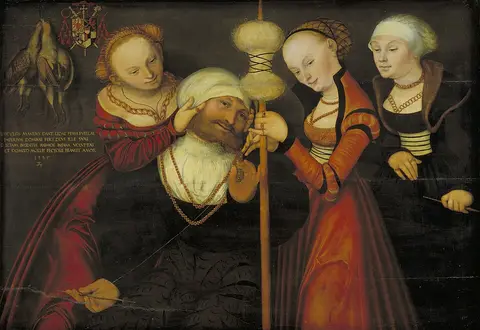 Heracles and Omphale: slave of the Lydian queen
The age of heroes
Phrixus and Helle: the ram with the golden fleeceThe age of heroes
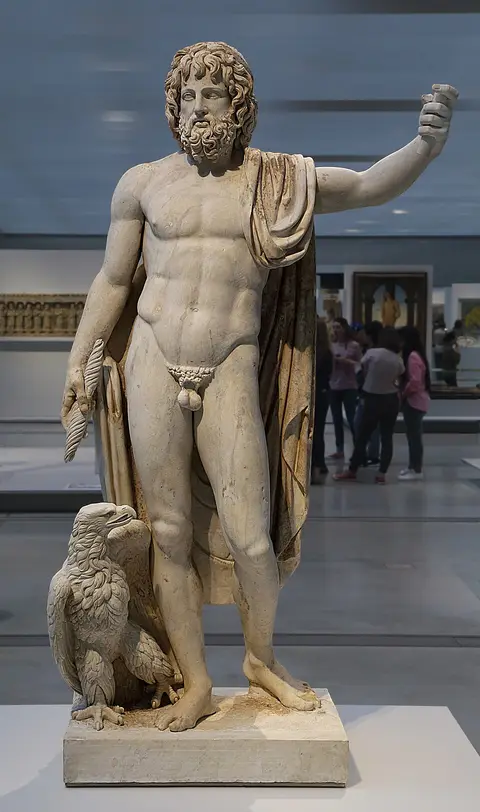 Amphion and Zethus: the walls of Thebes
The age of heroes
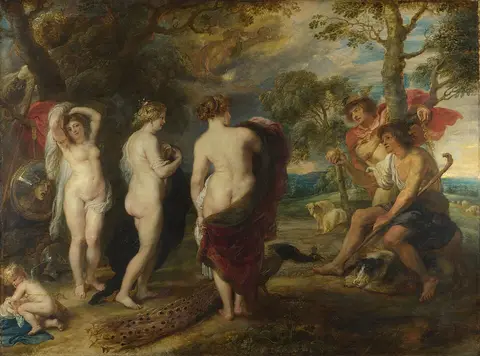 The judgement of Paris
The Trojan War and after
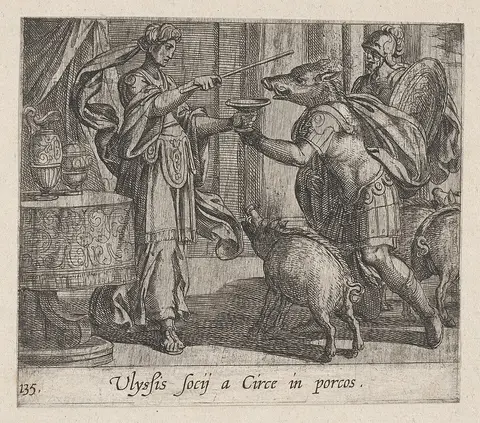 Odysseus and Circe
The Trojan War and after
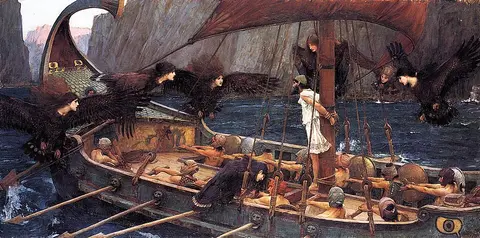 The return of Odysseus
The Trojan War and after
Quick questions
- Who are Hermes' parents?
- In the main account, Hermes' father is Zeus and mother is Maia. Hesiod, Theogony 938–939
- Who are Hermes' children?
- This atlas records 3 children of Hermes: Pan, Autolycus and Hermaphroditus. See the family tree →
- What is Hermes' Roman name?
- In Roman mythology Hermes is known as Mercury. All Greek and Roman names →
- What are Hermes' symbols?
- Winged sandals, Winged hat, Caduceus.
- Which myths is Hermes in?
- Prometheus's fire and Pandora · Deucalion and the great flood · The abduction of Persephone · The birth of Hermes: Apollo's cattle · Pan and Syrinx: the first panpipe · Salmacis and Hermaphroditus: the spring at Bodrum · The abduction of Ganymede: from Mount Ida to Olympus · Baucis and Philemon, and 8 more.
Ancient sources
This page is based on the texts below. Numbers refer to books and lines.
- Hesiod, Theogony 938–939
- Homeric Hymn 4 to Hermes
- Homer, Odyssey 5.28–148, 24.1–14
- Apollodorus, Library 3.10.2