Pan and Syrinx: the first panpipe
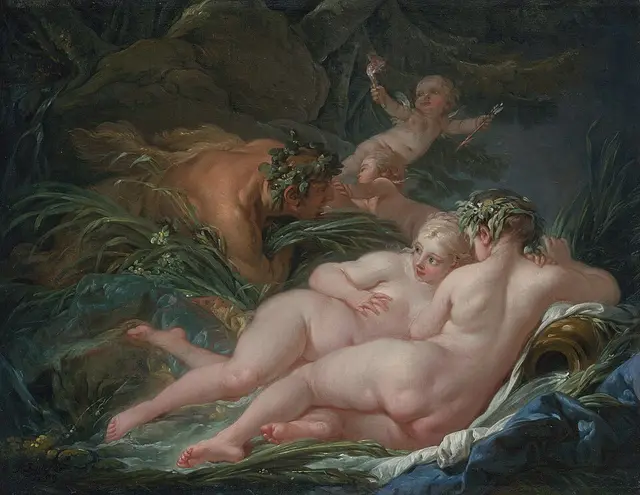
The goat-legged god Pan chases the Arcadian nymph Syrinx. On the bank of a river she is turned into reeds. Pan cuts reeds of different lengths, joins them into the first panpipe and names it after her.
In this story
-
A nymph who followed Artemis
In Ovid, Syrinx is the most famous of the nymphs of the cold Arcadian mountains. She has often escaped the satyrs and woodland gods. She wants to stay unmarried like Artemis and dresses like her; if her bow were of gold instead of horn, she might be taken for the goddess.
Ovid, Metamorphoses 1.689–698 -
On the bank of the Ladon
Pan sees her coming down from Mount Lycaeus and pursues her. She runs until the still waters of the river Ladon block her way, and there she begs her sister water nymphs to change her.
Just as Pan thinks he has caught her, he finds he is holding a handful of marsh reeds instead of the nymph. He sighs, and his breath through the reeds makes a thin, plaintive sound.
Ovid, Metamorphoses 1.699–708 -
The syrinx
Charmed by the sweet sound, Pan says, 'This way, at least, I will keep talking with you.' He joins reeds of unequal length with wax and names the instrument after his love: the syrinx, the shepherd's pipe now called the panpipe.
Ovid puts the story in the mouth of Hermes, who tells it to lull hundred-eyed Argus, the guard of Io, to sleep. As soon as all of Argus's eyes close, the story breaks off, and Hermes kills him.
Ovid, Metamorphoses 1.709–721
Ancient sources
- Ovid, Metamorphoses 1.668–721