Salmacis and Hermaphroditus: the spring at Bodrum
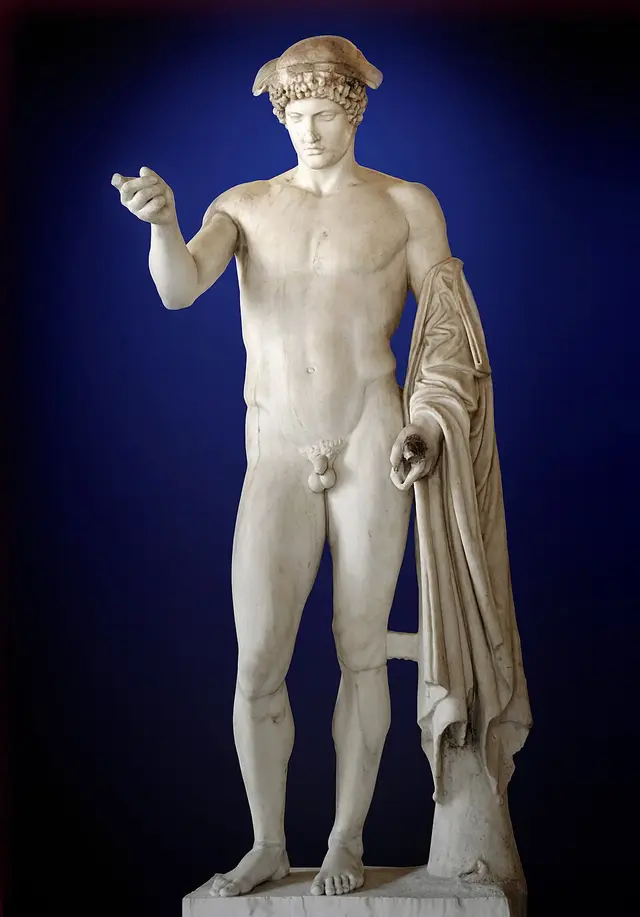
The son of Hermes and Aphrodite comes upon a clear spring in Caria. Its nymph, Salmacis, falls in love with him and prays never to be parted from him, and the two become one body. The spring was at ancient Halicarnassus, today's Bodrum.
In this story
-
The spring in Caria
The son of Hermes and Aphrodite grows up among the nymphs in the caves of Mount Ida. His face resembles both his mother and his father, and his name is made from both of theirs.
At fifteen he sets out to see new places and comes to Caria. There he finds a spring so clear you can see the bottom. Its nymph, Salmacis, does not hunt like the other nymphs. She spends her days bathing in her spring and combing her hair.
Ovid, Metamorphoses 4.285–315 -
Two bodies, one body
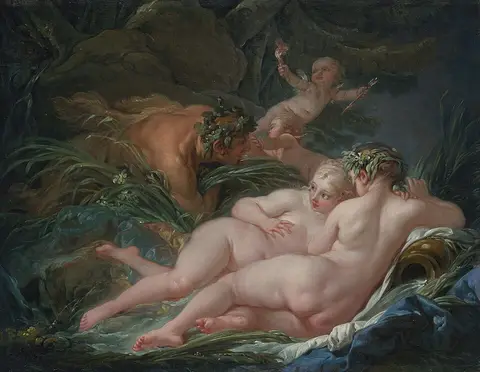
Salmacis falls in love with the young man the moment she sees him, and tells him so. He rejects her. She pretends to leave and hides in the bushes, and when he steps into the water she leaps in after him and wraps herself around him.
Salmacis prays to the gods never to be parted from him, and her prayer is granted: their bodies merge into a single being, both woman and man. Hermaphroditus in turn prays to his parents that any man who bathes in the spring will be changed in the same way. The word 'hermaphrodite' comes from his name.
Ovid, Metamorphoses 4.316–388 -
The pride of Halicarnassus
Strabo and Vitruvius mention the rumour that the spring of Salmacis at Halicarnassus made people 'soft'. Vitruvius offers a different explanation: a Greek opened an inn by the spring, and the local people came down from the mountains, mixed with the Greeks and took up their way of life.
In 1995 an inscription was found beside the spring of Salmacis at a place in Bodrum called Kaplan Kalesi. Known as the 'Pride of Halicarnassus', this 2nd-century BC poem praises Salmacis as a kindly nymph who led the city towards civilisation.
Strabo, Geography 14.2.16; Vitruvius, On Architecture 2.8.11–12; the Salmacis inscription (2nd century BC), Bodrum