Atalanta and Hippomenes: three golden apples
The unbeatable runner Atalanta will marry only the man who beats her in a race, and the losers die. Hippomenes wins with three golden apples from Aphrodite, but forgets to thank the goddess, and the couple are turned into lions.
In this story
-
A deadly race
An oracle warns Atalanta not to marry, or misfortune will follow. To keep suitors away she sets a condition: she will marry whoever outruns her, and those who lose will die.
Many young men race and die. At first Hippomenes thinks them fools, but when he sees Atalanta run, he decides to race too.
Ovid, Metamorphoses 10.560–637 -
The golden apples
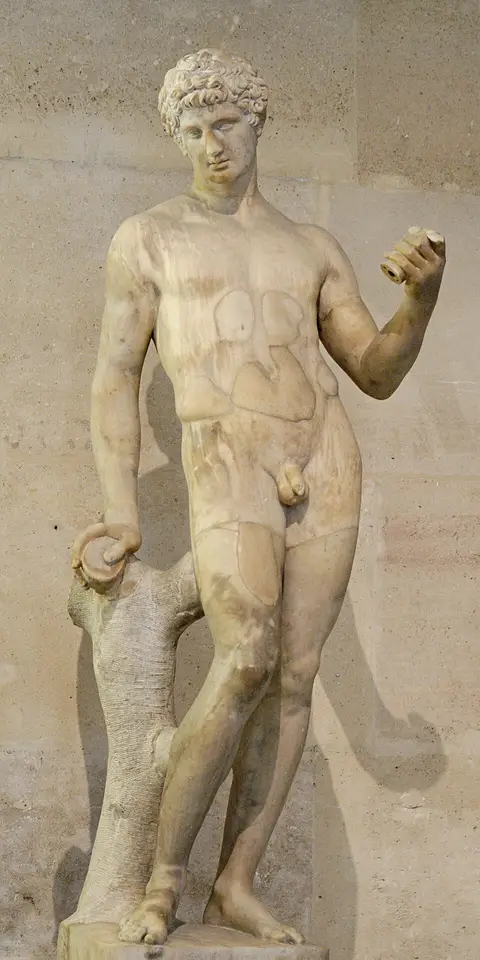
Hippomenes prays to Aphrodite. Ovid says she brings him three golden apples from a tree in her own sanctuary at Tamasus in Cyprus.
Each time Atalanta pulls ahead during the race, Hippomenes rolls an apple aside, and each time she leaves the track to pick it up. With the third apple Hippomenes crosses the line first and wins her.
Apollodorus tells the same story but calls the young man Melanion.
Ovid, Metamorphoses 10.638–680; Apollodorus, Library 3.9.2 -
Cybele's lions
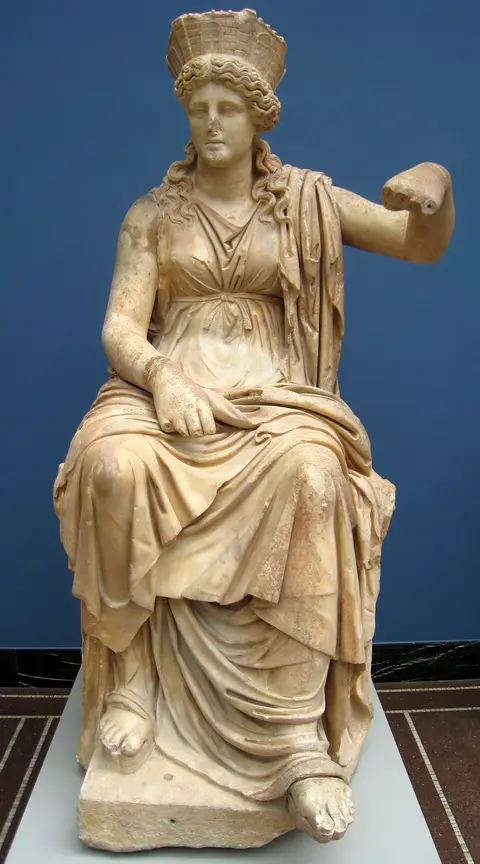
Hippomenes forgets to thank Aphrodite. The angry goddess drives the couple to make love in the temple of Cybele, the Mother Goddess. Cybele punishes the sacrilege by turning them into lions, and from then on the two lions pull her chariot. In Hyginus the temple is Zeus's.
Cybele was the Mother Goddess of Phrygia, and her temple at Pessinus (Ballıhisar, Eskişehir) was famous throughout the ancient world. In art she is usually shown flanked by lions or riding in a chariot drawn by them.
Ovid, Metamorphoses 10.681–707; Hyginus, Fabulae 185
Ancient sources
- Ovid, Metamorphoses 10.560–707
- Apollodorus, Library 3.9.2
- Hyginus, Fabulae 185
- Theocritus, Idyll 3.40–42