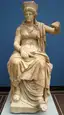
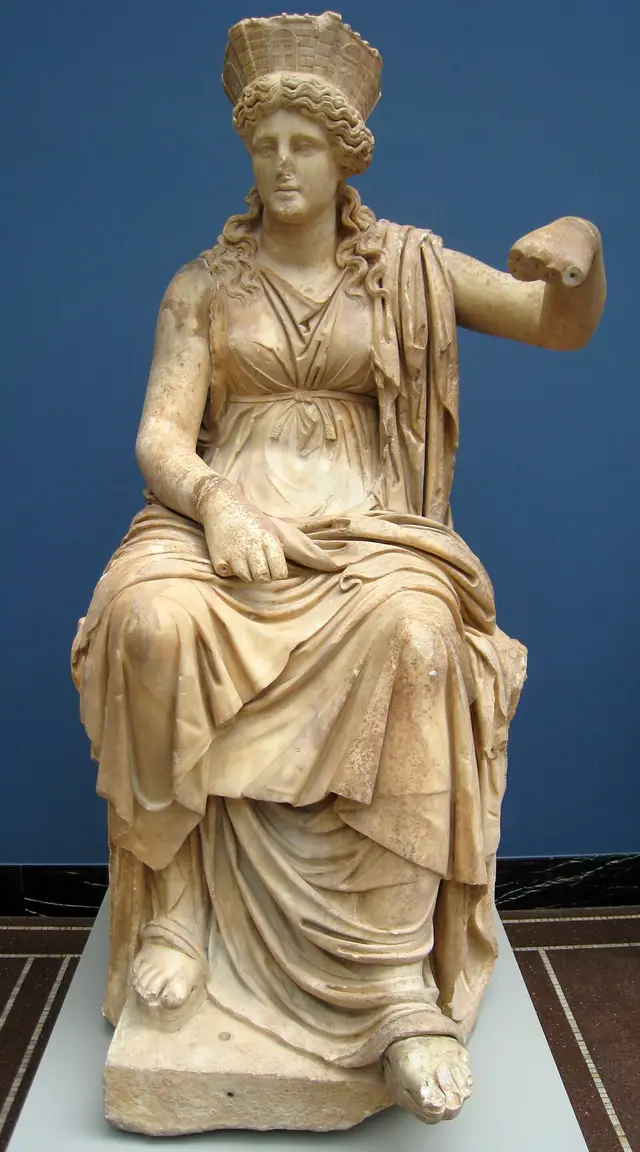
Cybele and Attis: the Mother Goddess of Pessinus
Cybele, the Mother Goddess of Phrygia, loves the young Attis. When he tries to marry another, she drives him mad and he castrates himself. The story is set at Pessinus, by the Sakarya river, and Rome would later bring the goddess from Pessinus as its saviour.
In this story
-
The story told at Pessinus
Pausanias reports a story told at Pessinus. Zeus's seed fell on the ground, and from the earth was born Agdistis, a being both male and female. The gods feared Agdistis and castrated it, and from the severed organ grew an almond tree. The daughter of the river Sangarius (the Sakarya) put one of its almonds in her lap and became pregnant. Her child was Attis, who grew up so beautiful that Agdistis fell in love with him.
Pausanias, Description of Greece 7.17.10–7.17.12 -
The wedding day
Attis is to marry the daughter of the king of Pessinus. As the wedding songs are being sung, Agdistis suddenly appears. Attis goes mad and castrates himself, and so does the bride's father. Agdistis regrets what she has done and asks Zeus to let Attis's body never decay or shrink. Ovid tells another version: Attis has sworn to Cybele to stay chaste, and when he sleeps with a nymph, Sagaritis, the goddess punishes him. In Ovid's Metamorphoses, Attis is turned into a pine tree, which is why the pine is sacred to Cybele.
Pausanias, Description of Greece 7.17.11–7.17.12; Ovid, Fasti 4.221–246; Ovid, Metamorphoses 10.103–105 -
The black stone that went to Rome
Cybele's priests, the Galli, castrated themselves like Attis. This Phrygian cult both fascinated and bewildered the Greek and Roman world. Livy says that in 204 BC, with Hannibal still in Italy, the Romans followed a prophecy and decided to bring the 'Idaean Mother', Cybele, to Rome. The goddess's sacred black stone was brought from Pessinus and placed in a temple on the Palatine Hill, where she was worshipped as Magna Mater, the Great Mother.
Livy 29.10–29.14; Ovid, Fasti 4.247–348