Goddess of love and beauty. There are two accounts of her birth: in Hesiod she rises from the foam of the sea, in Homer she is the daughter of Zeus and Dione.
In brief
- In Hesiod she is born from the foam around the severed parts of Uranus. She comes ashore first at Kythera, then on Cyprus, hence her names Cytherea and Cypris.
- She is the wife of Hephaestus, but her affair with Ares is famous.
- She wins the Judgement of Paris by promising him Helen, a promise that starts the Trojan War.
Family
Consorts and partners
Children
* Only in some accounts.
Siblings
½ Half-sibling: only one parent in common.
To see the whole family, open the Aphrodite family tree → · how is Aphrodite related to Zeus? → · compare with someone else →
Two births
In Hesiod Aphrodite belongs to an older generation than Zeus: born from the castration of Uranus, she is Zeus's aunt. In Homer she is the daughter of Zeus and Dione. In Plato's Symposium a speaker turns the two stories into two Aphrodites: the motherless 'heavenly' (Urania) and the 'common' (Pandemos), daughter of Zeus and Dione.
Hesiod, Theogony 188–206; Homer, Iliad 5.370–371; Plato, Symposium 180d–eAphrodite in Anatolia
Aphrodisias, in Karacasu (Aydın), takes its name from the goddess and was famous for her temple. In Roman times it was known for its sculpture workshops; it is now a UNESCO World Heritage Site. In the Homeric Hymn Aphrodite appears to the Trojan herdsman Anchises on Mount Ida (Kazdağı); their son is Aeneas, legendary ancestor of the Romans.
Homeric Hymn 5 to Aphrodite 53–199Aphrodite in art
16works depicting Aphrodite, in date order, from ancient vases to paintings of the Renaissance and after. All are in the public domain or openly licensed. Click an image for the full-size version and licence details. For scene-by-scene readings of famous vases, see Greek vase painting.


Stories featuring Aphrodite
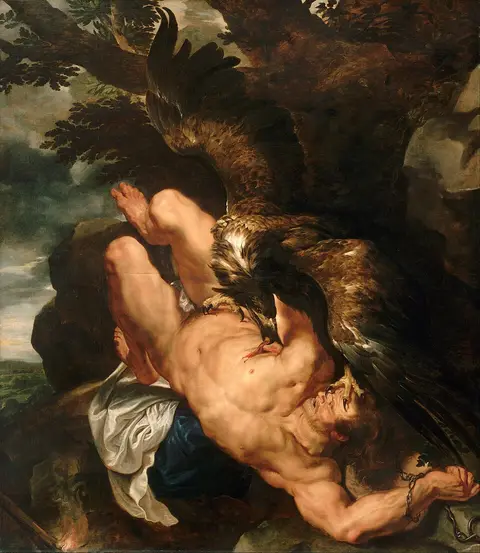 Prometheus's fire and Pandora
The age of the gods
 Cupid and Psyche
The age of the gods
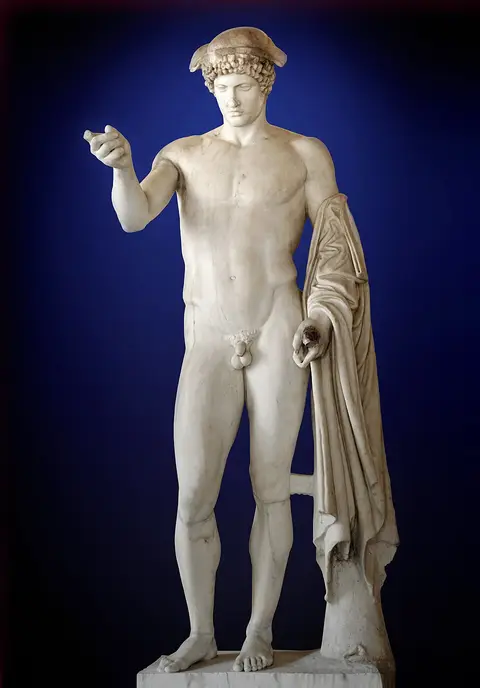 Salmacis and Hermaphroditus: the spring at Bodrum
The age of the gods
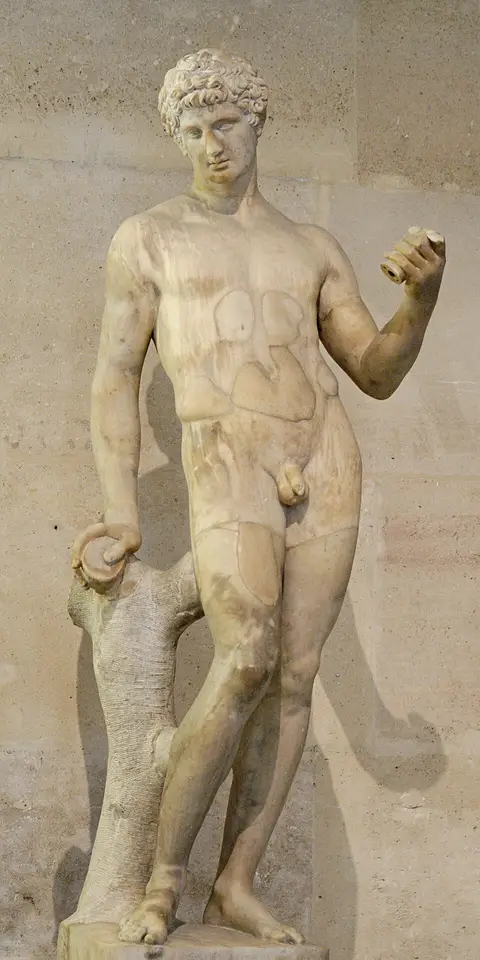 Myrrha and Adonis: the child born from a myrrh tree
The age of the gods
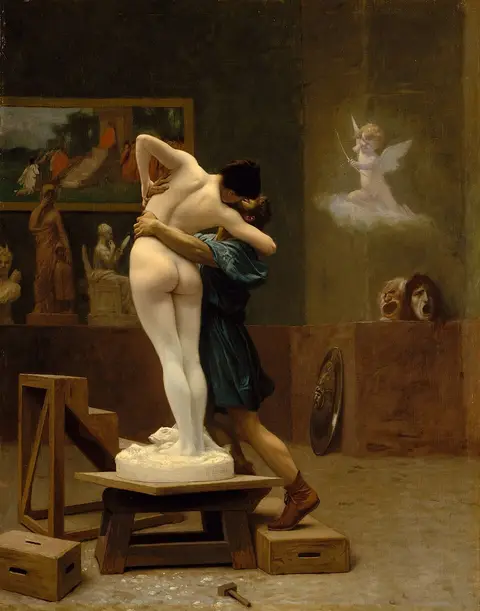 Pygmalion and the statue
The age of the gods
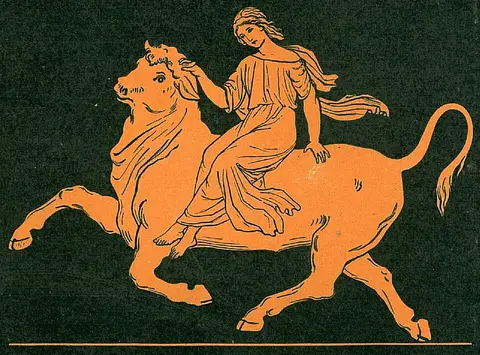 Cadmus and Europa: the bull, the dragon and the alphabet
The age of heroes
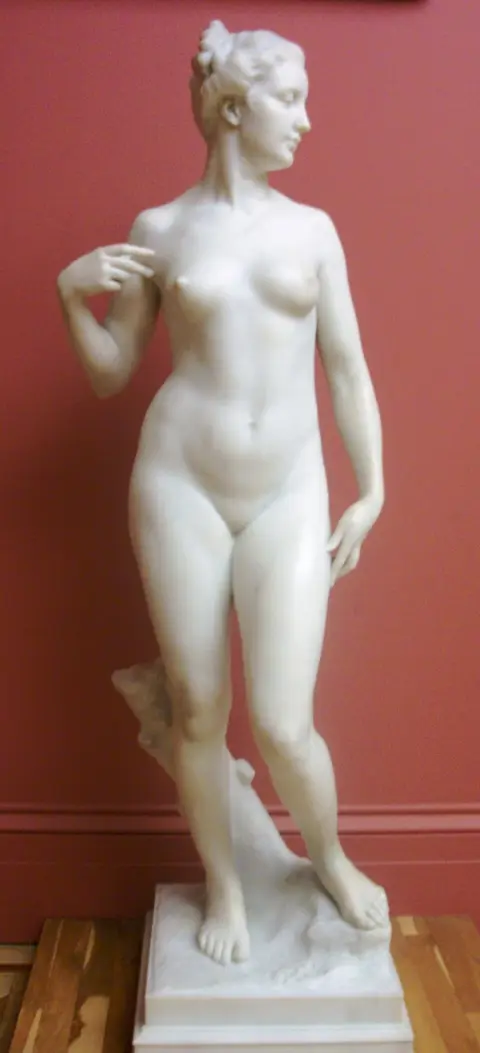 Atalanta and Hippomenes: three golden apples
The age of heroes
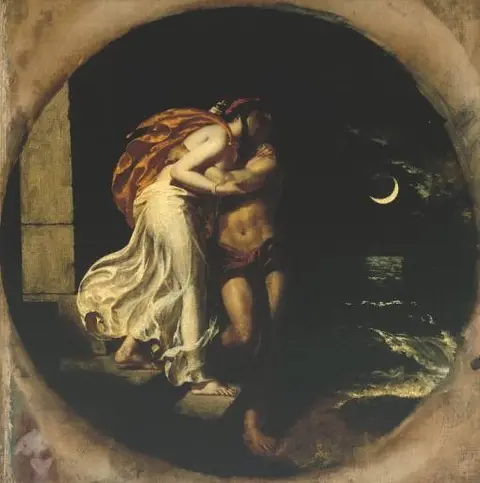 Hero and Leander: the lovers of the Dardanelles
The age of heroes
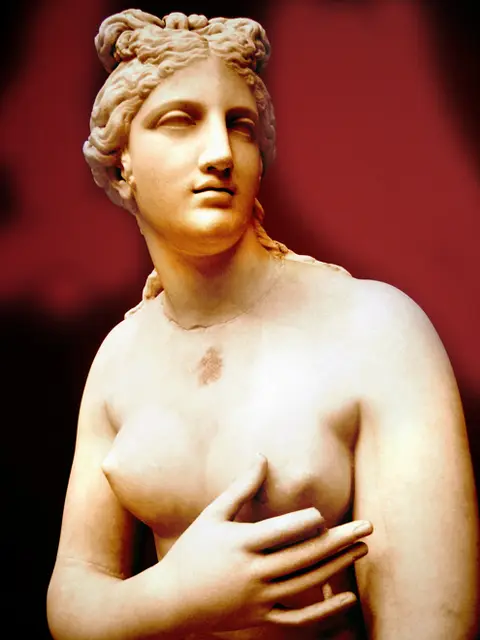 Aphrodite and Anchises: the goddess on Mount Ida
The age of heroes
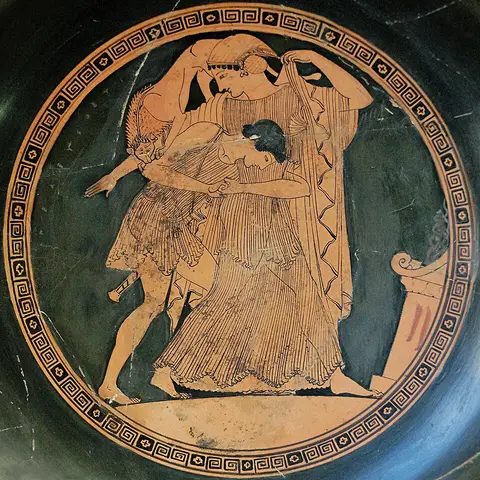 The wedding of Peleus and Thetis
The Trojan War and after
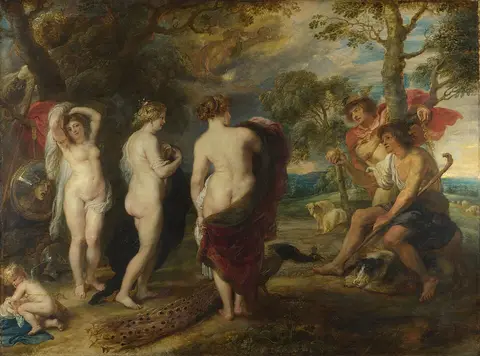 The judgement of Paris
The Trojan War and after
 The Trojan War
 and after
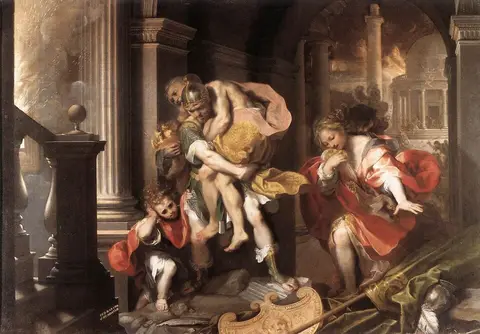 The journey of Aeneas: from Troy to Rome
The Trojan War and after
Quick questions
- Who are Aphrodite's parents?
- In the main account, Aphrodite's father is Uranus. The mother is not named in this account. Other accounts name other parents; the family box above lists them all with their sources. Hesiod, Theogony 188–206
- Who were Aphrodite's consorts and lovers?
- The partners named in the sources: Adonis, Hephaestus, Ares and Anchises.
- Who are Aphrodite's children?
- This atlas records 6 children of Aphrodite: Aeneas, Eros, Harmonia, Phobos, Deimos and Hermaphroditus. See the family tree →
- What is Aphrodite's Roman name?
- In Roman mythology Aphrodite is known as Venus. All Greek and Roman names →
- What are Aphrodite's symbols?
- Scallop shell, Dove, Rose, Myrtle.
- Which myths is Aphrodite in?
- Prometheus's fire and Pandora · Cupid and Psyche · Salmacis and Hermaphroditus: the spring at Bodrum · Myrrha and Adonis: the child born from a myrrh tree · Pygmalion and the statue · Cadmus and Europa: the bull, the dragon and the alphabet · Atalanta and Hippomenes: three golden apples · Hero and Leander: the lovers of the Dardanelles, and 5 more.
Ancient sources
This page is based on the texts below. Numbers refer to books and lines.
- Hesiod, Theogony 188–206
- Homer, Iliad 5.311–430
- Homeric Hymn 5 to Aphrodite
- Homer, Odyssey 8.266–366