Prince of Troy who judges the beauty contest of the goddesses on Mount Ida and gives the golden apple to Aphrodite, winning Helen and starting the Trojan War.
Who fought for whom in the Trojan War? Play →
In brief
- The son of Priam and Hecuba, king and queen of Troy. Before his birth Hecuba dreams that she gives birth to a burning torch that sets Troy on fire, so the baby is left on Mount Ida.
- A she-bear suckles him, then a herdsman finds and raises him. The herdsmen call him Alexandros, 'protector of men', because he defends the flocks. Years later his identity is discovered and he returns to the palace.
- On Mount Ida he judges between Hera, Athena and Aphrodite and gives the apple to Aphrodite. Then he sails to Sparta and brings Helen back to Troy.
Family
Consorts and partners
To see the whole family, open the Paris family tree → · how is Paris related to Zeus? → · compare with someone else →
Paris in the Iliad
In the Iliad Paris agrees to fight Menelaus in single combat. When he is about to lose, Aphrodite wraps him in mist, snatches him from the battlefield and sets him down in his bedroom. His brother Hector often scolds him for avoiding the fighting.
Homer, Iliad 3.15–447, 6.325–331His death and Oenone
With Apollo's help, Paris shoots and kills Achilles. He himself is later wounded by Philoctetes with an arrow from the bow of Heracles. The only one who can heal him is the nymph Oenone, his first wife on Mount Ida. Hurt that he abandoned her, she refuses at first, then regrets it and hurries after him, but arrives too late and kills herself.
Apollodorus, Epitome 5.3, 5.8; Apollodorus, Library 3.12.6Paris in art
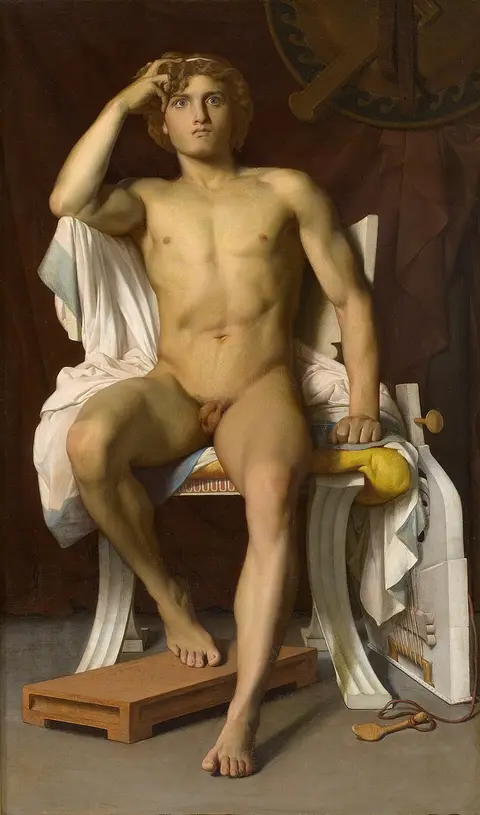
16works depicting Paris, in date order, from ancient vases to paintings of the Renaissance and after. All are in the public domain or openly licensed. Click an image for the full-size version and licence details. For scene-by-scene readings of famous vases, see Greek vase painting.


Stories featuring Paris
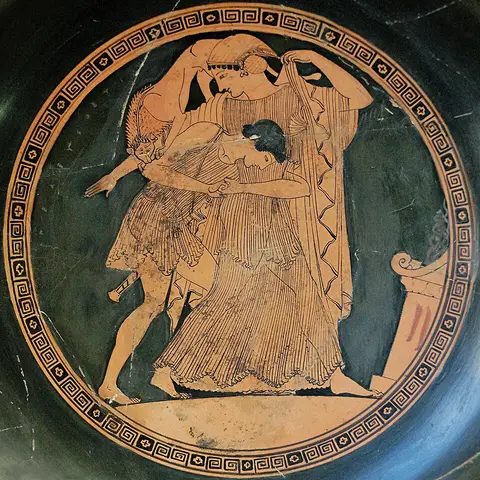 The wedding of Peleus and Thetis
The Trojan War and after
 The judgement of Paris
The Trojan War and after
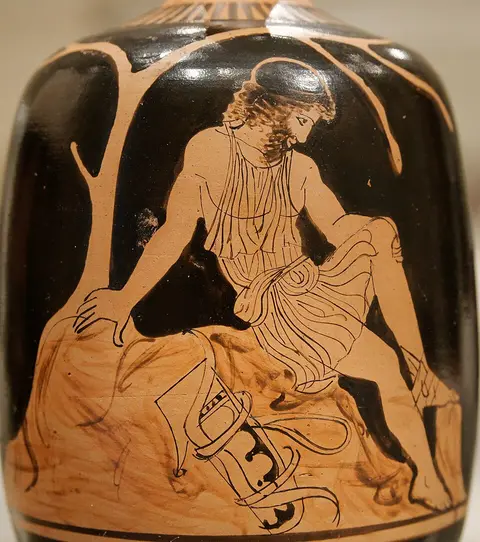 Philoctetes on Lemnos: the wounded archer
The Trojan War and after
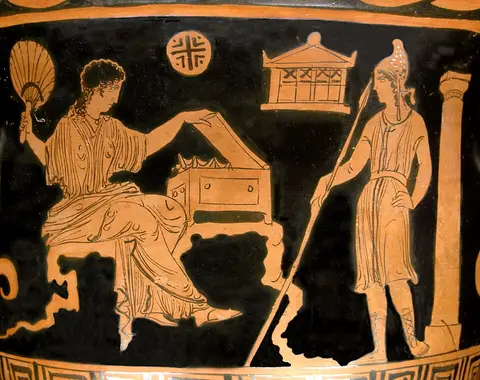 Helen in Egypt: the woman who never went to Troy
The Trojan War and after
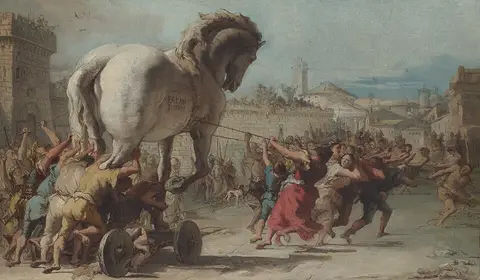 The Trojan War
 and after
 The death of Achilles
The Trojan War and after
Quick questions
- How did Paris die?
- After killing Achilles with an arrow guided by Apollo, Paris was himself wounded by Philoctetes, shooting with the bow of Heracles. Only his first wife, the nymph Oenone, could heal him. Bitter at being abandoned, she refused, then repented and ran to him too late, and killed herself. Apollodorus, Epitome 5.3, 5.8; Apollodorus, Library 3.12.6
- Why was Paris abandoned as a baby?
- Before he was born, his mother Hecuba dreamt she gave birth to a firebrand that set Troy ablaze, so the baby was left on Mount Ida. A she-bear nursed him and a herdsman raised him; he was called Alexander, "defender of men", for protecting the flocks. The judgement of Paris → Apollodorus, Library 3.12.5
- Who are Paris' parents?
- In the main account, Paris' father is Priam and mother is Hecuba. Apollodorus, Library 3.12.5
- Who were Paris' consorts and lovers?
- The partners named in the sources: Helen and Oenone.
- What are Paris' symbols?
- Golden apple, Bow.
- Which myths is Paris in?
- The wedding of Peleus and Thetis · The judgement of Paris · Philoctetes on Lemnos: the wounded archer · Helen in Egypt: the woman who never went to Troy · The Trojan War · The death of Achilles.
Ancient sources
This page is based on the texts below. Numbers refer to books and lines.
- Homer, Iliad 3, 6
- Apollodorus, Library 3.12.5–3.12.6; Apollodorus, Epitome 3.2–5.8
- Ovid, Heroides 5, 16