The greatest Greek warrior of the Trojan War and hero of the Iliad. Son of a mortal father and a sea goddess, he chooses a short, glorious life over a long, obscure one.
Who fought for whom in the Trojan War? Play →
In brief
- His father is the mortal king Peleus, his mother the sea goddess Thetis. All the gods attend their wedding, where Eris throws the golden apple.
- His mother tells him he must choose between two fates: a long and obscure life at home, or a short life with undying fame at Troy. He chooses fame.
- The Iliad tells how he withdraws from the fighting after Agamemnon takes Briseis from him, and returns to kill Hector after his dearest friend Patroclus is killed by Hector.
Family
Consorts and partners
Children
To see the whole family, open the Achilles family tree → · how is Achilles related to Zeus? → · compare with someone else →
Where the heel story comes from
Homer says nothing about Achilles being invulnerable; in the Iliad he is even wounded once. The story that Thetis made him invulnerable by dipping him in the Styx first appears in the Roman poet Statius's Achilleid. There Thetis wishes she had protected him 'entirely'; the heel itself is named outright only in later retellings. Apollodorus says Achilles died of an arrow shot by Paris and guided by Apollo, which struck him in the ankle. The phrase 'Achilles heel' comes from this later tradition.
Homer, Iliad 21.166–167; Statius, Achilleid 1.133–134, 1.268–270; Apollodorus, Epitome 5.3His tomb at Troy
In antiquity a mound at Sigeion, at the mouth of the Dardanelles, was shown as the tomb of Achilles. According to Arrian, Alexander the Great laid a wreath on it at the start of his Asian campaign.
Strabo, Geography 13.1.32; Arrian, Anabasis of Alexander 1.12.1Words of Achilles
“I would rather be a hired hand on the land of some poor man with little to live on than be king over all the dead who have perished.”
“My mother told me I have two fates. If I stay and fight here, I will never go home, but my fame will never fade. If I go home, my fame is lost, but my life will be long.”
Our own plain translations: they keep the sense, not the exact words. Play “Who said it?” →
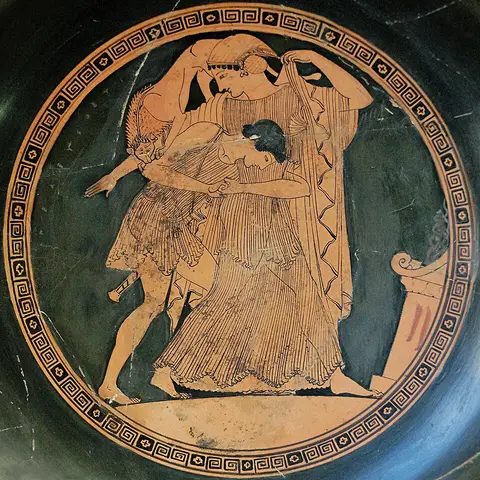
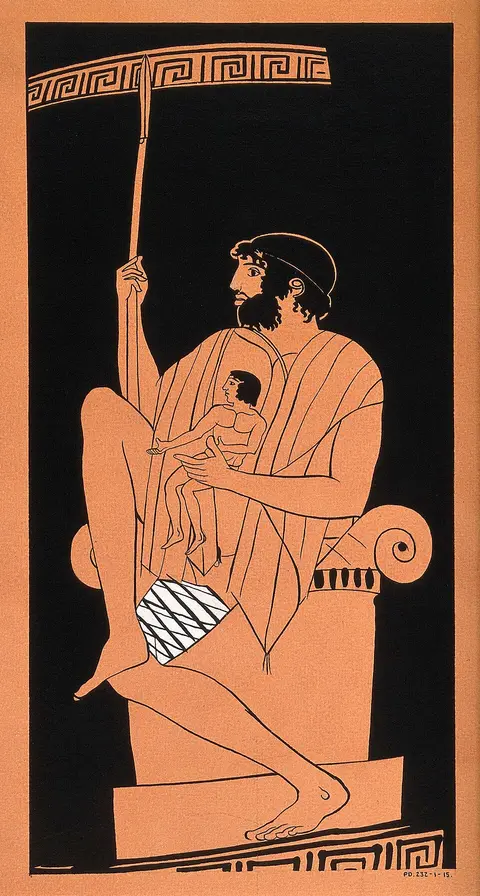
Achilles on Greek vases
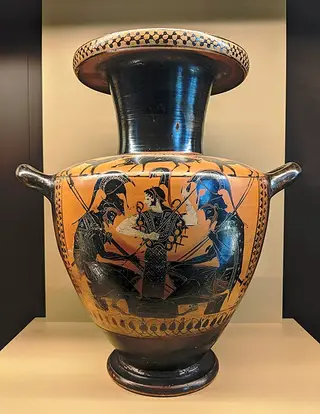
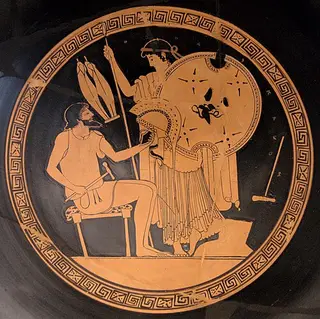
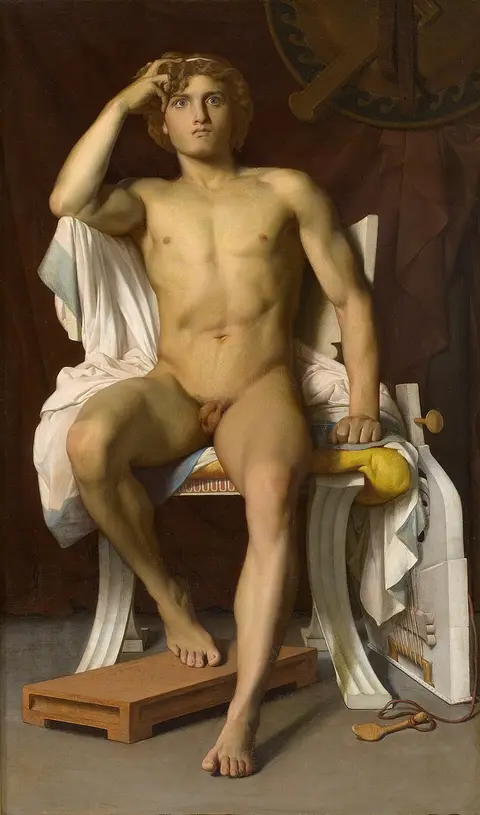
Achilles in art
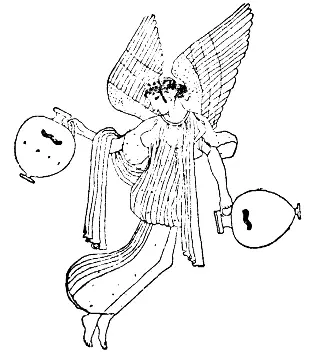
16works depicting Achilles, in date order, from ancient vases to paintings of the Renaissance and after. All are in the public domain or openly licensed. Click an image for the full-size version and licence details. For scene-by-scene readings of famous vases, see Greek vase painting.


Stories featuring Achilles
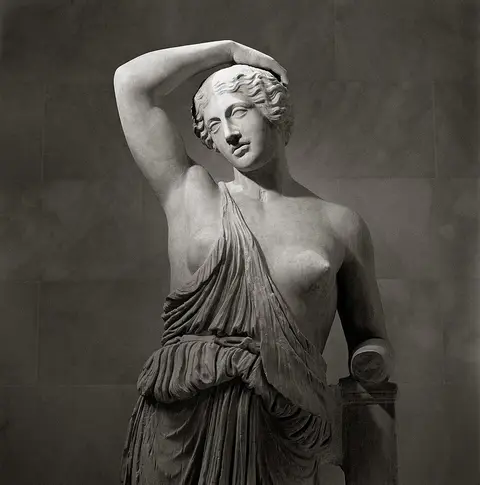 The Amazons: warrior women of the Black Sea
The age of heroes
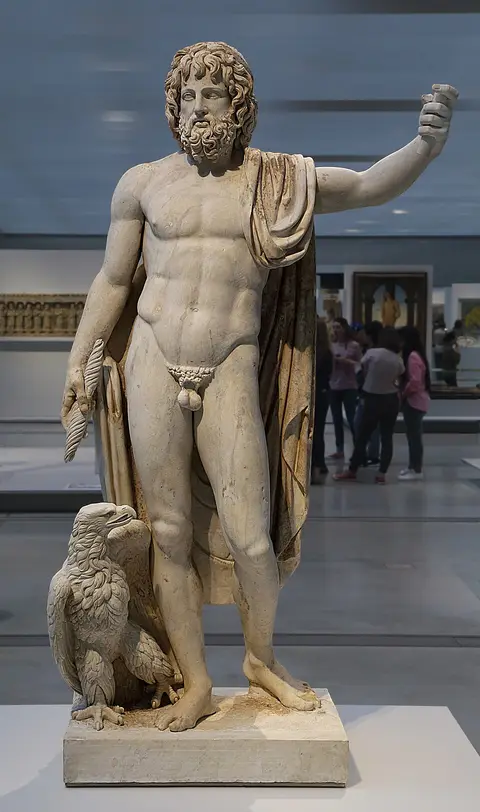 Aeacus and the Myrmidons: the people born from ants
The age of heroes
 The wedding of Peleus and Thetis
The Trojan War and after
 Telephus: the hero of Pergamon
The Trojan War and after
 Eos and Tithonus
The Trojan War and after
 The youth of Achilles
The Trojan War and after
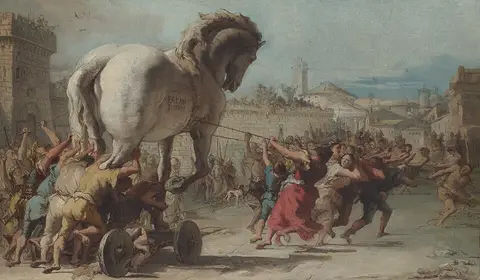 The Trojan War
 and after
The death of AchillesThe Trojan War and after
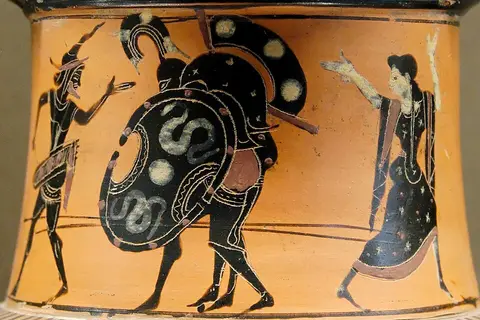 The madness of Ajax: the armour of Achilles
The Trojan War and after
Quick questions
- Who are Achilles' parents?
- In the main account, Achilles' father is Peleus and mother is Thetis. Hesiod, Theogony 1006–1007; Homer, Iliad 1.280
- Who were Achilles' consorts and lovers?
- The partners named in the sources: Deidamia and Briseis.
- Who are Achilles' children?
- This atlas records 1 child of Achilles: Neoptolemus. See the family tree →
- What are Achilles' symbols?
- Spear, Shield made by Hephaestus.
- Which myths is Achilles in?
- The Amazons: warrior women of the Black Sea · Aeacus and the Myrmidons: the people born from ants · The wedding of Peleus and Thetis · Telephus: the hero of Pergamon · Eos and Tithonus · The youth of Achilles · The Trojan War · The death of Achilles, and 1 more.
Ancient sources
This page is based on the texts below. Numbers refer to books and lines.
- Homer, Iliad 1, 9, 16–24
- Homer, Odyssey 11.467–540, 24.36–94
- Apollodorus, Library 3.13.5–3.13.8
- Statius, Achilleid