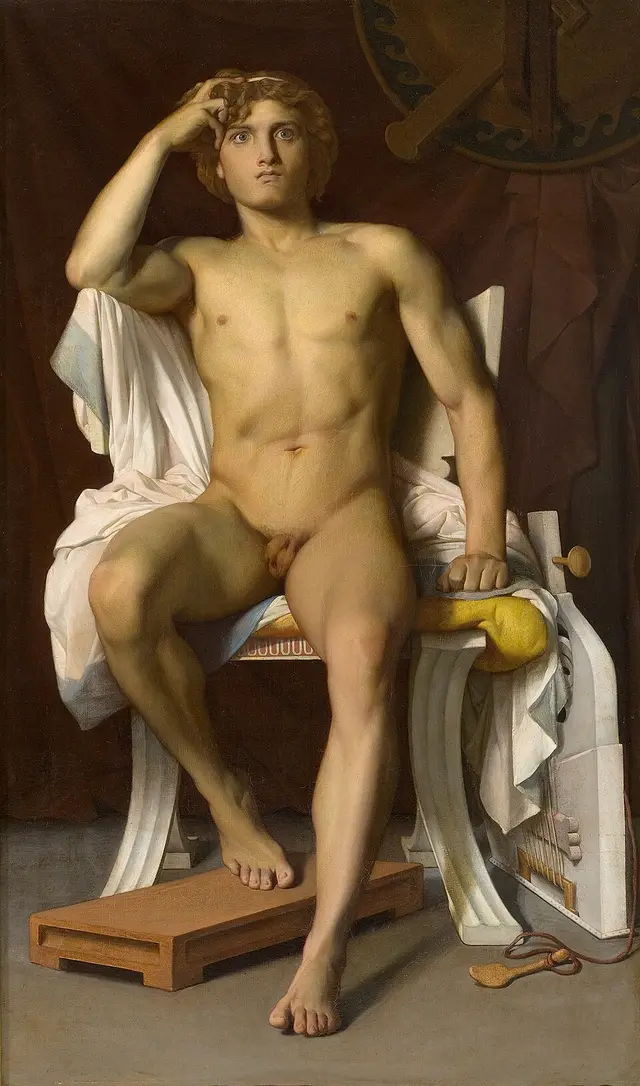
The death of Achilles
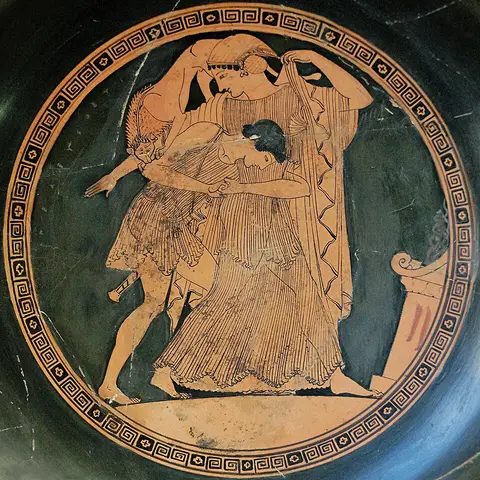
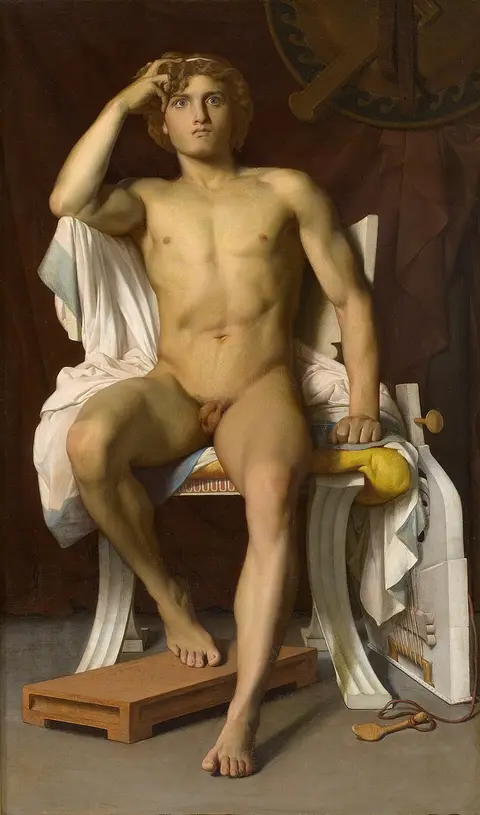
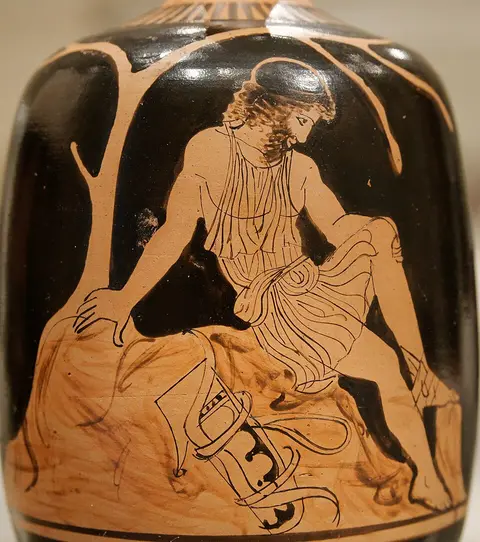
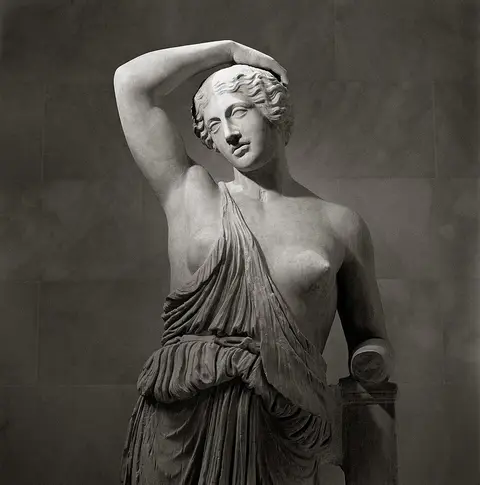
Having killed Hector, Achilles knows his own death is near. He defeats the Amazon queen Penthesilea and Memnon, king of Ethiopia, but at the gates of Troy an arrow from Paris, guided by Apollo, brings him down. His mother Thetis and the Muses mourn him for seventeen days.
In this story
-
A death foretold
In the Iliad, the dying Hector tells Achilles that Paris and Apollo will kill him at the Scaean Gate. His horse Xanthus has already warned him of the same. The Iliad ends with Hector's funeral; Achilles's death was told in the lost epic Aethiopis, of which only a short summary by Proclus survives.
Homer, Iliad 19.404–417, 22.355–360 -
Memnon and the Scaean Gate
Memnon, king of Ethiopia, comes to help the Trojans in armour made by Hephaestus and kills Antilochus, son of Nestor. To avenge his friend, Achilles kills Memnon and chases the Trojans back to the city. At the Scaean Gate an arrow shot by Paris and guided by Apollo strikes him; Apollodorus says it hit his ankle. A great battle is fought over his body. Ajax carries it away on his shoulders while Odysseus holds off the pursuing Trojans.
Aethiopis (Proclus's summary); Apollodorus, Epitome 5.3–5.4 -
The lament of the Muses
In the Odyssey, Agamemnon's ghost describes Achilles's funeral to him. Thetis rises from the sea with the Nereids, and the nine Muses take turns singing the lament. Gods and mortals weep for seventeen days, and on the eighteenth the body is burned. His bones are mixed with those of Patroclus in a golden urn made by Hephaestus, and the Greeks raise a great mound on the shore of the Hellespont, to be seen from far out at sea. In the land of the dead, when Odysseus praises him, Achilles replies that he would rather be a hired labourer for a poor man on earth than king over all the dead.
Homer, Odyssey 24.36–94, 11.488–491
Ancient sources
- Homer, Iliad 19.404–417, 22.355–360
- Aethiopis (Proclus's summary)
- Apollodorus, Epitome 5.3–5.5
- Homer, Odyssey 24.36–94
- Quintus Smyrnaeus 3