Queen of the Amazons. After Hector's death she comes to help Troy. Achilles kills her, and when he takes off her helmet and sees her face, he falls in love with her.
In brief
- The daughter of Ares, god of war, and the Amazon queen Otrera.
- Apollodorus says she had killed her sister Hippolyta by accident, and Priam purified her of the killing. In return she and her Amazons fought for Troy.
- She kills many Greeks in battle, until at last she meets Achilles and dies on his spear.
Family
Parents
Apollodorus, Epitome 5.1
Siblings
½ Half-sibling: only one parent in common.
To see the whole family, open the Penthesilea family tree → · how is Penthesilea related to Zeus? → · compare with someone else →
Love after death
In accounts based on the lost epic Aethiopis, when Achilles takes off the dead queen's helmet he sees her beauty and falls in love with her. When the Greek soldier Thersites mocks him for it, Achilles kills him.
An amphora made in Athens and signed by Exekias, now in the British Museum, shows the moment Achilles kills Penthesilea. It is read as the moment their eyes meet.
In 1808 the German writer Heinrich von Kleist retold the story in his play Penthesilea.
Apollodorus, Epitome 5.1–5.2; Aethiopis (summary by Proclus)Penthesilea in art
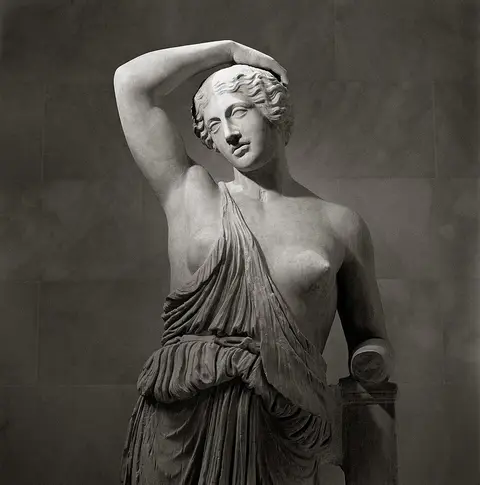
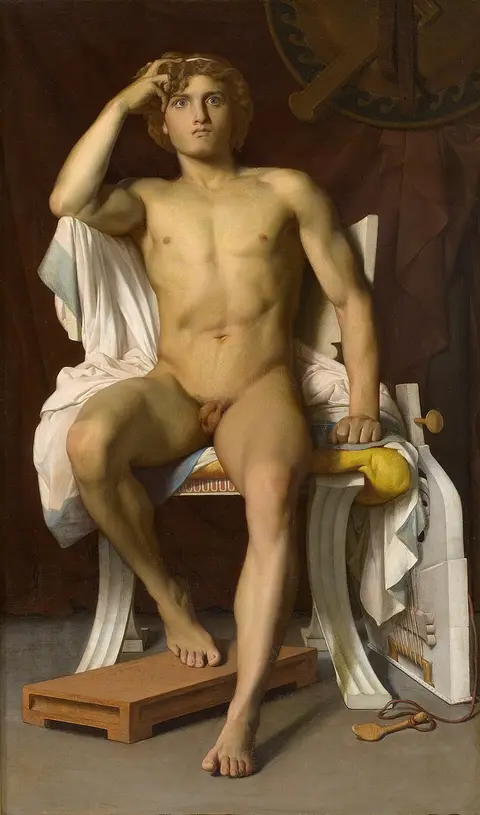
4works depicting Penthesilea, in date order, from ancient vases to paintings of the Renaissance and after. All are in the public domain or openly licensed. Click an image for the full-size version and licence details. For scene-by-scene readings of famous vases, see Greek vase painting.


Stories featuring Penthesilea
Quick questions
- Who are Penthesilea's parents?
- In the main account, Penthesilea's father is Ares and mother is Otrere. Apollodorus, Epitome 5.1
- What are Penthesilea's symbols?
- Double axe, Crescent shield.
- Which myths is Penthesilea in?
- The Amazons: warrior women of the Black Sea · The death of Achilles.
Ancient sources
This page is based on the texts below. Numbers refer to books and lines.
- Apollodorus, Epitome 5.1–5.2
- Aethiopis (summary by Proclus)
- Quintus of Smyrna, The Fall of Troy 1