The archer who inherits the bow of Heracles. On the way to Troy a snake bites him, and his wound smells so foul that his companions leave him on a deserted island. Ten years later it turns out Troy cannot fall without him.
In brief
- The son of Poeas. He (or his father) lights Heracles' pyre on Mount Oeta, and in return receives Heracles' bow and arrows.
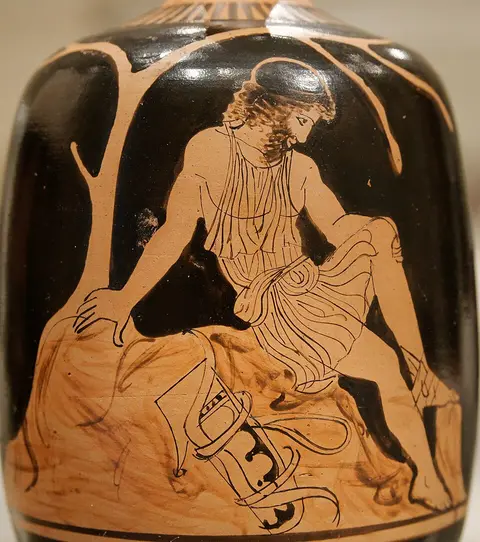
- When the fleet bound for Troy stops at an island, a snake bites him. The wound will not heal; it festers and stinks, and Philoctetes cries out in pain. On Odysseus's advice they leave him alone on the island of Lemnos.
- Ten years later the seer Helenus reveals that Troy can only fall to the bow of Heracles. The Greeks have to bring Philoctetes back. The arrow that kills Paris comes from his bow.
Family
Parents
Homer, Iliad 2.716–725
To see the whole family, open the Philoctetes family tree → · how is Philoctetes related to Zeus? → · compare with someone else →
Sophocles' Philoctetes
In Sophocles' play, Odysseus and Achilles' young son Neoptolemus come to Lemnos to trick Philoctetes out of his bow. Neoptolemus is ashamed to deceive a man in such pain and tells him the truth. In the end the deified Heracles appears and persuades Philoctetes to go to Troy.
The play is counted among the finest treatments of the choice between honesty and success.
Sophocles, PhiloctetesPhiloctetes in art
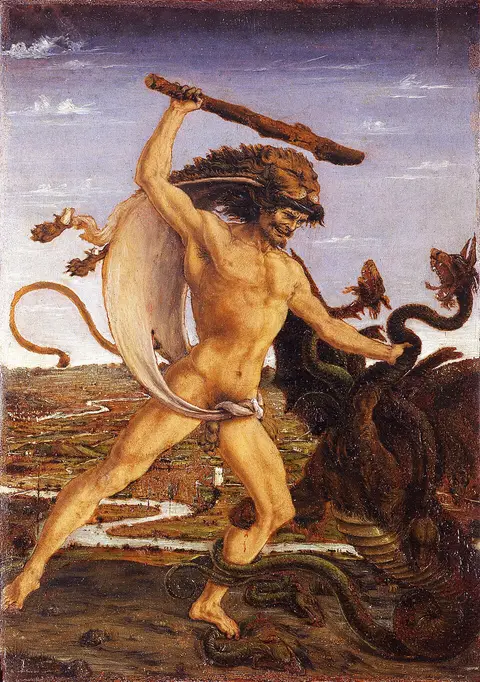
7works depicting Philoctetes, in date order, from ancient vases to paintings of the Renaissance and after. All are in the public domain or openly licensed. Click an image for the full-size version and licence details. For scene-by-scene readings of famous vases, see Greek vase painting.


Stories featuring Philoctetes
Quick questions
- Who are Philoctetes' parents?
- In the main account, Philoctetes' father is Poeas. The mother is not named in this account. Homer, Iliad 2.716–725
- What are Philoctetes' symbols?
- The bow of Heracles.
- Which myths is Philoctetes in?
- The death and deification of Heracles · Philoctetes on Lemnos: the wounded archer.
Ancient sources
This page is based on the texts below. Numbers refer to books and lines.
- Homer, Iliad 2.716–725
- Sophocles, Philoctetes
- Apollodorus, Library 2.7.7; Apollodorus, Epitome 3.27, 5.8