Myrrha and Adonis: the child born from a myrrh tree
Myrrha, daughter of the king of Cyprus, is turned into a tree as punishment for a forbidden love. From its trunk the beautiful Adonis is born. Aphrodite falls in love with him, and when he is killed by a wild boar, she makes the anemone spring from his blood.
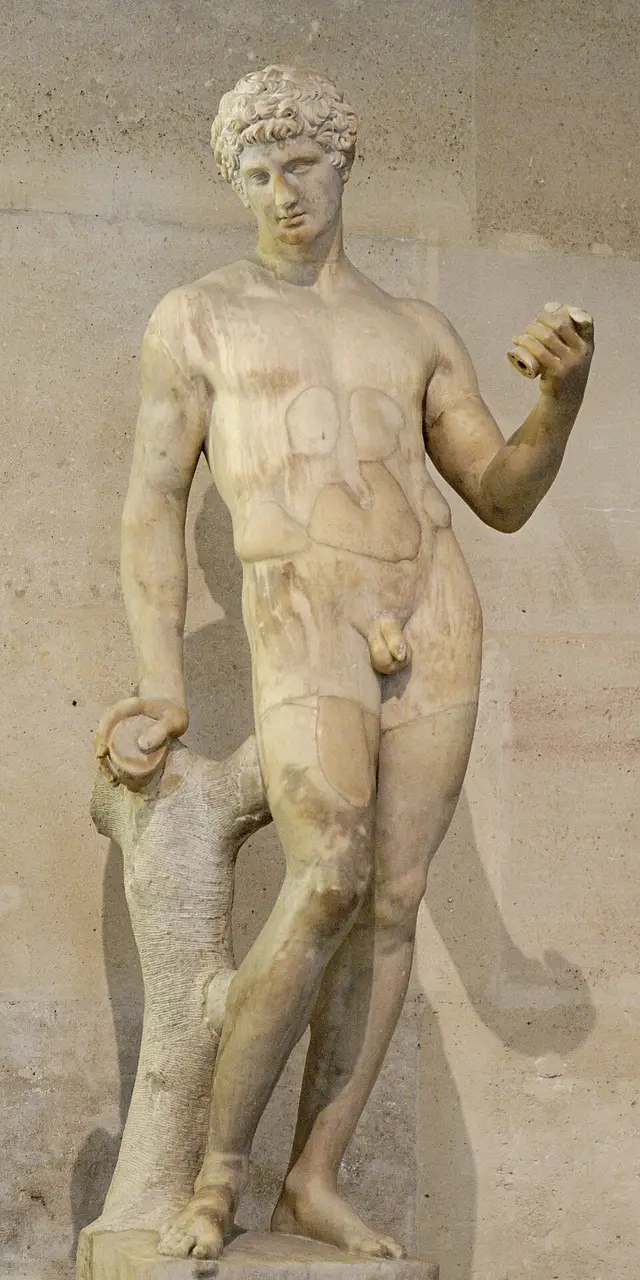
In this story
-
The girl who became a tree
Ovid says Myrrha, daughter of Cinyras, king of Cyprus, is seized by a forbidden passion for her own father. With her nurse's help she goes to him in the dark, hiding who she is. When Cinyras learns the truth he draws his sword, and Myrrha flees.
She wanders for months and at last begs the gods to let her stay neither among the living nor among the dead. The earth closes over her legs and she becomes a myrrh tree. The resin the tree weeps is her tears, and myrrh is named after her.
Ovid, Metamorphoses 10.298–502 -
Beloved of two goddesses
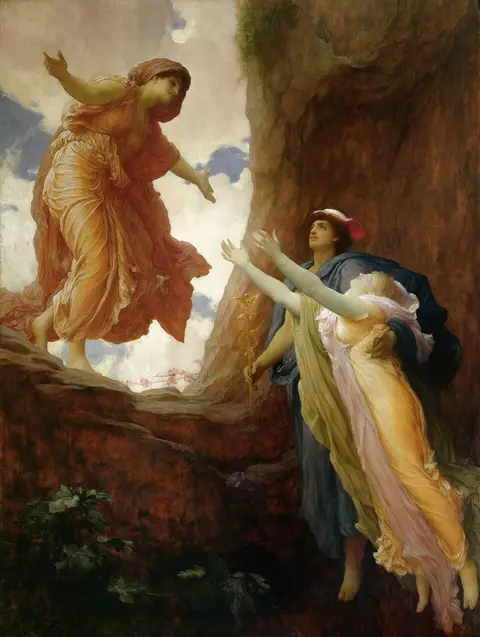
The tree's trunk splits open and a baby is born: Adonis. Apollodorus says Aphrodite hid the baby in a chest and gave it to Persephone to keep. When Persephone saw how beautiful he was, she refused to give him back.
Zeus settles the dispute: Adonis will spend a third of the year with Persephone, a third with Aphrodite, and the rest wherever he chooses. Adonis gives that share to Aphrodite too.
Ovid, Metamorphoses 10.503–518; Apollodorus, Library 3.14.4 -
Anemones
Aphrodite warns Adonis to keep away from dangerous game, above all boars and lions. Adonis does not listen, and a wild boar gores him with its tusks. In some accounts the boar is the jealous Ares in disguise.
Ovid says Aphrodite sprinkled nectar on Adonis's blood, and from it grew a delicate flower whose petals the wind soon scatters: the anemone. Its name was linked with the Greek anemos, 'wind'.
In the poet Bion's lament, Adonis's blood becomes roses and Aphrodite's tears become anemones.
Every year the death of Adonis was mourned in Athens and many cities of the eastern Mediterranean at the Adonia, a festival held by women. They planted quick-growing, quick-fading plants on the rooftops, then lamented for Adonis.
Ovid, Metamorphoses 10.519–559, 10.708–739; Aristophanes, Lysistrata 387–398
Ancient sources
- Ovid, Metamorphoses 10.298–739
- Apollodorus, Library 3.14.4
- Bion, Lament for Adonis
- Theocritus, Idyll 15