Amphion and Zethus: the walls of Thebes
Antiope, loved by Zeus, bears twins and has to leave them on a mountain. A herdsman raises them: Zethus becomes a strong cowherd, Amphion a musician with a lyre. They take revenge on Lycus and Dirce, who tormented their mother, and then build the walls of Thebes. The stones move into place at the sound of Amphion's lyre.
In this story
-
Antiope's flight
In the Odyssey, Odysseus sees Antiope in the land of the dead. Homer calls her the daughter of the river god Asopus. She bore Zeus two sons, Amphion and Zethus.
In Apollodorus, Antiope is the daughter of Nycteus, ruler of Thebes. When she becomes pregnant by Zeus she flees her father's anger and marries Epopeus, king of Sicyon. Nycteus kills himself and asks his brother Lycus to take revenge.
Lycus takes Sicyon, kills Epopeus and carries Antiope off as a captive. On the way, near Eleutherae, she gives birth to twins. The babies are left on the mountain, where a cowherd finds and raises them.
Homer, Odyssey 11.260–265; Apollodorus, Library 3.5.5 -
Two brothers, two lives
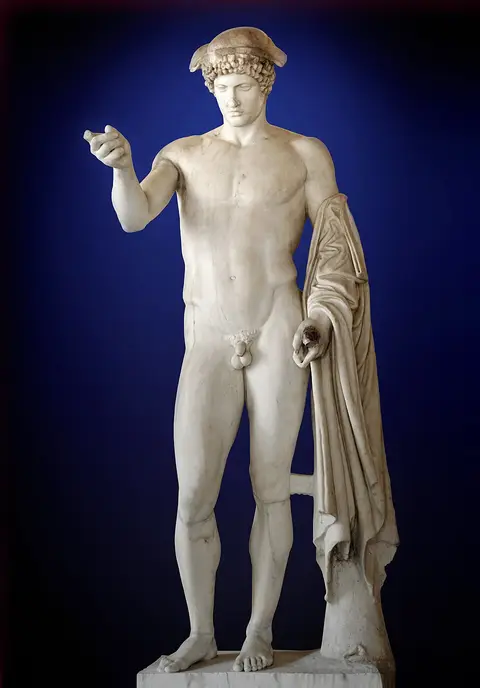
Zethus looks after the cattle. Amphion devotes himself to music, on a lyre given to him by Hermes.
In Euripides' Antiope, which survives only in fragments, the brothers argue. Zethus defends the active, working life; Amphion defends music and thought. Plato recalls this debate in the Gorgias.
Apollodorus, Library 3.5.5; Euripides, Antiope (fragments); Plato, Gorgias 485e–486d -
Dirce's punishment
Lycus and his wife Dirce keep Antiope captive for years and torment her. One day her chains fall away of their own accord, and she escapes to the hut where her sons live.
The twins recognise their mother. In Apollodorus they kill Lycus, tie Dirce to a bull, which drags her to her death, and throw her body into a spring. The spring has been called Dirce ever since.
In Euripides, Hermes appears at the last moment and stops them killing Lycus, who hands the kingdom over to the twins.
Apollodorus, Library 3.5.5; Hyginus, Fabulae 8; Euripides, Antiope (fragments) -
Walls built by a lyre
The twins become rulers of Thebes. The Odyssey says they were the first to found seven-gated Thebes and ring it with walls.
Apollonius of Rhodes and Pausanias tell how Zethus carried stones on his back, while Amphion played his lyre and the stones moved by themselves at the sound of the music and took their places in the wall.
Amphion marries Niobe, daughter of Tantalus. Zethus's wife is Thebe, who gives her name to the city.
Homer, Odyssey 11.262–265; Apollonius of Rhodes, Argonautica 1.735–741; Pausanias, Description of Greece 9.5.6–9; Apollodorus, Library 3.5.6 -
The Farnese Bull
The punishment of Dirce became the subject of one of the largest sculptural groups of antiquity. Pliny says Zethus, Amphion, Dirce, the bull and the rope were all carved from a single block. The group was made by Apollonius and Tauriscus and brought from Rhodes to Rome. The two sculptors are thought to have been brothers from Tralles in Caria.
A Roman copy of the group was found in 1545 in the Baths of Caracalla in Rome. Known as the Farnese Bull, it is now in the National Archaeological Museum in Naples.
Pliny, Natural History 36.34
Ancient sources
- Homer, Odyssey 11.260–265
- Apollodorus, Library 3.5.5–3.5.6
- Euripides, Antiope (fragments)
- Pausanias, Description of Greece 9.5.6–9, 9.17.4–7
- Apollonius of Rhodes, Argonautica 1.735–741
- Hyginus, Fabulae 7–8
- Pliny, Natural History 36.34