The twelve labours of Heracles
Driven mad by Hera, Heracles kills his own children, and to atone he serves King Eurystheus for twelve years. The labours take him from Greece to the ends of the earth, from the Black Sea to the underworld.
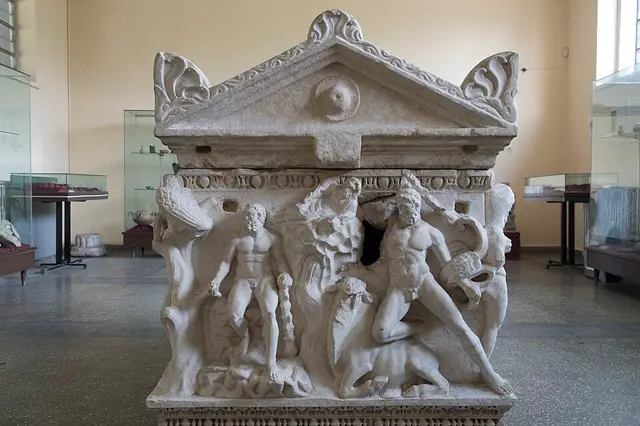
🗺 Follow the twelve labours on a map
In this story
-
Why twelve labours?
Hera sent a fit of madness on Heracles, and he threw his own children into the fire. When he came to his senses he went to Delphi. The oracle told him to settle in Tiryns, serve Eurystheus for twelve years and carry out the ten labours he was set; his reward would be immortality. Eurystheus refused to count two of them, and so there came to be twelve.
Apollodorus, Library 2.4.12 -
Six labours in the Peloponnese
1. The Nemean lion: no weapon could pierce its hide, so Heracles strangled it in its cave and wore its skin for the rest of his life. 2. The Lernaean Hydra: two heads grew for every one he cut off, until his nephew Iolaus seared the necks with a torch. 3. The Ceryneian hind: he chased the golden-horned deer sacred to Artemis for a whole year, to catch it without harming it. 4. The Erymanthian boar: he drove it into deep snow until it was exhausted and caught it alive. 5. The stables of Augeas: stables that had not been cleaned for years, which he cleaned in a single day by diverting the rivers Alpheus and Peneus through them. 6. The Stymphalian birds: he scared them into the air with bronze rattles made by Hephaestus and given to him by Athena, and shot them as they rose.
Apollodorus, Library 2.5.1–2.5.6 -
From Crete to the Black Sea
7. The Cretan bull: he caught the bull that Minos had failed to sacrifice to Poseidon and brought it to Greece. 8. The mares of Diomedes: he took the man-eating mares of the Thracian king and brought them to Mycenae. 9. The belt of Hippolyta: Eurystheus's daughter wanted the belt the Amazon queen had received from Ares. Heracles sailed to Themiscyra on the Black Sea coast. Hippolyta was willing to give him the belt, but Hera convinced the Amazons that Heracles was carrying off their queen. In the fight that followed Heracles killed Hippolyta and took the belt.
Apollodorus, Library 2.5.7–2.5.9 -
The ends of the earth, and the underworld
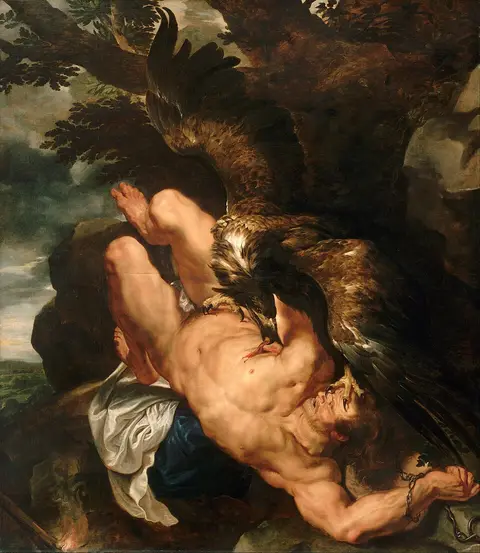
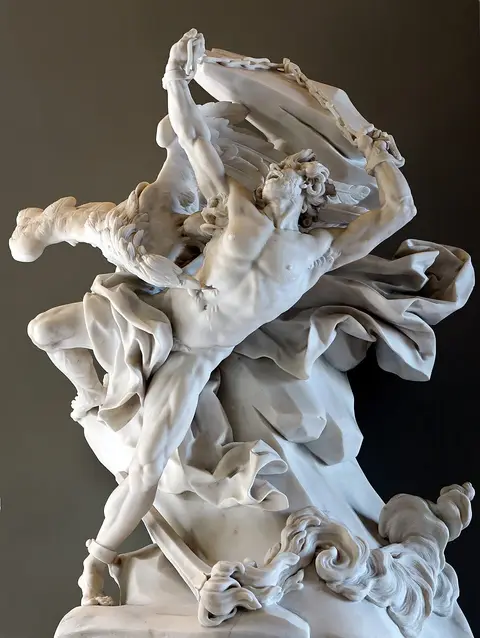
10. The cattle of Geryon: he brought back the cattle of the three-bodied Geryon from Erytheia, an island at the far western edge of the world. On the way he set up the 'Pillars of Heracles' on either side of the strait between Europe and Africa. 11. The apples of the Hesperides: on his journey to find them he freed Prometheus. He held up the sky for a while in place of Atlas, and tricked him into handing over the apples. 12. Cerberus: he went down to the underworld and, with Hades's permission, overpowered Cerberus with his bare arms and brought him up to the earth. He showed the dog to Eurystheus, then took it back to the underworld.
Apollodorus, Library 2.5.10–2.5.12
This story on Greek vases
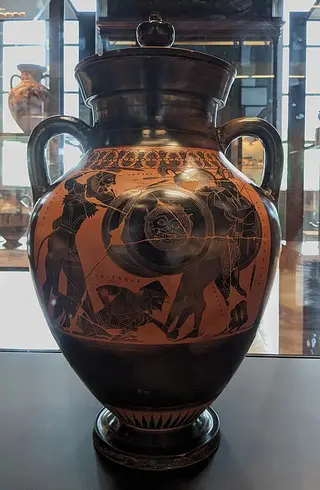 Exekias' Geryon amphora
mid-6th century BC · Louvre, Paris
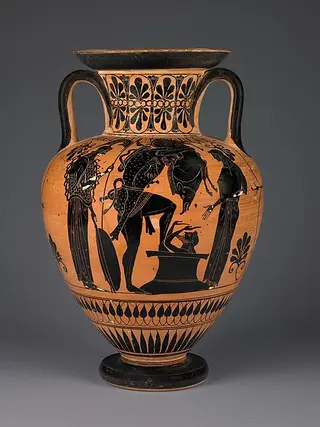 Heracles and the Erymanthian boar
late 6th century BC · J. Paul Getty Museum, Los Angeles
What each painter chose to show, scene by scene: Greek vase painting →
The twelve labours of Heracles: common questions
Why did Heracles do the twelve labours?
In a madness sent by Hera he killed his own children. To atone, the Delphic oracle told him to serve King Eurystheus and perform his labours; the reward would be immortality.
Apollodorus, Library 2.4.12What are the twelve labours of Heracles?
The Nemean lion, the Lernaean Hydra, the Ceryneian hind, the Erymanthian boar, the stables of Augeas, the Stymphalian birds, the Cretan bull, the mares of Diomedes, the belt of Hippolyta, the cattle of Geryon, the apples of the Hesperides and Cerberus. See them on a map →
Apollodorus, Library 2.5.1–2.5.12Why twelve and not ten?
The oracle spoke of ten labours, but Eurystheus refused to count two: the Hydra, because Iolaus helped, and the stables of Augeas, because Heracles had asked for payment. So he set two more.
Apollodorus, Library 2.4.12, 2.5.2, 2.5.5What was the hardest labour?
The ancient sources do not rank them, but the last was the one no mortal was expected to survive: going down to the underworld and bringing up Cerberus, overpowered with bare hands, as Hades had demanded.
Apollodorus, Library 2.5.12Ancient sources
- Apollodorus, Library 2.4.12–2.5.12
- Euripides, Heracles 348–441
- Diodorus, Library of History 4.11–26