The son of Hypnos, god of sleep, and the god of dreams who appears to sleepers in human form. His name comes from morphe, 'shape', and morphine is named after him.
In brief
- Our source for Morpheus is Ovid. He is one of the thousand sons of the god of Sleep.
- Ovid says Morpheus imitates people's walk, face and voice better than anyone, but takes only human form. His brother Icelos, or Phobetor, takes the shapes of animals, and Phantasos those of lifeless things: earth, rock, water and trees.
Family
Parents
Ovid, Metamorphoses 11.633–638
To see the whole family, open the Morpheus family tree → · how is Morpheus related to Zeus? → · compare with someone else →
Alcyone's dream
Queen Alcyone prays every day for the return of her husband Ceyx, who has drowned at sea. Hera sends Iris to the cave of Sleep, and Sleep sends Morpheus.
Morpheus takes on the pale, dripping form of Ceyx, enters Alcyone's dream and tells her he is dead.
Ovid, Metamorphoses 11.585–673Morphine
In the early 19th century the German pharmacist Friedrich Sertürner isolated a sleep-inducing substance from opium and named it after the god of dreams: morphium. The word 'morphine' comes from it.
Sertürner, Annalen der Physik 55 (1817)Morpheus in art
2works depicting Morpheus, in date order, from ancient vases to paintings of the Renaissance and after. All are in the public domain or openly licensed. Click an image for the full-size version and licence details. For scene-by-scene readings of famous vases, see Greek vase painting.


Stories featuring Morpheus
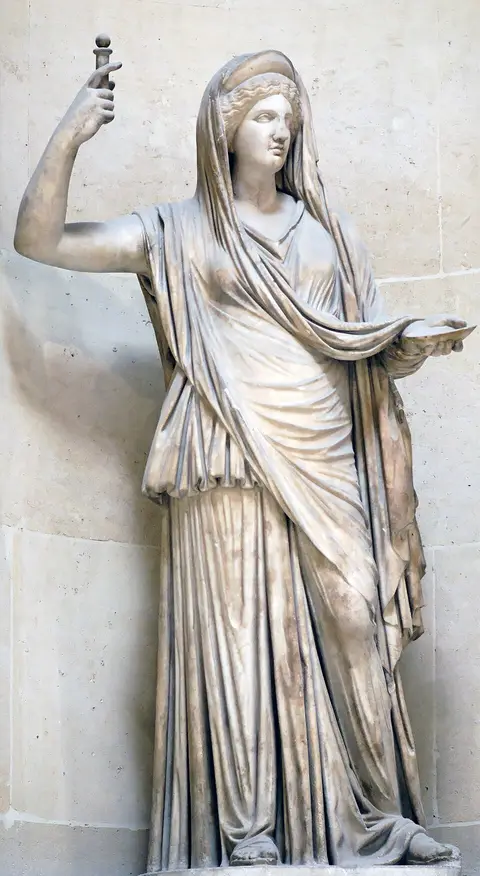
Quick questions
- Who are Morpheus' parents?
- In the main account, Morpheus' father is Hypnos. The mother is not named in this account. Ovid, Metamorphoses 11.633–638
- What are Morpheus' symbols?
- Wings, Poppy.
- Which myths is Morpheus in?
- Ceyx and Alcyone: love lost in a storm.
Ancient sources
This page is based on the texts below. Numbers refer to books and lines.
- Ovid, Metamorphoses 11.592–673