A mountain nymph punished by Hera: she cannot speak for herself, only repeat the last words of others. She falls hopelessly in love with Narcissus and fades away to a voice.
In brief
- In Ovid, Echo is a talkative nymph. Whenever Zeus is with the nymphs, Echo keeps Hera busy with long conversations so that the nymphs can slip away.
- When Hera sees through the trick she punishes her: Echo can never speak first, only repeat the end of what she hears.
- Echo falls in love with the beautiful Narcissus, who rejects her harshly. She withdraws into caves, her body wastes away and her bones turn to stone. Only her voice is left.
Family
Parents
No parents: one of the first beings.
To see the whole family, open the Echo family tree → · how is Echo related to Zeus? → · compare with someone else →
Pan's Echo
Longus's novel Daphnis and Chloe tells a different story. Echo is a gifted singer who rejects the love of Pan. Pan drives the shepherds mad, and they tear Echo apart and scatter her far and wide. To please the nymphs, Gaia hides the pieces in the earth. They go on singing, and that is why they repeat sounds everywhere.
Longus, Daphnis and Chloe 3.23Echo in art
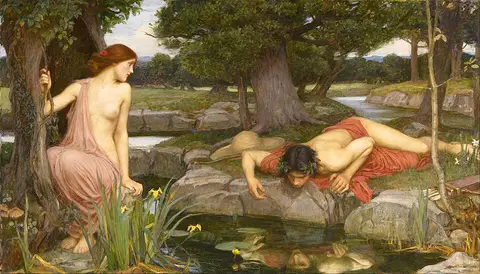
10works depicting Echo, in date order, from ancient vases to paintings of the Renaissance and after. All are in the public domain or openly licensed. Click an image for the full-size version and licence details. For scene-by-scene readings of famous vases, see Greek vase painting.


Stories featuring Echo
Ancient sources
This page is based on the texts below. Numbers refer to books and lines.
- Ovid, Metamorphoses 3.356–401
- Longus, Daphnis and Chloe 3.23