Princess of Colchis and sorceress, granddaughter of Helios. She helps Jason win the Golden Fleece and takes terrible revenge when he abandons her.
Follow the voyage of the Argo on a map, stop by stop →
In brief
- The daughter of Aeetes, king of Colchis, and the Oceanid Idyia. Her father is a son of Helios, so Medea is the sun god's granddaughter; the sorceress Circe is her aunt.
- She falls in love with Jason, helps him through his tasks and puts the dragon guarding the fleece to sleep. As they flee, she kills her brother Apsyrtus and scatters his body in the sea to delay her pursuing father.
- When Jason leaves her in Corinth to marry the king's daughter, Medea kills the bride with a poisoned robe. In Euripides she also kills her own children, then escapes in a dragon chariot sent by her grandfather Helios.
Family
Parents
Hesiod, Theogony 958–962
Children
Siblings
½ Half-sibling: only one parent in common.
To see the whole family, open the Medea family tree → · how is Medea related to Zeus? → · compare with someone else →
Did Euripides invent it?
In accounts older than Euripides, Medea's children die in other ways. Pausanias reports that the Corinthians stoned them to death because of the gifts Medea had sent. A mother killing her own children probably became the main version through Euripides's tragedy of 431 BC, which has shaped every later Medea.
Pausanias, Description of Greece 2.3.6–7; Euripides, MedeaAthens and the Medes
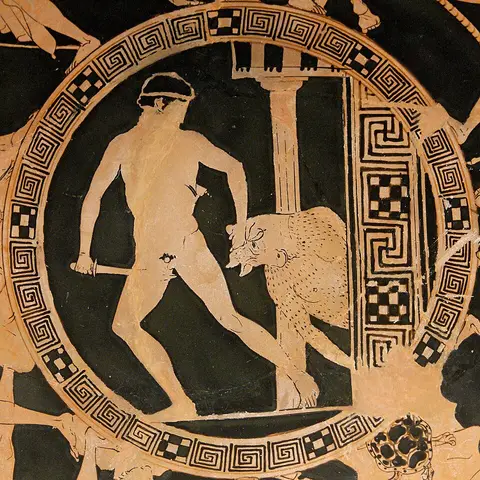
From Corinth Medea flees to Athens and marries King Aegeus. When Aegeus's son Theseus arrives, she tries to poison him, but Aegeus recognises his son's sword and dashes the cup to the ground. Medea flees Athens too. According to Apollodorus, her son Medus gave his name to the Medes of Iran. Herodotus instead links the name to Medea herself: the people once called Arioi changed their name when Medea came to them from Athens.
Apollodorus, Library 1.9.28; Apollodorus, Epitome 1.5–1.6; Herodotus, Histories 7.62Words of Medea
“I would rather stand three times in the battle line with a shield than give birth once.”
Our own plain translations: they keep the sense, not the exact words. Play “Who said it?” →
Medea in art
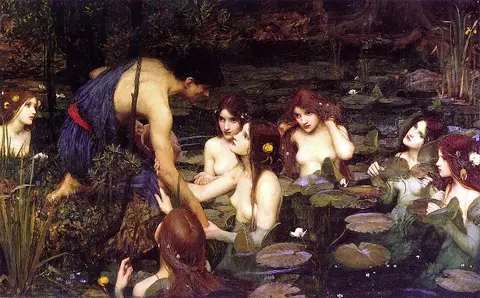
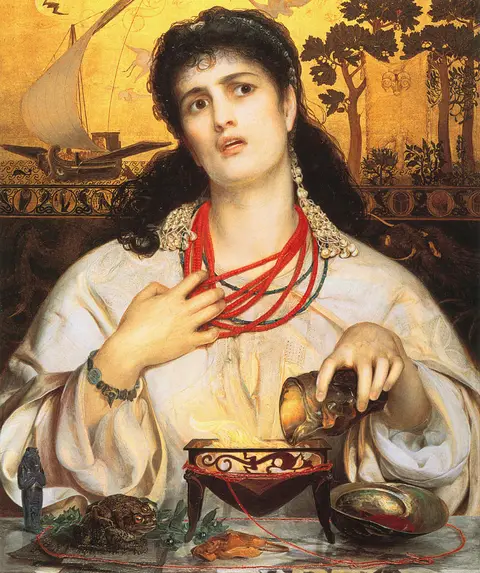
16works depicting Medea, in date order, from ancient vases to paintings of the Renaissance and after. All are in the public domain or openly licensed. Click an image for the full-size version and licence details. For scene-by-scene readings of famous vases, see Greek vase painting.


Stories featuring Medea
Quick questions
- Who are Medea's parents?
- In the main account, Medea's father is Aeëtes and mother is Idyia. Hesiod, Theogony 958–962
- Who were Medea's consorts and lovers?
- The partners named in the sources: Aegeus and Jason.
- Who are Medea's children?
- This atlas records 3 children of Medea: Medus, Mermerus and Pheres. See the family tree →
- What are Medea's symbols?
- Poison, Dragon chariot.
- Which myths is Medea in?
- Theseus' road to Athens: six bandits · Jason and the Argonauts · Medea in Corinth.
Ancient sources
This page is based on the texts below. Numbers refer to books and lines.
- Euripides, Medea
- Apollonius of Rhodes, Argonautica 3–4
- Apollodorus, Library 1.9.23–1.9.28
- Ovid, Metamorphoses 7.1–424