Daughter of Cadmus and Harmonia. She plots against her stepchildren Phrixus and Helle and nurses the infant Dionysus. Fleeing the madness Hera sends, she leaps into the sea with her son and becomes the sea goddess Leucothea.
In brief
- A daughter of Cadmus, founder of Thebes, and Harmonia. Her sisters are Semele, Agave and Autonoe.
- She marries Athamas, king of Orchomenus. To get rid of his children by his first wife, Phrixus and Helle, she contrives a famine; the children escape on the ram with the golden fleece.
- When her sister Semele dies she brings up the baby Dionysus. Hera in her anger drives Athamas mad, and Ino leaps into the sea with her little son Melicertes.
Family
Consorts and partners
Siblings
To see the whole family, open the Ino family tree → · how is Ino related to Zeus? → · compare with someone else →
The veil that saved Odysseus
In the Odyssey, after Odysseus leaves Calypso's island his raft is smashed by a storm. Ino, once mortal and now the sea goddess Leucothea, appears to him and gives him a veil so that he will not drown. He wraps it around his chest and swims safely to shore.
Homer, Odyssey 5.333–353The roasted seed
In Apollodorus, Ino persuades the women to roast the seed corn in secret, so that nothing grows. She bribes the messengers sent to the oracle to report that Phrixus must be sacrificed. Their mother Nephele carries the children off on the golden ram.
Apollodorus, Library 1.9.1Stories featuring Ino
Quick questions
- Who are Ino's parents?
- In the main account, Ino's father is Cadmus and mother is Harmonia. Hesiod, Theogony 975–978
- Who were Ino's consorts and lovers?
- The partners named in the sources: Athamas.
- What is Ino's Roman name?
- In Roman mythology Ino is known as Mater Matuta. All Greek and Roman names →
- What are Ino's symbols?
- Veil.
- Which myths is Ino in?
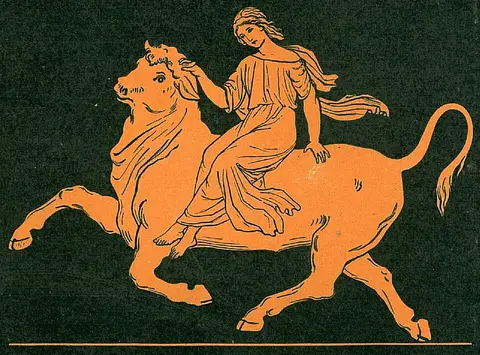
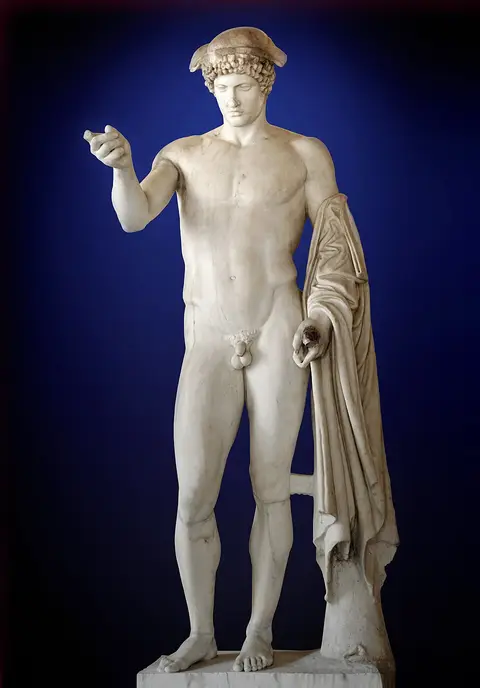
- Cadmus and Europa: the bull, the dragon and the alphabet · Phrixus and Helle: the ram with the golden fleece.
Ancient sources
This page is based on the texts below. Numbers refer to books and lines.
- Homer, Odyssey 5.333–353
- Apollodorus, Library 1.9.1, 3.4.3
- Ovid, Metamorphoses 4.416–542
- Ovid, Fasti 6.475–550