Daughter of the sun god Helios and wife of King Minos of Crete. Cursed by Poseidon, she falls for a bull and gives birth to the Minotaur.
In brief
- The daughter of Helios and Perseis, a daughter of Oceanus. She is the sister of the sorceress Circe and of Aeëtes, king of Colchis, and so the aunt of Medea.
- When Minos fails to sacrifice the bull Poseidon sent him, the angry god fills Pasiphaë with desire for the bull.
- The craftsman Daedalus builds her a hollow wooden cow. From this union the bull-headed Minotaur is born. Ariadne, Phaedra and Androgeus are also her children.
Family
Parents
Apollodorus, Library 3.1.2
Consorts and partners
To see the whole family, open the Pasiphaë family tree → · how is Pasiphaë related to Zeus? → · compare with someone else →
The shining one
Her name means 'she who shines for all'. Some scholars think she was originally a Cretan moon goddess. Pausanias and Plutarch say that at Thalamae, near Sparta, she had a sanctuary where oracles were given in dreams.
Pausanias, Description of Greece 3.26.1; Plutarch, Agis 9Pasiphaë in art
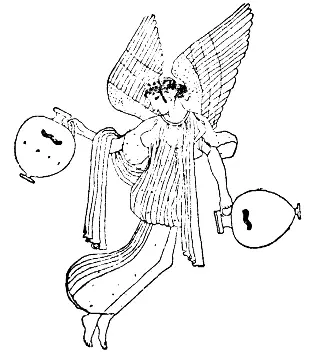
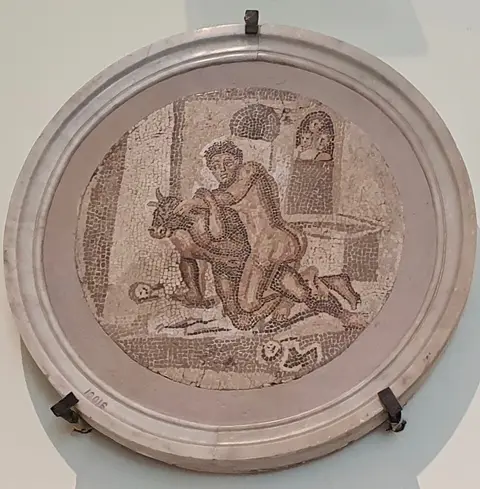
2works depicting Pasiphaë, in date order, from ancient vases to paintings of the Renaissance and after. All are in the public domain or openly licensed. Click an image for the full-size version and licence details. For scene-by-scene readings of famous vases, see Greek vase painting.


Stories featuring Pasiphaë
Quick questions
- Who are Pasiphaë's parents?
- In the main account, Pasiphaë's father is Helios and mother is Perseis. Apollodorus, Library 3.1.2
- Who were Pasiphaë's consorts and lovers?
- The partners named in the sources: Minos.
- Who are Pasiphaë's children?
- This atlas records 4 children of Pasiphaë: Ariadne, Phaedra, Minotaur and Androgeus. See the family tree →
- What are Pasiphaë's symbols?
- Bull.
- Which myths is Pasiphaë in?
- Cephalus and Procris: the spear that never missed · Theseus and the Minotaur.
Ancient sources
This page is based on the texts below. Numbers refer to books and lines.
- Apollodorus, Library 3.1.2–3.1.4
- Ovid, Metamorphoses 8.131–137
- Euripides, Cretans (fragments)