The baby son of Hector and Andromache. In the most moving scene of the Iliad he cries in fear of his father's plumed helmet. After Troy falls, the Greeks throw him from the city walls.
In brief
- His father names him Scamandrius, after the river Scamander. The Trojans call him Astyanax, 'lord of the city', because his father Hector alone defends it.
- In the sixth book of the Iliad, before going back to battle, Hector says farewell to his wife and son on the walls. The baby is frightened by the horsehair crest on his father's bronze helmet and shrinks back against his nurse. Hector and Andromache laugh. Hector takes off the helmet, kisses his son, lifts him up and prays to the gods for him.
Family
Parents
Homer, Iliad 6.399–403
Siblings
To see the whole family, open the Astyanax family tree → · how is Astyanax related to Zeus? → · compare with someone else →
The child thrown from the walls
After Hector's death, Andromache foresees her son's fate: either he will become a slave, or some Greek will hurl him from the walls.
When Troy falls, this comes true. In the lost epic Little Iliad, Neoptolemus, son of Achilles, throws him from the walls. In Euripides' Trojan Women the Greeks, afraid to let Hector's son live, decide on it at Odysseus's urging. His grandmother Hecuba buries the body on his father's shield.
Homer, Iliad 6.394–502, 22.484–507, 24.734–739; Euripides, Trojan Women 709–789, 1118–1250Astyanax on Greek vases
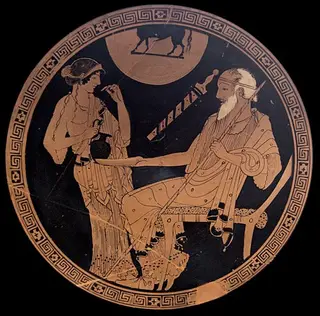
Astyanax in art
10works depicting Astyanax, in date order, from ancient vases to paintings of the Renaissance and after. All are in the public domain or openly licensed. Click an image for the full-size version and licence details. For scene-by-scene readings of famous vases, see Greek vase painting.


Quick questions
- How did Astyanax die?
- When Troy fell, the Greeks threw Hector's infant son from the city walls. In the lost epic Little Iliad it is Neoptolemus who throws him; in Euripides' Trojan Women the Greeks decide on it at Odysseus's urging, fearing that Hector's son might grow up, and his grandmother Hecuba buries him on his father's shield. The Trojan War → Homer, Iliad 24.734–739; Euripides, Trojan Women 709–789, 1118–1250
- What happens in the farewell scene of Hector and Andromache?
- Before going back to battle, Hector meets his wife Andromache and their baby on the walls. The child is frightened by the horsehair crest on his father's helmet and shrinks back; his parents laugh, Hector takes off the helmet, kisses his son and prays to the gods for him. Homer, Iliad 6.394–502
- Who are Astyanax's parents?
- In the main account, Astyanax's father is Hector and mother is Andromache. Homer, Iliad 6.399–403
Ancient sources
This page is based on the texts below. Numbers refer to books and lines.
- Homer, Iliad 6.394–502, 22.484–507
- Euripides, Trojan Women
- Little Iliad (Proclus' summary)
- Seneca, Trojan Women