Callisto and the Great Bear
Callisto, a huntress in the band of Artemis, is deceived by Zeus, becomes pregnant and is turned into a bear. In the end she and her son are set in the sky: the Great Bear, and Boötes, the Bear-watcher who follows her.
In this story
-
Zeus disguised as Artemis
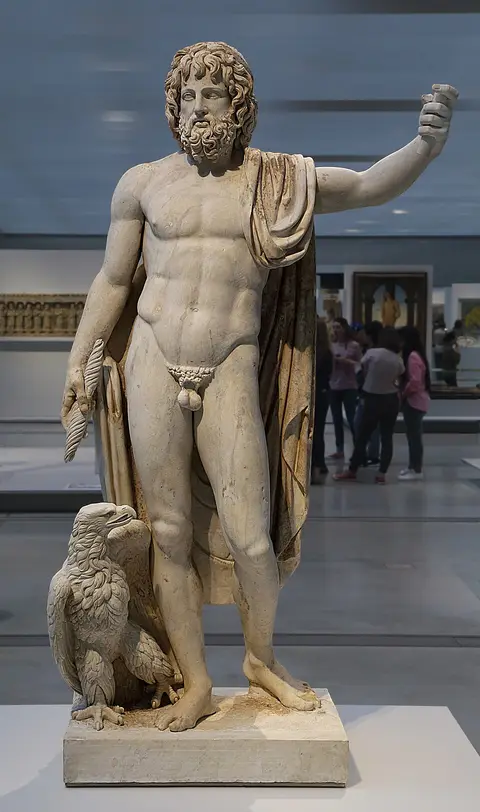
Callisto is one of the nymphs who have sworn never to marry and hunt alongside Artemis. Ovid says Zeus approached her disguised as Artemis herself.
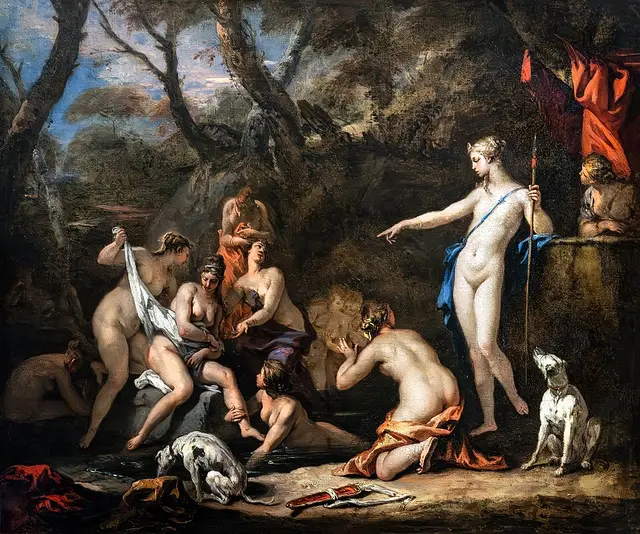
Months later, as Artemis and her nymphs bathe in a spring, it becomes clear that Callisto is pregnant, and Artemis drives her away.
Ovid, Metamorphoses 2.401–465 -
The bear
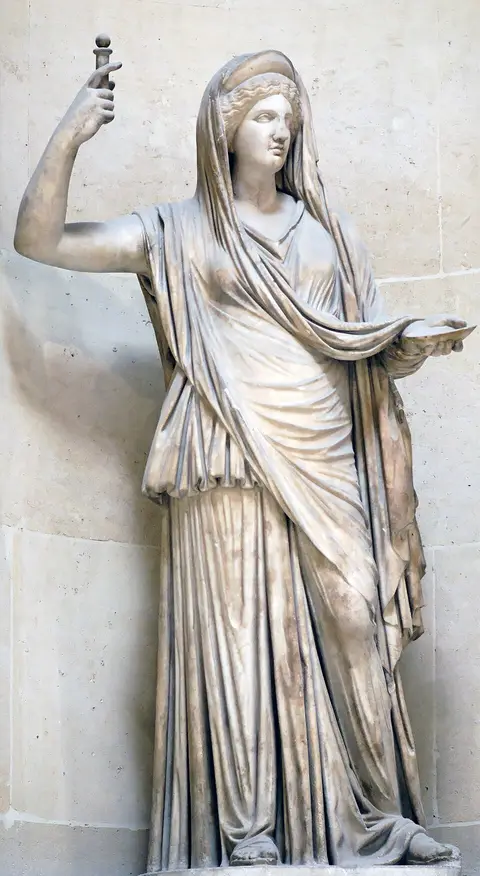
Callisto gives birth to Arcas. In Ovid, the jealous Hera turns her into a bear. Apollodorus reports other versions: in some it is Zeus who turns her into a bear to hide her from Hera, in others Artemis.
For years Callisto wanders the woods, but her mind is still human. She is afraid of hunters, and even of other bears.
Ovid, Metamorphoses 2.466–495; Apollodorus, Library 3.8.2 -
Two bears in the sky
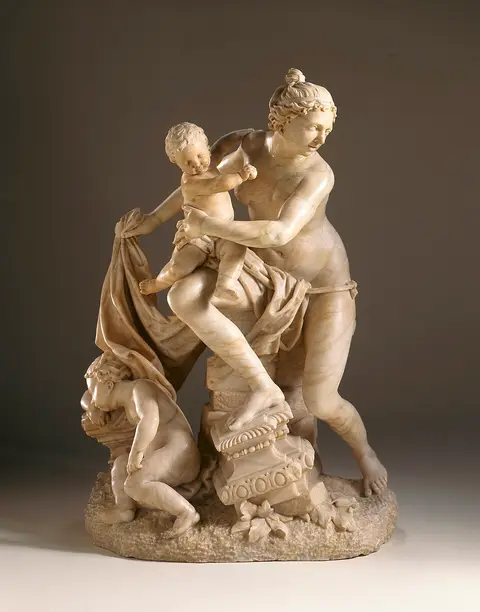
At fifteen, Arcas is out hunting when he meets his mother. The bear recognises her son and comes towards him. As Arcas is about to throw his spear, Zeus lifts them both into the sky in a whirlwind and turns them into stars. Callisto becomes the Great Bear. In Ovid's Fasti and in Hyginus, Arcas becomes Arctophylax, the 'Bear-watcher' who follows her: the constellation Boötes. The version that makes Arcas the Little Bear is not found in the ancient sources; it became popular later.
Hera is furious at this too, and asks Oceanus and Tethys never to let the two constellations dip into the sea to bathe. And indeed, seen from the latitude of the Mediterranean, they never set all year round.
Arcas later becomes king of Arcadia, which takes its name from him.
Ovid, Metamorphoses 2.496–530; Ovid, Fasti 2.183–192; Hyginus, Astronomica 2.4; Pausanias, Description of Greece 8.3.6–7, 8.4.1
Ancient sources
- Ovid, Metamorphoses 2.401–530
- Apollodorus, Library 3.8.2
- Ovid, Fasti 2.153–192
- Pausanias, Description of Greece 8.3.6–7