Leto and the Lycian peasants: the frogs
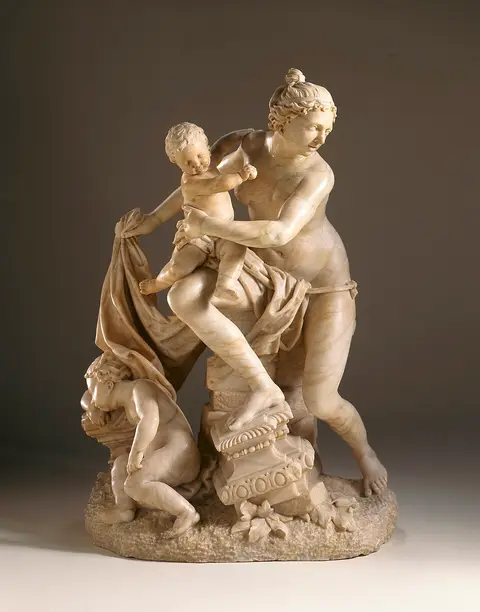
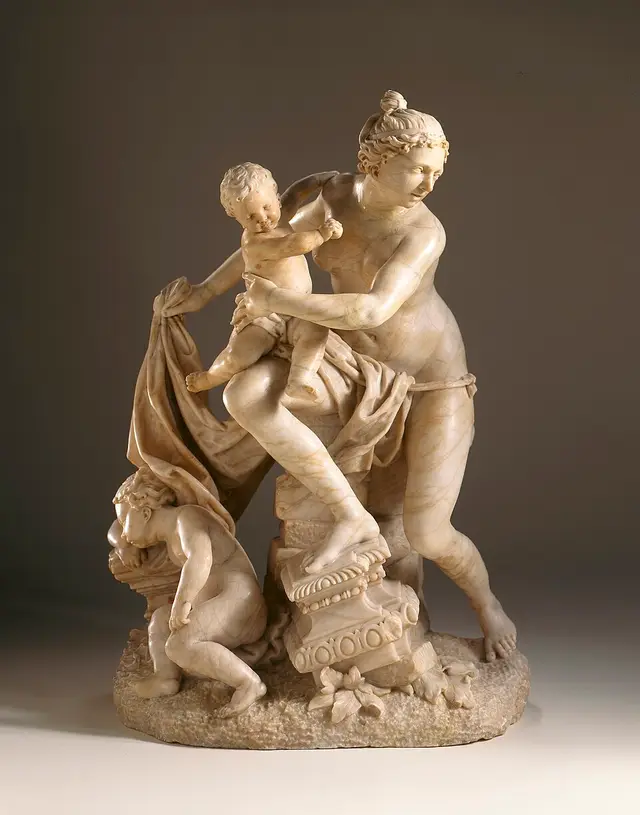
Fleeing Hera's anger with her newborn twins Apollo and Artemis, Leto reaches a lake in Lycia. She wants a drink, but the peasants drive her away and muddy the water, and the goddess condemns them to live in it forever, as frogs.
In this story
-
A thirsty goddess
In Ovid the story is told by a man who remembers a journey in Lycia, where he saw an old altar in the middle of a lake. Hunted by Hera, Leto carries her twins in her arms. In the Lycian heat she is exhausted with thirst. In a valley she finds a small lake where peasants are cutting reeds. She kneels to drink, but they stop her. Leto pleads: 'Water belongs to everyone. If not for me, then have pity on these children in my arms.'
Ovid, Metamorphoses 6.313–359 -
The lake's new owners
The peasants curse her and stir up the bottom of the lake with their feet, turning the water to mud. Leto raises her hands to heaven in anger: 'Live in this lake forever!' At once the peasants plunge into the water. Their necks shrink, their backs turn green and their bellies white. Even underwater they still try to curse, and that is why frogs croak.
Ovid, Metamorphoses 6.360–381 -
The wolves, and the name of Lycia
Antoninus Liberalis, drawing on Menecrates of Xanthos, gives another version. Leto goes to the spring of Melite to bathe her children, and herdsmen drive her away. Wolves guide her to the river Xanthus, and in their honour she names the land Lycia, from the Greek lykos, 'wolf'. Here too the herdsmen are turned into frogs. The Letoon, near Xanthos, was the most important sanctuary in Lycia, dedicated to Leto, Apollo and Artemis, and is a UNESCO World Heritage Site together with Xanthos. In 1973 a trilingual inscription in Greek, Lycian and Aramaic was found there, which did much to help decipher the Lycian language.
Antoninus Liberalis, Metamorphoses 35; Letoon trilingual inscription (4th century BC)
Ancient sources
- Ovid, Metamorphoses 6.313–381
- Antoninus Liberalis 35