Niobe: the mother turned to stone
The queen of Thebes boasts of her children and scorns the goddess Leto. She loses them all and turns to stone in the land of her birth, on Mount Sipylus near Manisa.
In this story
-
Pride
Niobe is the daughter of Tantalus, king of Sipylus in Lydia, and the wife of Amphion, king of Thebes. In Ovid, the seer Manto calls on the women of Thebes to make offerings to Leto and her children. Niobe arrives and objects: 'My ancestors are gods, I am a queen, I have seven sons and seven daughters. Leto has only two children. Why worship her when you could worship me?'
Ovid, Metamorphoses 6.146–203 -
The arrows
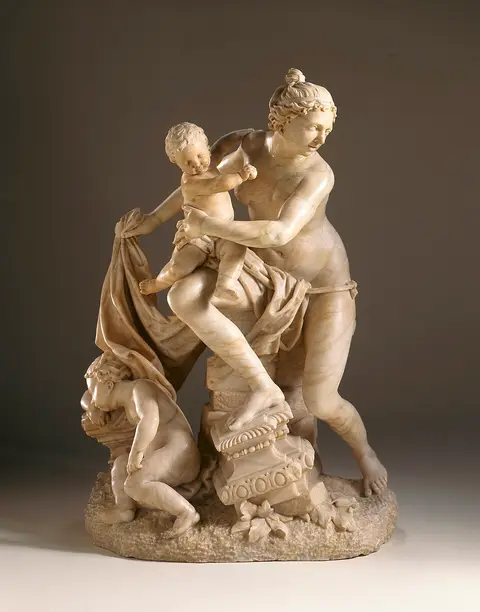
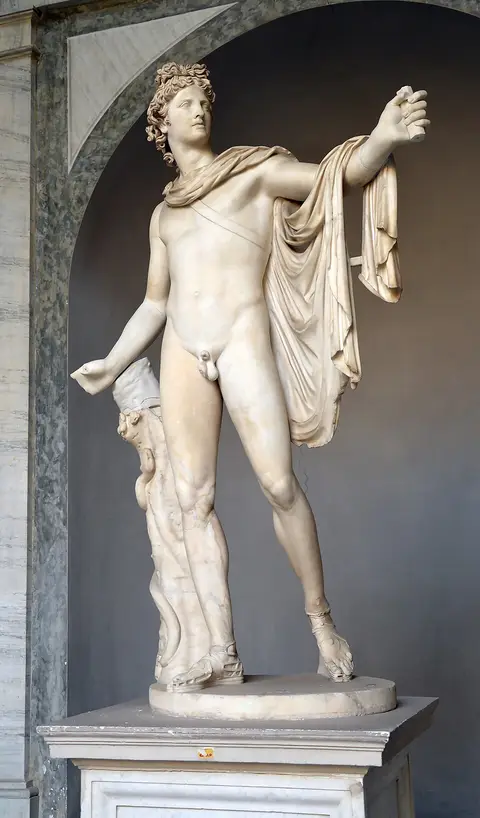
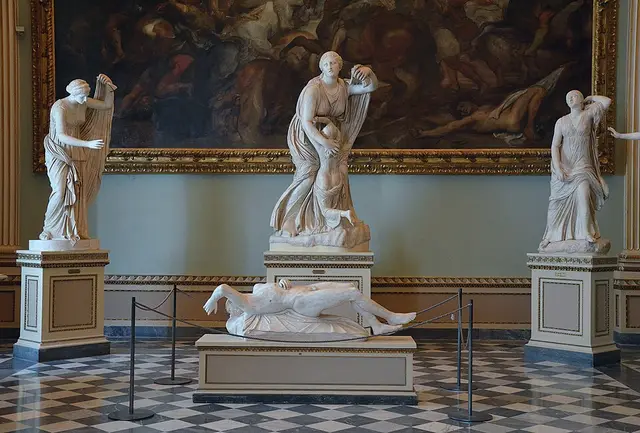
Leto calls to her children from Delos. Outside the city, where Niobe's sons are exercising their horses, Apollo shoots them down one by one. Their father Amphion cannot bear the grief and kills himself. Still Niobe will not give in: 'Even in my loss I have more than you.' At that moment Artemis's arrows begin to strike her daughters. Niobe hides the last one under her skirts and begs for her life, but she dies too.
Ovid, Metamorphoses 6.204–301 -
The Weeping Rock
Niobe freezes with grief. Her hair no longer stirs in the wind, her eyes stand still, her body turns to stone. A whirlwind carries her to the land of her birth, the mountains of Sipylus, where she goes on weeping as a rock. In the Iliad, Achilles urges the grieving Priam to eat by reminding him of Niobe: even she ate after the death of her twelve children. Pausanias writes that he saw Niobe on Sipylus with his own eyes: close up she is a rock, but from a distance she looks like a weeping woman.
Ovid, Metamorphoses 6.301–312; Homer, Iliad 24.599–620; Pausanias, Description of Greece 1.21.3
This story on Greek vases
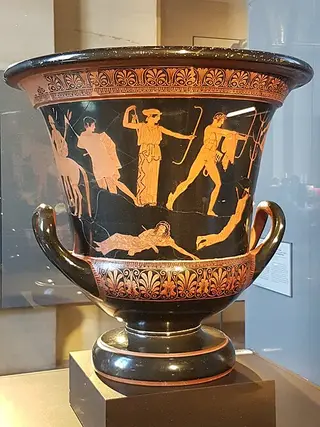
What each painter chose to show, scene by scene: Greek vase painting →
Ancient sources
- Homer, Iliad 24.599–620
- Ovid, Metamorphoses 6.146–312
- Apollodorus, Library 3.5.6