The 'rosy-fingered' goddess of dawn. She asks Zeus to make her mortal lover Tithonus immortal, but forgets to ask that he stay young.
In brief
- Daughter of Hyperion and Theia, and sister of Helios and Selene.
- With the Titan Astraeus she becomes the mother of the winds (Zephyrus, Boreas and Notus) and of the stars.
- She falls in love with the Trojan prince Tithonus and asks Zeus to make him immortal, but forgets to ask for eternal youth. Tithonus grows older forever.
Family
Children
* Only in some accounts.
To see the whole family, open the Eos family tree → · how is Eos related to Zeus? → · compare with someone else →
Her son Memnon
Memnon, Eos's son by Tithonus, is king of the Ethiopians. He comes to the aid of Troy in the Trojan War and is killed by Achilles. Ovid says the dew that falls each morning is Eos's tears for him.
Hesiod, Theogony 984–985; Ovid, Metamorphoses 13.576–622Eos in art
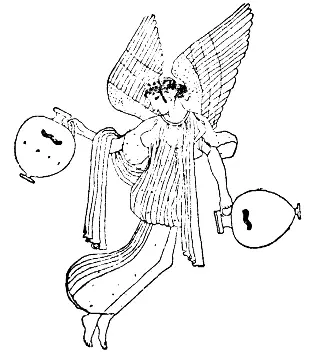
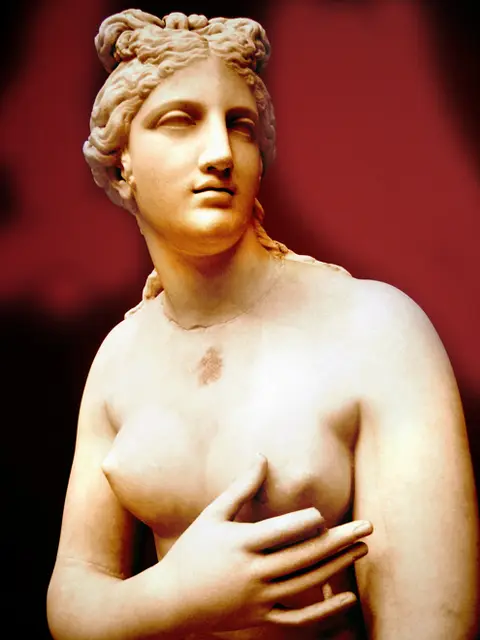
8works depicting Eos, in date order, from ancient vases to paintings of the Renaissance and after. All are in the public domain or openly licensed. Click an image for the full-size version and licence details. For scene-by-scene readings of famous vases, see Greek vase painting.


Stories featuring Eos
Quick questions
- Who are Eos' parents?
- In the main account, Eos' father is Hyperion and mother is Theia. Hesiod, Theogony 371–374
- Who were Eos' consorts and lovers?
- The partners named in the sources: Astraeus, Orion, Tithonus and Cephalus.
- Who are Eos' children?
- This atlas records 5 children of Eos: Boreas, Zephyrus, Memnon, Phaethon and Eosphorus. See the family tree →
- What is Eos' Roman name?
- In Roman mythology Eos is known as Aurora. All Greek and Roman names →
- What are Eos' symbols?
- Saffron robe, Rosy fingers.
- Which myths is Eos in?
- Cephalus and Procris: the spear that never missed · Aphrodite and Anchises: the goddess on Mount Ida · Eos and Tithonus.
Ancient sources
This page is based on the texts below. Numbers refer to books and lines.
- Hesiod, Theogony 371–382, 984–985
- Homeric Hymn 5 to Aphrodite 218–238