Glaucus and Scylla: beauty turned monster
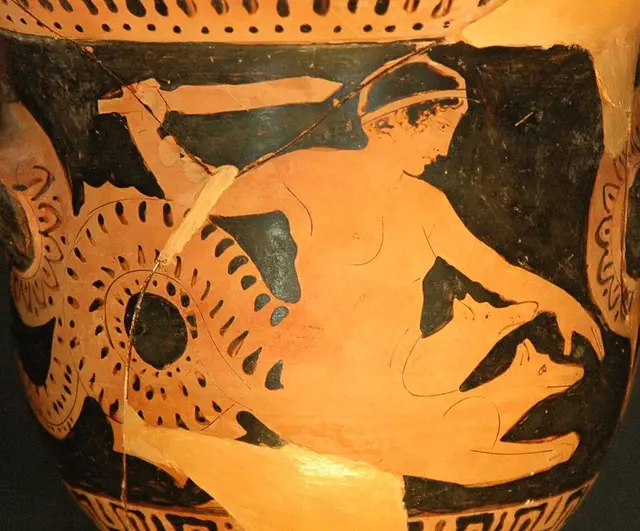
The fisherman Glaucus eats a magic herb and becomes a sea god. He falls in love with the beautiful Scylla and asks the sorceress Circe for help, but Circe loves Glaucus herself, and out of jealousy turns Scylla into a terrible monster.
In this story
-
The magic herb
Ovid says Glaucus is a fisherman from Anthedon in Boeotia. One day he spreads his catch on a lonely meadow. As the fish touch the grass they come back to life and leap into the sea.
Curious, Glaucus eats some of the grass. An irresistible longing for the sea fills him, and he dives in. The sea gods welcome him; Oceanus and Tethys wash away his mortality, and he becomes a sea god with a green beard and a fish's tail.
Ovid, Metamorphoses 13.904–968 -
Circe's jealousy
Glaucus falls in love with the lovely nymph Scylla as she walks along the shore. Frightened by his strange looks, she runs away. Glaucus goes to the island of the sorceress Circe for a love potion.
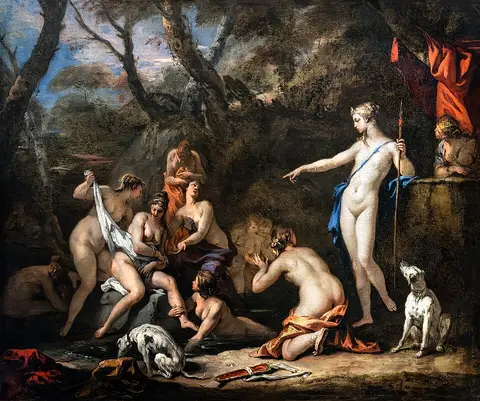
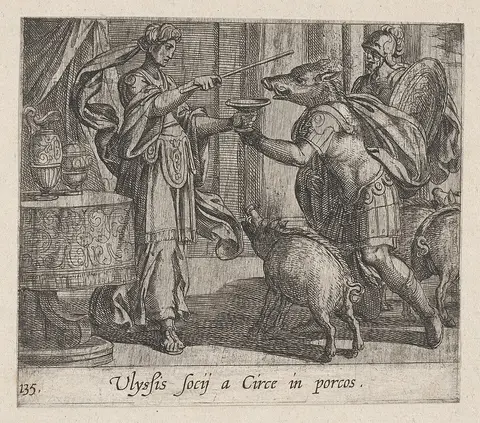
Circe falls in love with Glaucus and offers herself to him. Glaucus refuses, and Circe takes out her anger on Scylla. She mixes poisonous herbs into the water of the cove where Scylla bathes every day.
Ovid, Metamorphoses 14.1–51 -
The monster that became a rock
When Scylla steps into the water, the lower half of her body turns into barking dogs' heads. She tries to run from them, but the monsters are part of her.
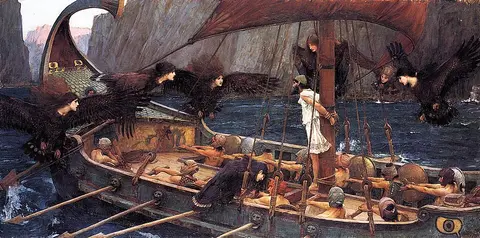
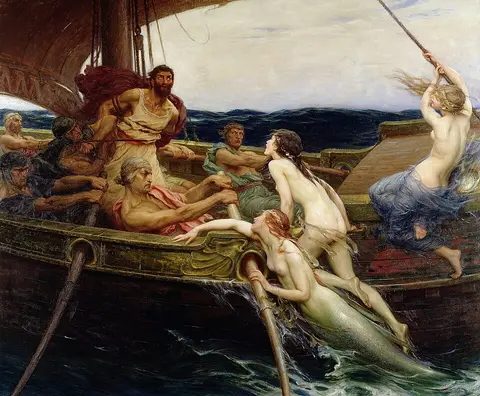
Scylla stays where she is. Out of hatred for Circe, she snatches six men from the ship of Odysseus as it passes. Ovid says she was finally turned into a rock, which sailors still avoid.
Ovid, Metamorphoses 14.52–74