Glaucus and Diomedes: friendship on the battlefield
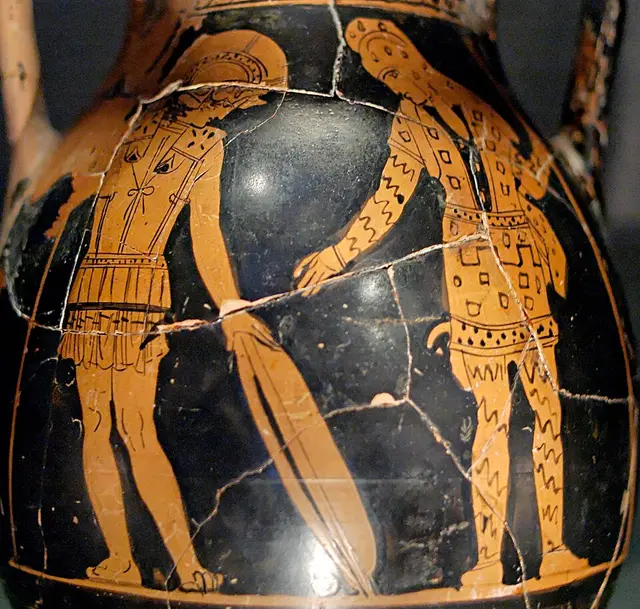
Meeting between the armies at Troy, the Lycian Glaucus and the Greek Diomedes tell each other their ancestry instead of fighting. Finding that their grandfathers were guest-friends, they exchange armour and part. Glaucus trades gold armour for bronze.
In this story
-
Who are you?
In Book 6 of the Iliad, Diomedes sees the Lycian Glaucus step out between the armies and asks who he is: if he is a god, Diomedes will not fight him, remembering what happened to Lycurgus, who fought the gods.
Homer, Iliad 6.119–143 -
The generations of leaves
Glaucus answers with a famous image: the generations of men are like the generations of leaves. The wind scatters the leaves on the ground, and in spring the forest grows new ones; so one generation of men is born and another passes away.
Then he tells his ancestry: his forefather was Sisyphus of Corinth; his grandfather Bellerophon was sent to Lycia, killed the Chimera and married the Lycian king's daughter. His father Hippolochus sent him to Troy saying, 'Always be the best, and excel all others.'
Homer, Iliad 6.144–211 -
The spear in the ground
Diomedes is delighted and plants his spear in the earth. His own grandfather Oineus once entertained Bellerophon for twenty days, and they exchanged gifts. So they too are guest-friends by inheritance.
The two heroes agree to avoid each other in battle; there are other Trojans and Greeks to kill. To show their friendship, they exchange armour.
Homer, Iliad 6.212–233 -
Gold for bronze
Homer closes the scene with a dry joke: Zeus must have taken away Glaucus's wits, for he traded gold armour worth a hundred oxen for bronze worth nine.
The meeting became the ancient world's most famous example of guest-friendship (xenia) binding families across generations. Glaucus later leads the Lycians when his cousin Sarpedon dies.
Homer, Iliad 6.234–236, 16.492–531
Ancient sources
- Homer, Iliad 6.119–236, 16.492–531